In bushcraft and outdoor learning, there is often a temptation to keep moving. Walking woodland paths searching for tracks, scaning the horizon for wildlife and focusing on the next skill to practise. Yet some of the most rewarding moments outdoors happen when you stop doing altogether.
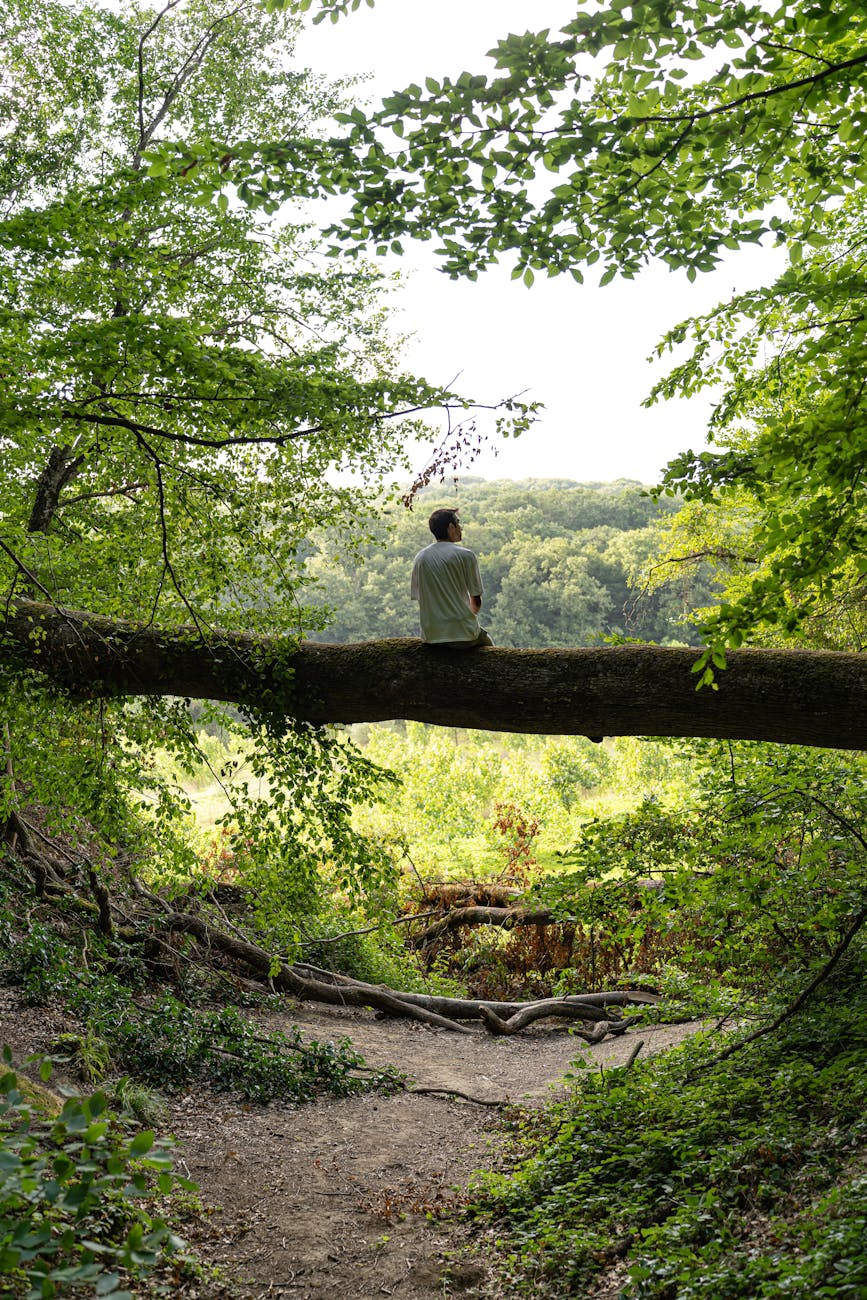
Recently, I found myself sitting quietly in one spot for around twenty minutes during a walk. No agenda, no task to complete, no pressure to move on. Just stillness.
What struck me afterwards was not how little happened, but how much.
The First Five Minutes: Restlessness
At first, sitting still feels surprisingly difficult.
You notice the urge to check the time, move position or continue walking. Your mind races ahead to jobs waiting at home, things you should be doing or whether this pause is somehow “unproductive.”
It is strange how uncomfortable stillness can feel in a world that constantly encourages movement.
But if you stay put, something changes.
The woodland begins to settle around you.
Ten Minutes In: The Woodland Comes Alive
After ten minutes or so, the things you missed at first begin to reveal themselves.
Birdsong becomes layered rather than distant background noise. A robin darts low through the undergrowth. A wood pigeon shifts somewhere unseen overhead. The breeze moves through leaves differently depending on the trees around you.
You begin to notice movement instead of simply looking for it.
On more than one occasion, I’ve seen wildlife emerge only because I stayed still long enough to become part of the scenery. Small birds venture closer. Squirrels lose interest in your presence. Insects resume their busy work.
Sometimes there is no dramatic wildlife encounter at all, only the quiet rhythm of the place itself.
And somehow, that feels enough.
Twenty Minutes: You Start Seeing Properly
Around the twenty-minute mark, something else happens.
You stop observing nature as a visitor and begin noticing details you would normally walk straight past.
The shape of old bark. Tiny fungi hidden in dead wood. The route ants follow between roots. Moss growing thicker on one side of a fallen branch. Signs that animals have passed through, disturbed leaves, nibbled stems, faint tracks in soft ground.
It becomes less about spotting something impressive and more about paying attention.
For anyone interested in bushcraft, this kind of observation is a skill in itself.
The ability to read the landscape, notice subtle changes, or understand what has moved through an area comes from slowing down enough to actually see.
Why Sitting Still Matters
There is also something valuable happening internally.
Sitting quietly outdoors gives the mind space to settle.
We spend so much time surrounded by noise, screens, notifications and constant stimulation that stillness can feel unfamiliar. Yet twenty minutes outside (without distraction) often feels more restorative than we expect.
Some people call it mindfulness. Others simply call it enjoying the outdoors.
Whatever the label, there is value in giving yourself permission to pause. Not every walk has to be a challenge, an expedition, or a lesson in survival.
Sometimes the most useful thing we can do outdoors is sit on a log and notice what has been there all along.
A Habit Worth Building
Lately, I’ve been trying to make this more intentional.
Even if it is only once a week, choosing a place to sit for twenty minutes has become a small habit worth keeping. No phone in hand. No destination in mind. Just watching and listening.
It pairs naturally with keeping a field journal too. A few quick notes afterwards (what birds were present, changes in season, signs of animal activity, weather, sounds) often reveal patterns you would otherwise forget.
Over time, these small observations build into something larger: a stronger connection to a place.
You stop simply visiting the outdoors and begin noticing its rhythms.
Try It Yourself
Next time you head out for a walk, try an experiment.
Find somewhere comfortable and safe. Sit quietly for twenty minutes without distractions. Resist the urge to move on too quickly.
At first, it may feel like nothing is happening.
Then notice what changes.
You may be surprised by how much of the natural world has been quietly carrying on around you all along, waiting for someone patient enough to stop and see it.






Leave a comment