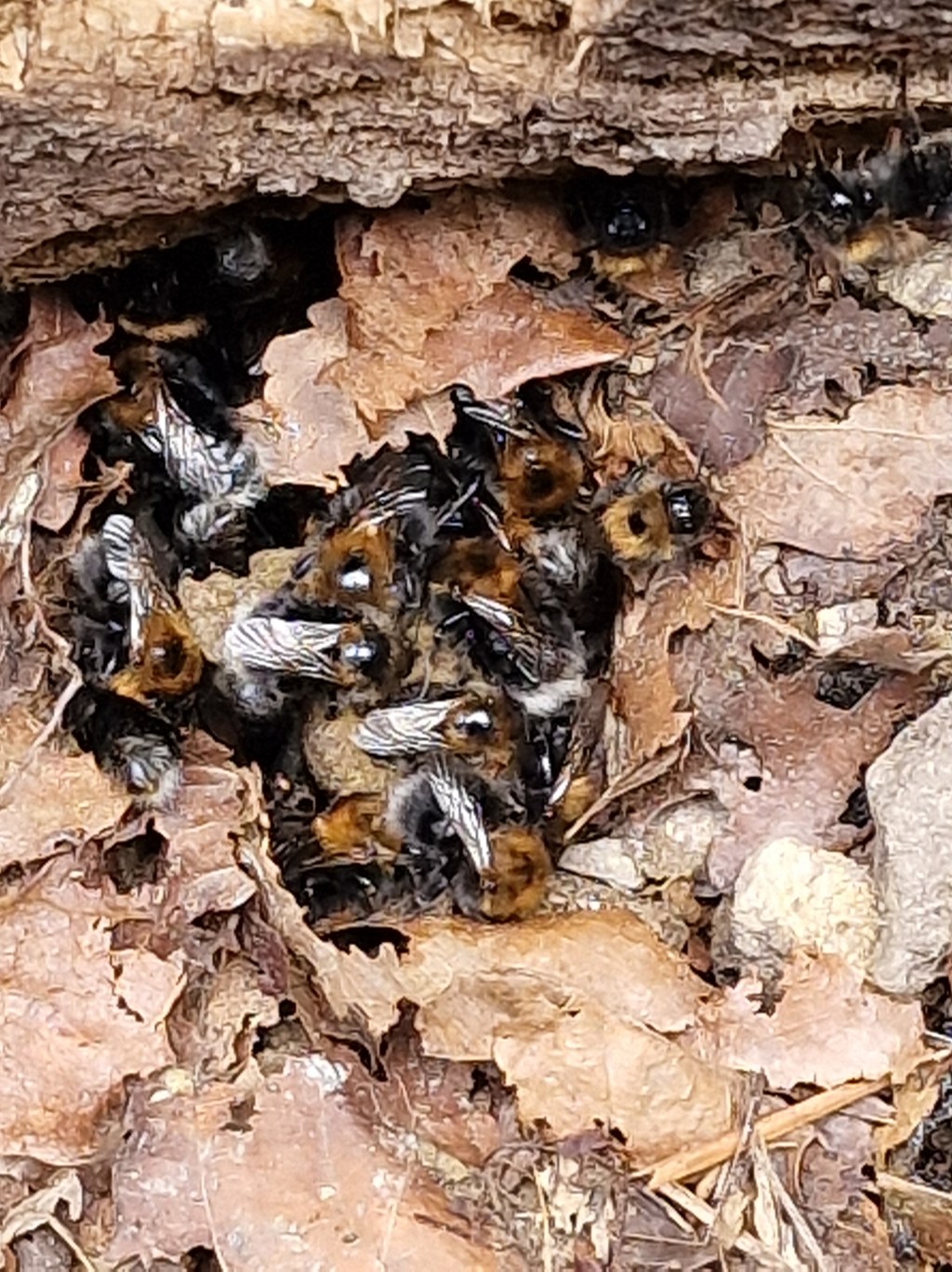
There’s something special about walking the dog early in the morning. The world feels quieter, wildlife seems bolder and sometimes you stumble across something unexpected. This morning’s surprise came in the form of a disturbed bumblebee nest, exposed in the undergrowth and still humming with life.
At first glance, it looked as though a larger animal had dug it up, perhaps a fox or even a badger searching for food. The nest had clearly been disturbed, with the insulating material and top of the comb exposed to the elements, being protected by a group of bumblebees. Yet despite the damage, the bees themselves were still active, flying in and out with determined purpose.
Watching them carry on despite the chaos was a reminder of just how resilient these insects can be.
Meet the Tree Bumblebee
The bees appeared to be tree bumblebees, a relatively recent arrival in the UK that has quietly become one of our more familiar wild pollinators.
The tree bumblebee, scientifically known as Bombus hypnorum, was first recorded in the UK in 2001 in Wiltshire. Since then, it has spread remarkably quickly across England, Wales and parts of Scotland.
Tree bumblebees have a habit of nesting above ground, favouring cavities in trees, roof spaces, compost heaps and bird boxes. I was supprised to see them underground, but the wooden plank holding the side of the path indicated that they were possible thinking it was a fallen tree.
If you’ve ever opened a nesting box expecting blue tits and instead heard an angry buzz, there’s a good chance you’ve met a tree bumblebee colony.
How to Identify a Tree Bumblebee
Tree bumblebees are among the easier species to recognise once you know what to look for.
They have a distinctive appearance:
- A ginger or tawny-brown thorax (the fluffy upper section behind the head)
- A black abdomen
- A clean white tail
This striking combination makes them stand out from species like the buff-tailed bumblebee or white-tailed bumblebee, which tend to have more yellow banding.
Why Was the Nest Exposed?
Finding a damaged nest on a dog walk raises questions. What happened?
Tree bumblebee nests (like those of other bumblebee species) can attract predators. Mammals such as foxes and badgers sometimes dig up nests in search of the nutritious larvae, pupae and honey-like nectar stores inside. A badger, with its powerful claws and keen sense of smell, can make short work of a hidden nest. Foxes may also investigate if they catch the scent.
From the signs this morning, it looked entirely possible that one of these nighttime visitors had uncovered the colony.
Yet the remarkable thing was that the bees had not abandoned it.
Even after disturbance, worker bees will often continue defending and repairing a nest if enough of the colony survives and the queen remains alive. Their persistence can be astonishing.
Are Tree Bumblebees Aggressive?
A common concern when people discover a nest (especially one close to footpaths or gardens) is whether the bees are dangerous.
In reality, tree bumblebees are not naturally aggressive. Like most bumblebees, they generally prefer to avoid conflict and are focused on gathering pollen and nectar. However, they can become defensive if a nest is disturbed or threatened, particularly when it has already suffered damage.
That means if you discover an exposed nest, it’s best admired from a respectful distance. Curious dogs, children and repeated disturbance can add further stress to an already vulnerable colony.
Why Tree Bumblebees Matter
It’s easy to overlook bumblebees, but they are among the UK’s most important pollinators. Tree bumblebees help pollinate wildflowers, fruit trees and garden plants, supporting biodiversity and food production alike.
Their long tongues and fuzzy bodies make them highly efficient pollinators, carrying pollen between flowers as they forage. Without species like these, many ecosystems would struggle.
Despite being a relatively new arrival in Britain, tree bumblebees appear to slot neatly into the wider pollinator picture.
A Reminder From the Wild
Standing beside that exposed nest this morning, watching bees continue their work after what had clearly been a rough night, it was hard not to admire them.
Nature can be brutal. A fox or badger may have torn into the nest looking for breakfast, yet the survivors were still there, buzzing with purpose, carrying on as if rebuilding was simply part of the job.
The next time you’re out walking it’s worth keeping an eye on the edges of paths and hedgerows. Sometimes the smallest discoveries tell the biggest stories.
And if you happen upon a patch of soft buzzing in an unexpected place, pause for a moment. You might just have found one of Britain’s remarkable tree bumblebees at work.
Video Short of the Exposed Hive
Further Reading
- Bumblebee Conservation Trust – Tree Bumblebee Species Guide; identification, nesting habits, behaviour, active season and colony information.
- Woodland Trust – Tree Bumblebee (Bombus hypnorum); UK arrival (first recorded in 2001), appearance, and nesting preferences.
- The Wildlife Trusts – Tree Bumblebee; habitat, distribution, nesting in bird boxes/roof spaces and behaviour around nest entrances.
- Bumblebee Conservation Trust – Do Bumblebees Swarm?; clarification on the male “hovering cloud” behaviour often seen around tree bumblebee nests.








Leave a comment