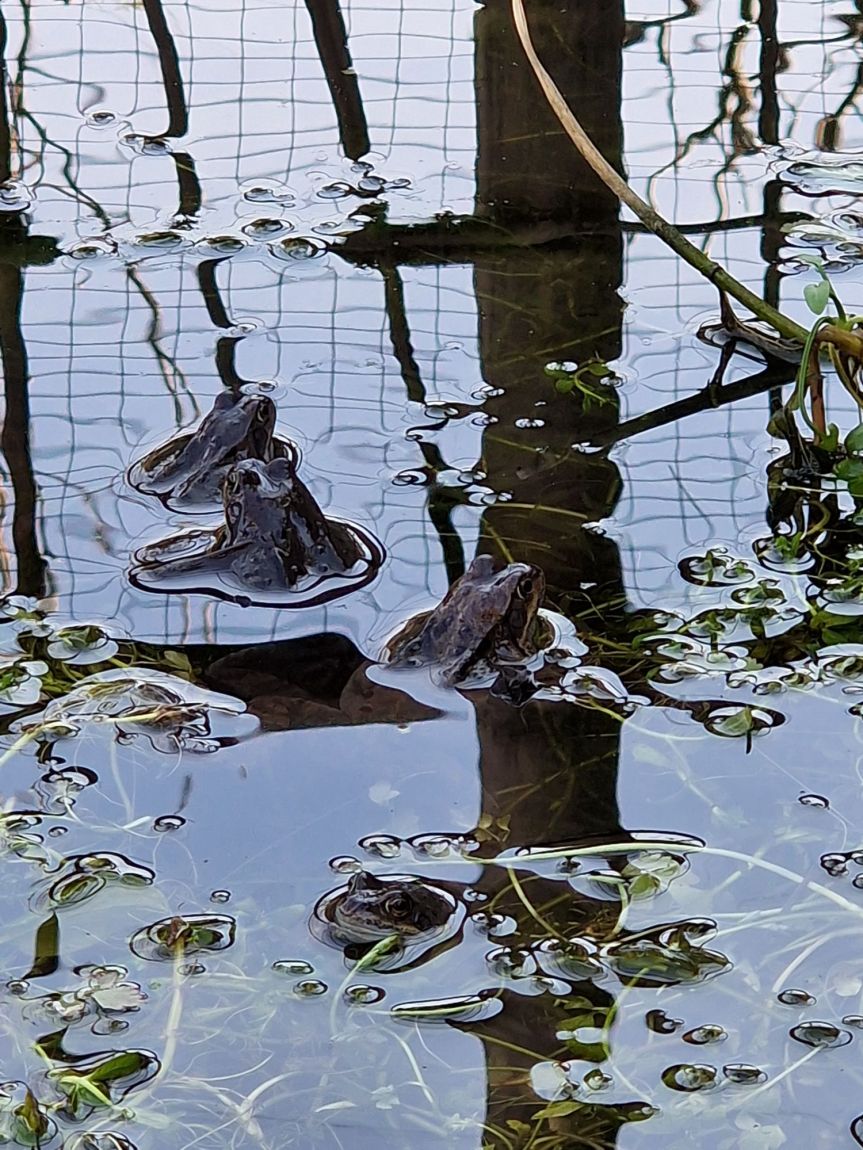
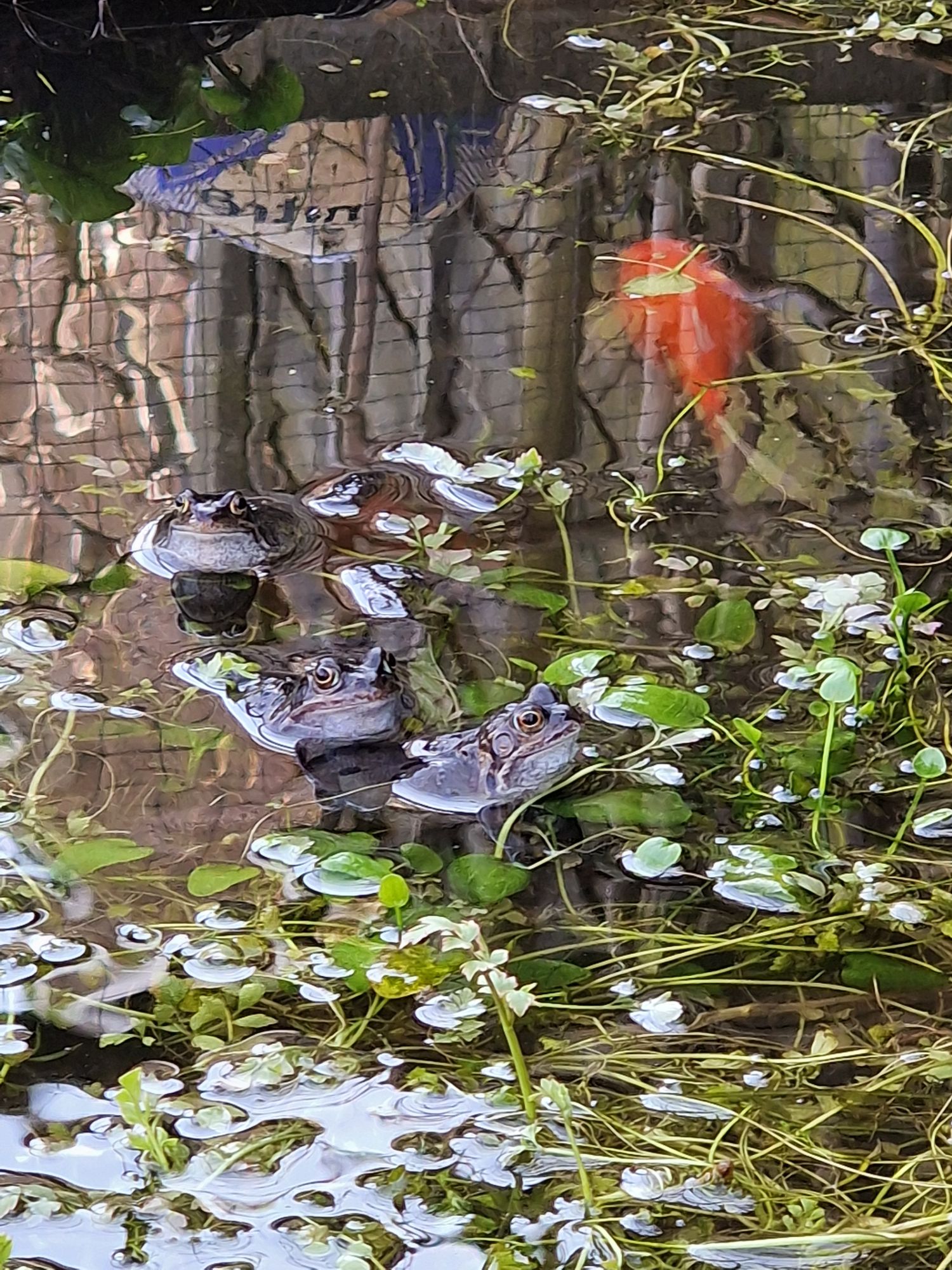
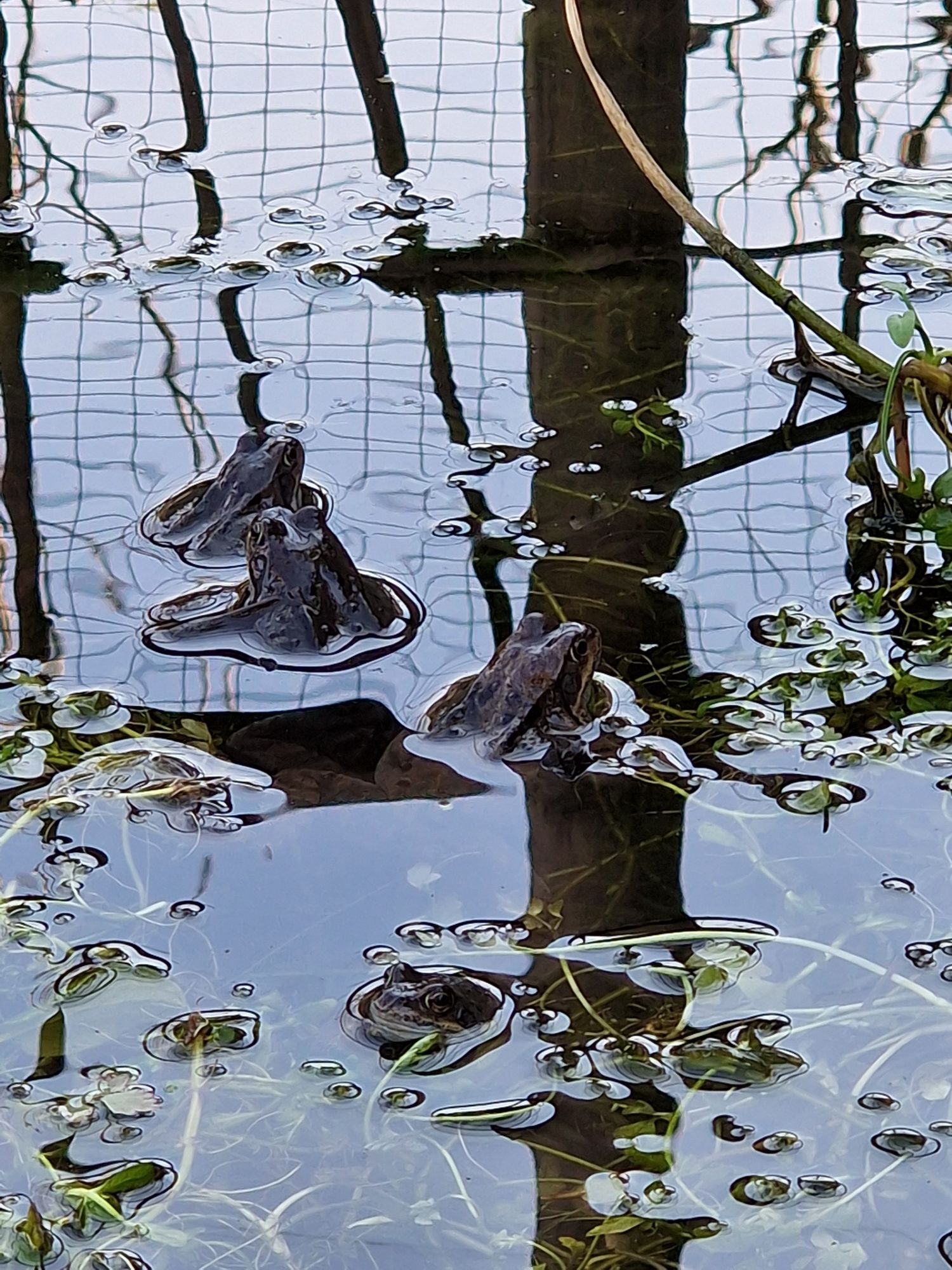
A good sign that spring is on the way is when you hear the chorus of frogs in your pond.
Counted 8 frogs sat in the plants and weed with a couple croaking away this afternoon.
A large amount of frogspawn has also appeared. Although you can find forgspawn from as early as January, typically in my pond, it’s March time.
Do you know the difference between frog and toad spawn? Frog is normally clumped together, whilst toad is strung in a line.
Whilst tempting to move spawn from a pond to somewhere else, it is not advisable as you could introduce contaminants from one pond to anthoer (diseases, invasive species etc.)
This time of year is great to just sit and watch the pond life and nature take its course.
Another year on and 30 Days June is here again. My posts have been seriously lacking in between and hope to fix that going forward. Though I would start this years 30 Days of June with an update on my pond.
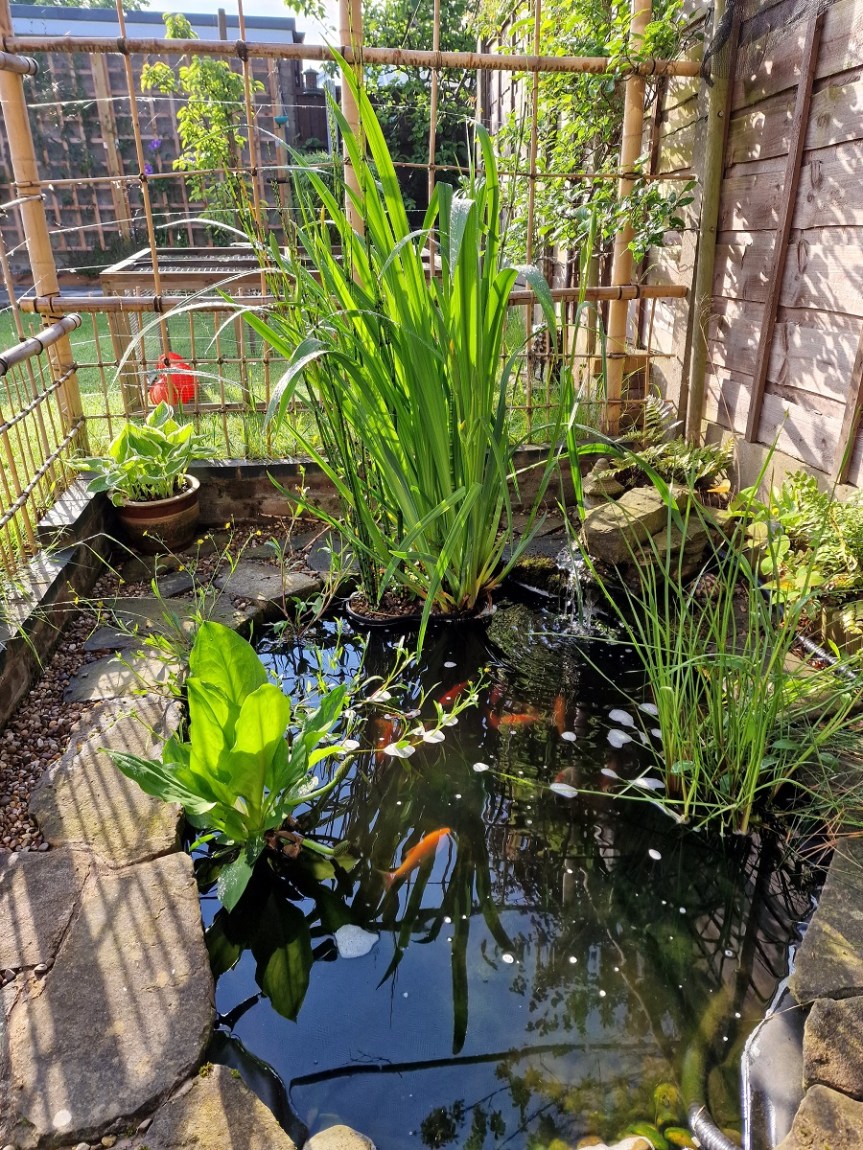
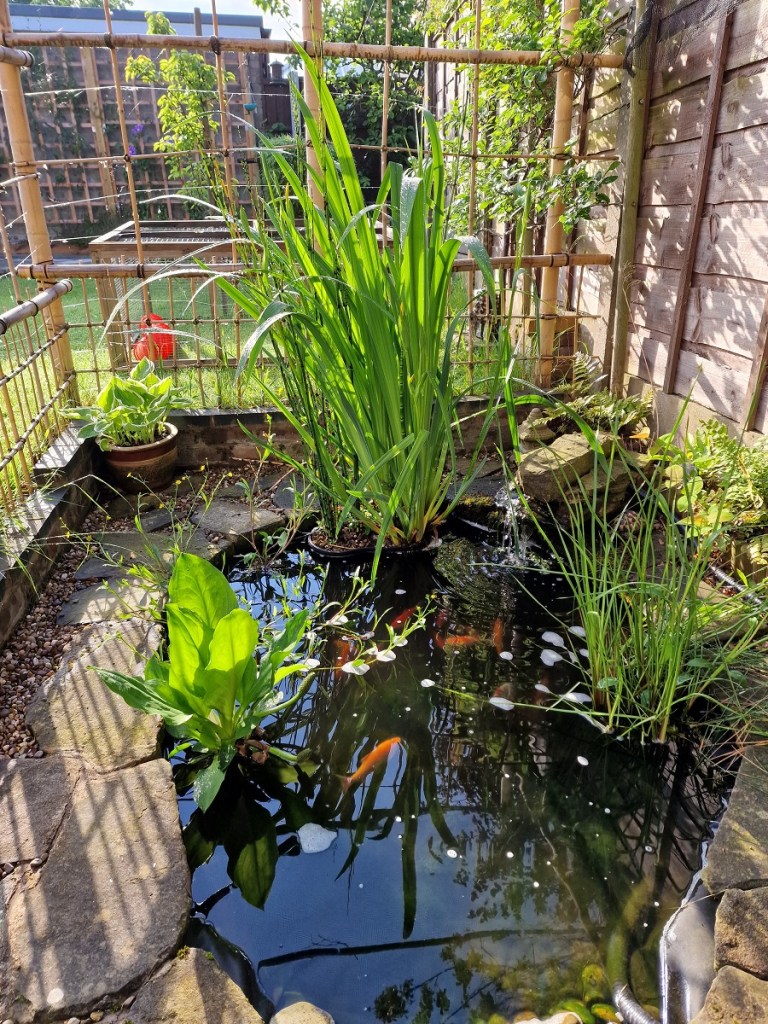
Since building the pond a few years ago it has become established and a focal point for wildlife in the garden. The Heron still appears and can only look at the all you can eat Heron buffet without the eating part due to the bamboo cage. Most of the lashing had to be replaced on the cage as the twine I first used had degraded, but it is holding strong. The cage provides a lot of nooks and places for spiders to hide and build their webs on feasting on the flies and insects that visit the pond.
Frogs have visited and their offspring have become tadpoles which hide well from the fish within the stones and pebbles forming the slope at the end of the pond offering any animal that wanders in an easy way out of the water.
The plants are thriving well and providing a source of shade and stability to the water. The Iris has grown from a small garden centre purchased plant to a large feature and looks like it might actually flower this year.
Having a pond in a garden no matter how big, is a great way of attracting wildlife of all sizes and worth while investment of time in making it and sitting and watching it flourish.
The Wood Mouse (Apodemus sylvaticus) or Long Tailed Field Mouse is a widespread and common mammal that you might spot on a walk or in your garden.
Growing between 8cm and 10cm long and weighing between 23g and 25g, the typical Wood Mouse lives for around 1 year.
A female can have a litter of 4-8 and up to 6 times a year, which makes for a lot of mice! The circle of life though means that the Wood Mouse has a lot of predators such as birds of prey, foxes etc. One of the reasons that they are mainly nocturnal, although you may be lucky enough to spot one in the daytime.
They feed mainly on seeds from trees such as oak, beech etc and will change to berries and fruits when available in the later months of the year.
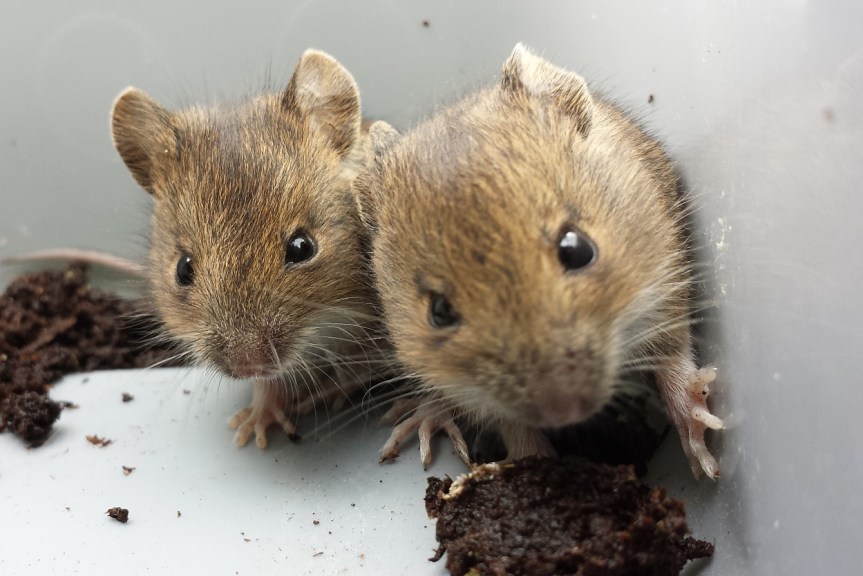
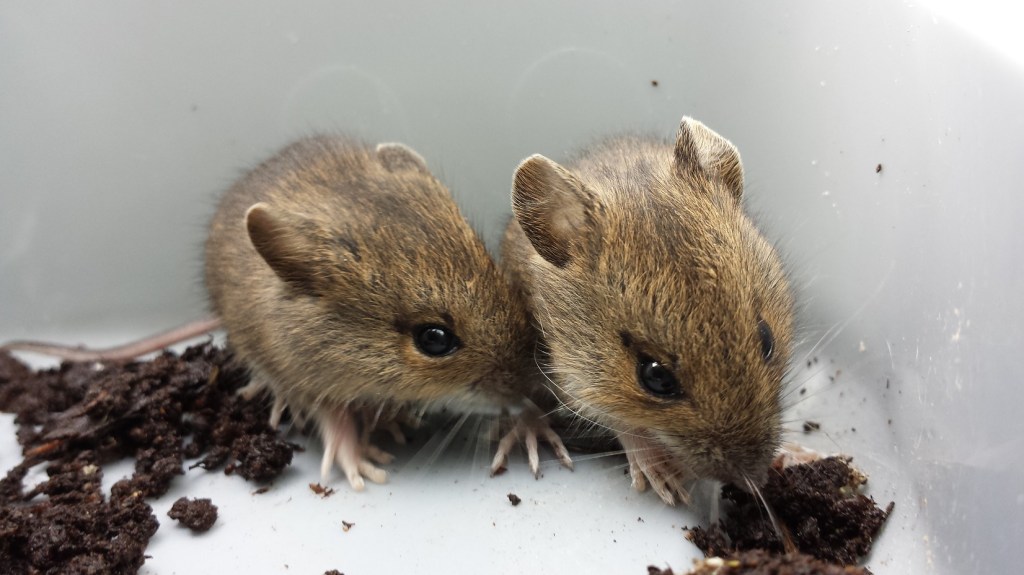
These two scamps (in the picture) were in my compost bin making a nice nest. Unfortunately for them I needed the bin contents, so they were relocated to some nice woodland to make a new home.
Taking a walk out in a wood or forest you are most likely to spot a Squirrel. More often it will probably be a Grey Squirrel, which has taken over a good proportion of the UK and has helped in the reduction in numbers of our native Red Squirrel. There are however some protected areas where only the Red Squirrels are, such as Formby, Isle of Wight, Anglesey and Brownsea Island (there are other areas as well).
There are two species of squirrel in the UK; Red Squirrels and Grey Squirrels. Populations are currently estimated at approximately 140,000 red squirrels and 2.5 million grey squirrels. Red squirrels are our native species and have lived in the UK for around 10,000 years, Grey squirrels were introduced to the UK from North America by the Victorians in the 1800s, the first record of them escaping and establishing a wild population is 1876.
Well there is actually another Squirrel that has made its way to the UK.
Black Squirrels are the result of “interbreeding” between their grey cousins and the North American fox squirrel, a study has concluded.
There are thought to be around 25,000 Black Squirrels in the UK, with numbers largely concentrated in Bedfordshire, Hertfordshire and Cambridgeshire. The first wild Black Squirrel was recorded in Woburn in 1912, and was believed to have escaped from a private zoo having been imported from the United States.
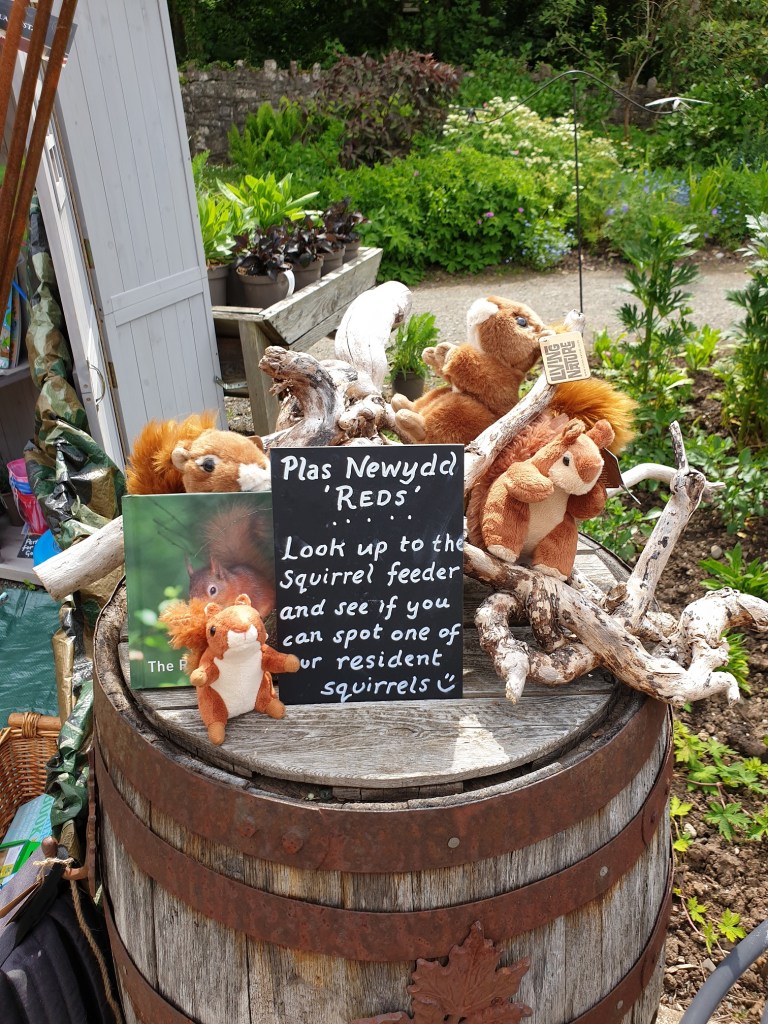
Whilst out on Anglesey recently on a nature walk we went to several areas where Red Squirrels are regularly sighted. The first was Plas Newydd, which is a National Trust property and grounds. Unfortunately we were too late in the morning to spot any. You need to be up early to see them out for their morning forage.
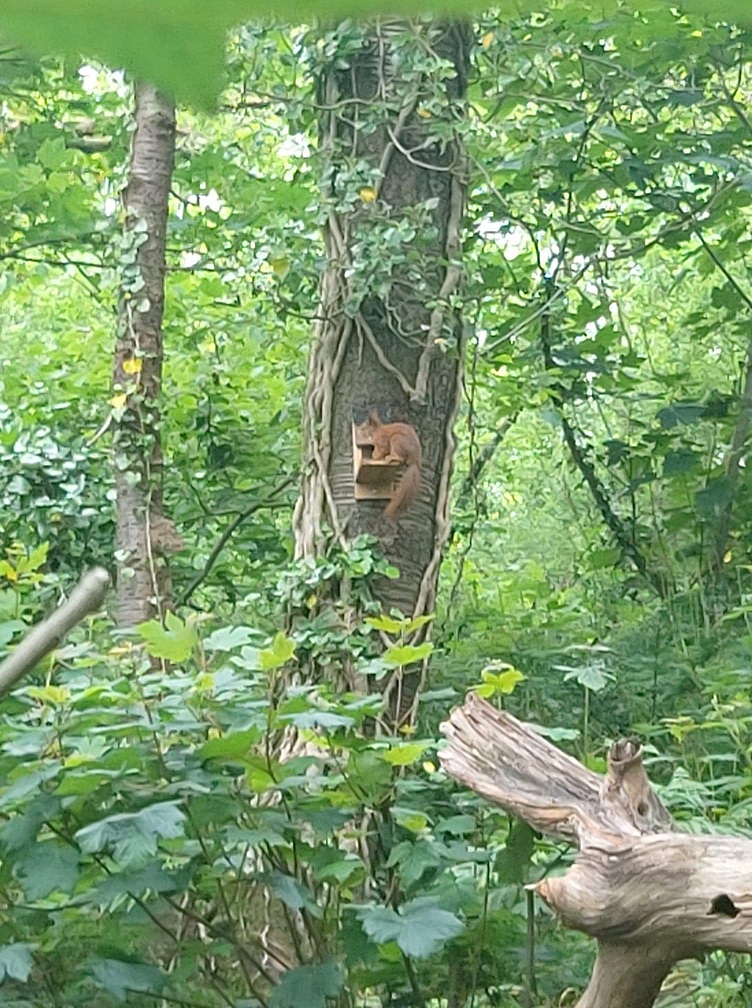
Next we moved on to a Dingle Woodland where they are often spotted. We were up early enough to spot them and came across two near to some feeders that were placed in the area. Keeping our distance the only picture we managed to get this time was a bit blurred due to the phone camera zoom.
Its always great to see a Red Squirrel in its natural habitat.
Red Squirrels live in nests called Dreys or Dens. Dreys are built in broad-leaved and coniferous trees mainly, unless a Squirrel Box has been put up to encourage breeding. They normally build their nests at around 6 meters or more for protection or the thick canopy. Dens are built in the trunks or branch forks of deciduous trees after the leaves have fallen to protect the Squirrels from the elements.
A Red Squirrels Year
JANUARY – Peak mating chases. Male and female fully reproductively active. (Many males run over on roads whilst ranging in search of females).
FEBRUARY – First litters born. Females refurbish or build litter dreys.
MARCH – Peak spring litters born. 1-6 young, usually 3.
APRIL – Young squirrels first emerge from litter drey but do not yet leave it. Spring moult.
MAY – Spring litters weaned and leave litter drey to become independent.
JUNE – Light-weight summer dreys of grass start to appear, often built by new juveniles.
JULY – Peak summer litters born. Dispersal of spring young. Begin to grow new ear-tufts and hair tails.
AUGUST – Squirrels fatten for autumn on hazel. Moult into winter coat.
SEPTEMBER – Male squirrel testes regress. Summer juveniles become independent.
OCTOBER – Dispersal of summer young. Males inactive.
NOVEMBER – Male squirrels start to become reproductively active as testes descend into scrotum and grow.
DECEMBER – Young squirrels near full size; spring young may become reproductively active for next season – particularly males. Adulty males capable of fertilizing females. First females in oestrous at end of month.
Squirrels by Jessica Holm – Whittet Books
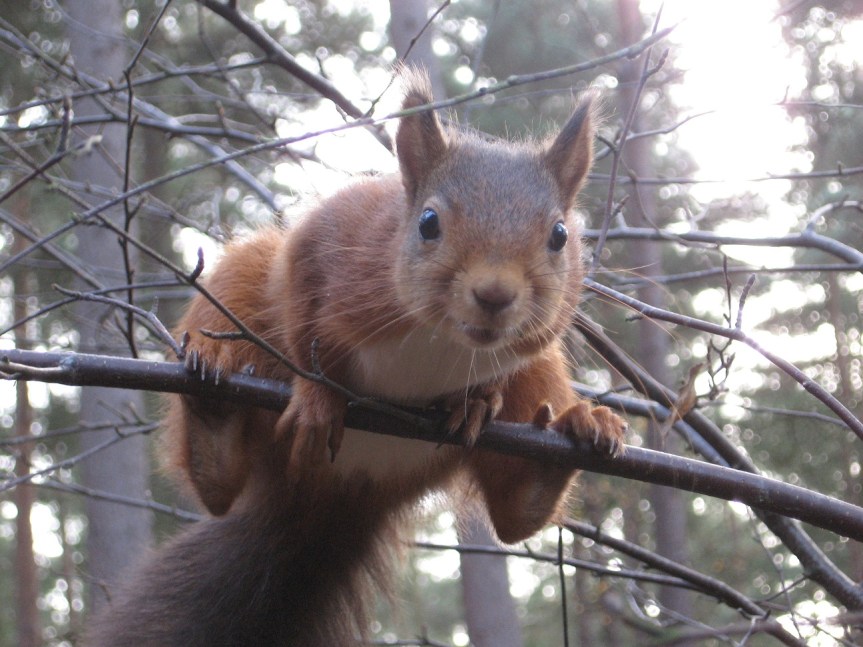
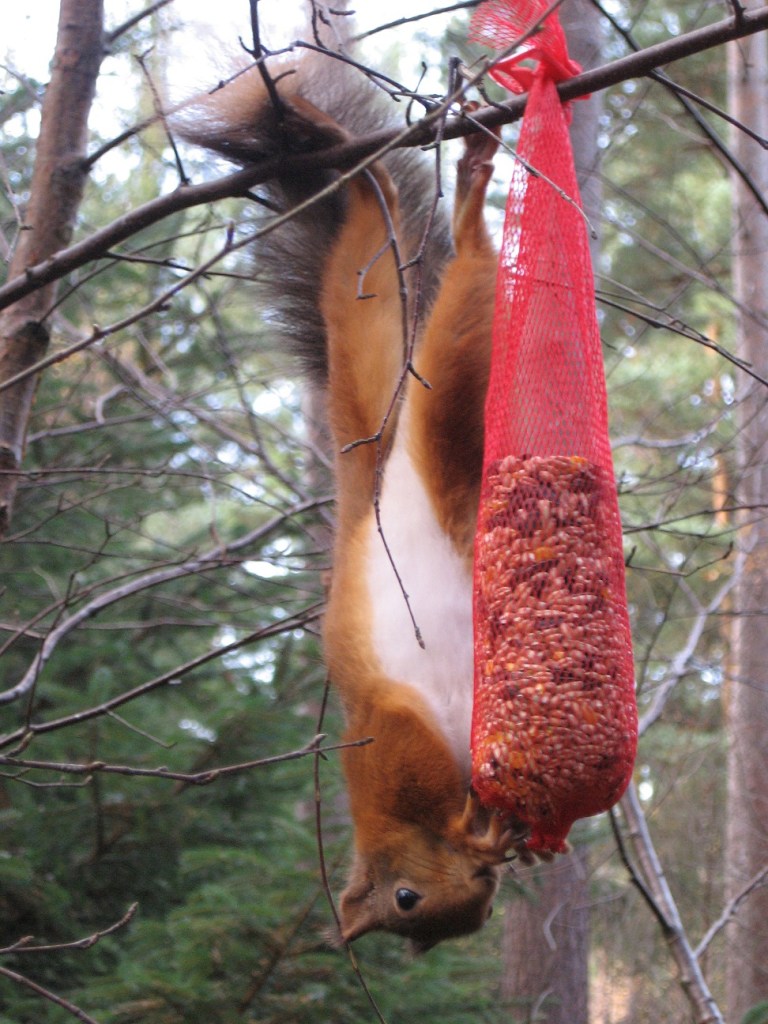
The picture above is one I took a few years back whilst on holiday in a Centre Parcs near Perth. The Red Squirrels loved the bird feed that we left out.
Typically they will eat:
Cached food
Catkins
Flowers (e.g. Blackthorn and Oak)
Fungi
Hips
Insects
Seeds – Acorns, Beachnuts etc
Shoots
Tree Bark
Squirrels also peel back bark to eat the sweet sap beneath.
The main threats to the Red Squirrel are Humans and Grey Squirrels.
The grey squirrel is the main reason for the decline of the red squirrel. Habitat loss has also contributed to the red squirrel’s decline. This occurs when areas of woodland are destroyed or become separated by development and changing land-use. This leads to isolated areas which cannot sustain viable populations of wildlife, including red squirrels in some places. Squirrelpox virus is fatal to red squirrels but is carried by grey squirrels without causing them any harm.
Other threats are predator’s such as Birds of Prey, Foxes, Pine Martins and Stoats.
Red squirrels that survive their first winter have a life expectancy of 3 years. Individuals may reach 7 years of age, and 10 in captivity. Survival is positively related to the availability of autumn-winter tree seeds; on average, 75–85% of juveniles die during their first winter, and mortality is approximately 50% for winters following the first.
June is a great month to get out and enjoy nature. The weather is getting better (fingers crossed) and the days are getting longer with more time to spend outside.
Every year I like to sign up to the 30 Days Wild with the Wildlife Trust and do something outside each day.
If you haven’t yet signed up for 30 Days Wild there is still time. What activities will you be doing over June?



 Sparrowhawk Bushcraft