
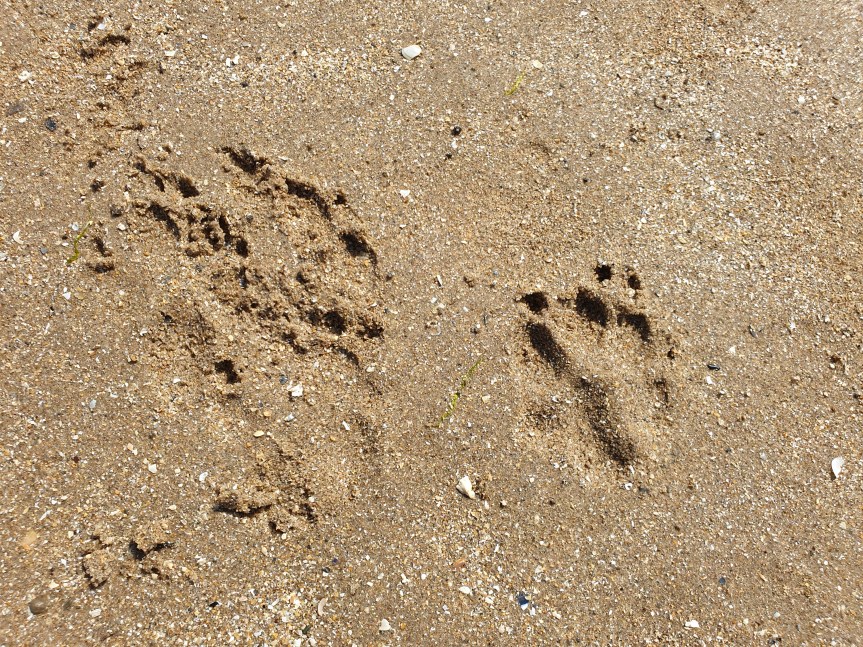
The beach is a great place to track footprints. Okay so they are typically Human and Dog but look closer qnd you will find other types of track and sign.
The best place to look for these is when the tide is out and on the wet sand. Although you can find sign (something disturbed or left) on dry sand, prints and some sign can dissappear quickly.
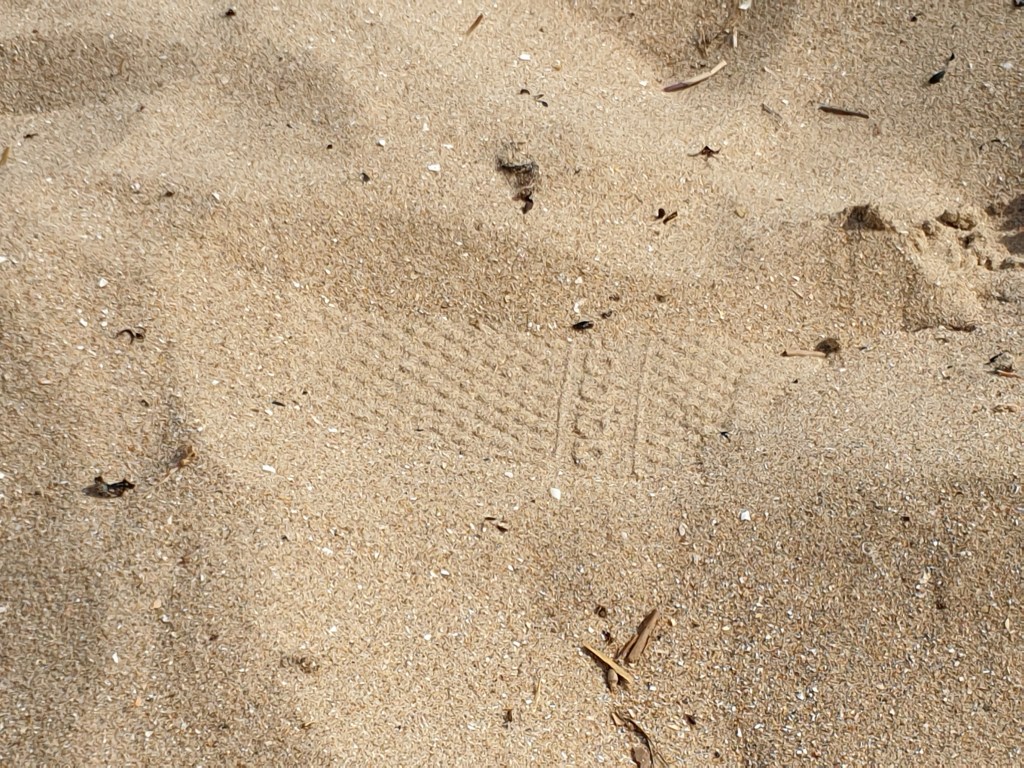
There is a lot to tracking, but in a basic form, looking at a print or sign you can determine what left it, its direction and how quickly it was going.
Lets start with the obvious prints and sign first.
Humans
Lots of footprints on a busy beach or less so on a less crowded one. Some in footwear of different types and others barefoot.
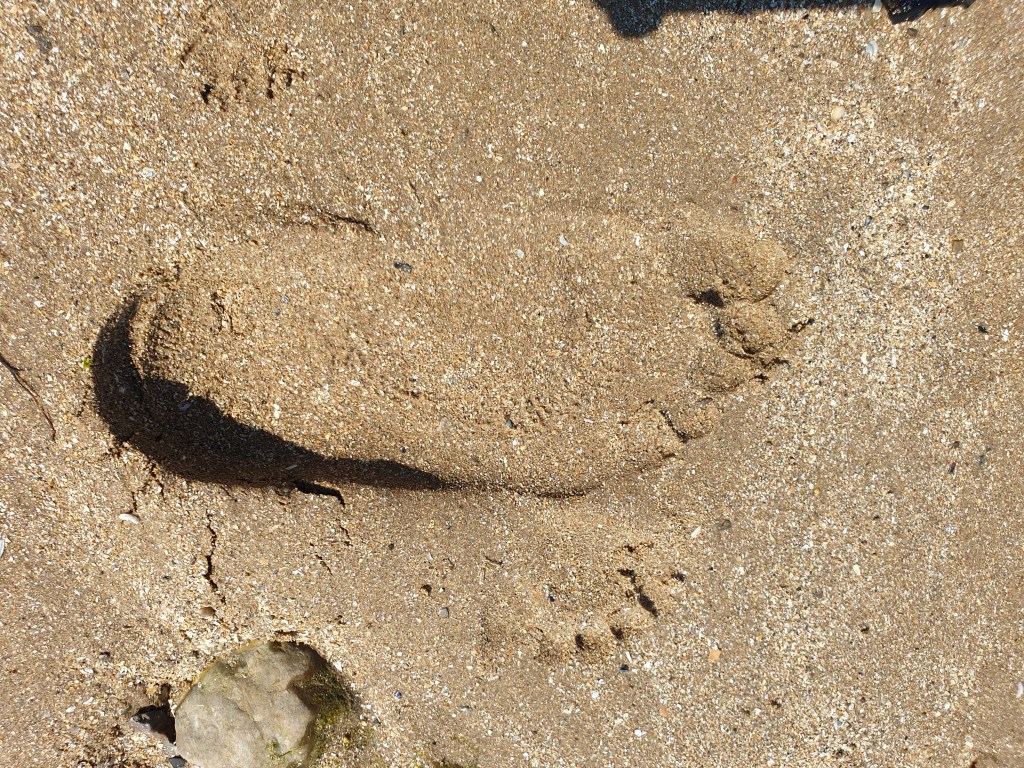
Not all prints will be full. You may only see a partial print depending on how that person was walking or even running.
The great part of tracking is to work out what they were doing, direction etc.
Dog
On a beach that allows dogs you may come across a set of tracks made by one.
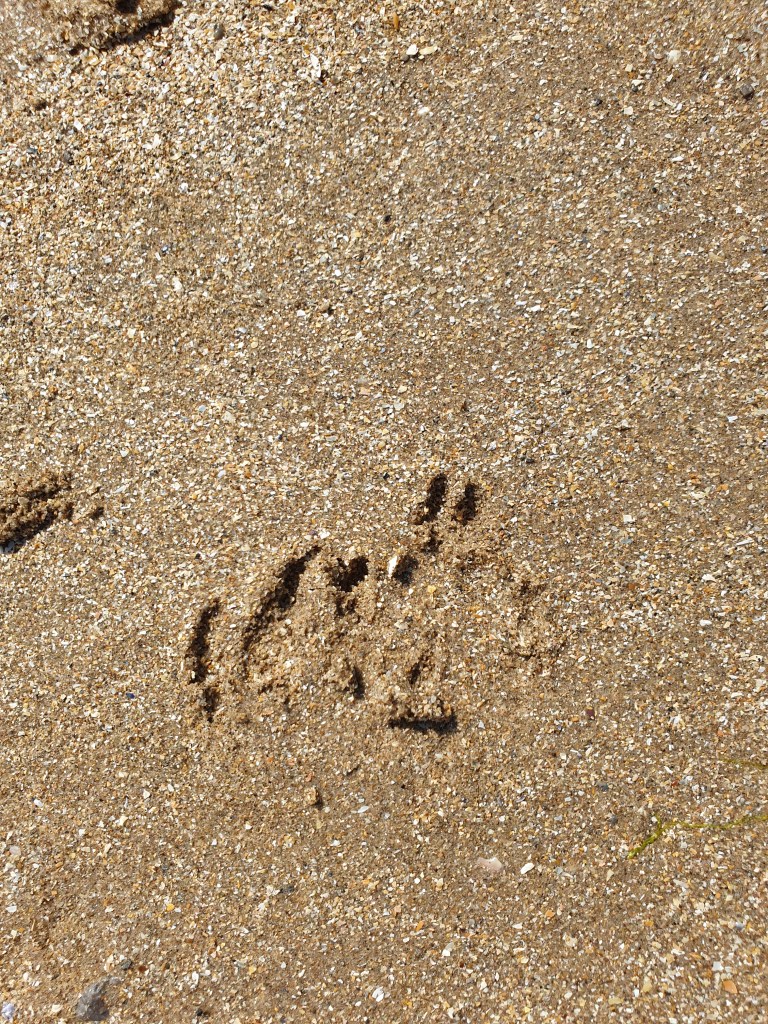
Like the human print the depth will depend on if the dog was running or walking. The pattern on the prints will depend upon the dogs gait. The gait is the pattern of movement from the animals limbs.
Different breeds of dogs of course leave different prints and spacing depending on their size.
Mechanical Tracks
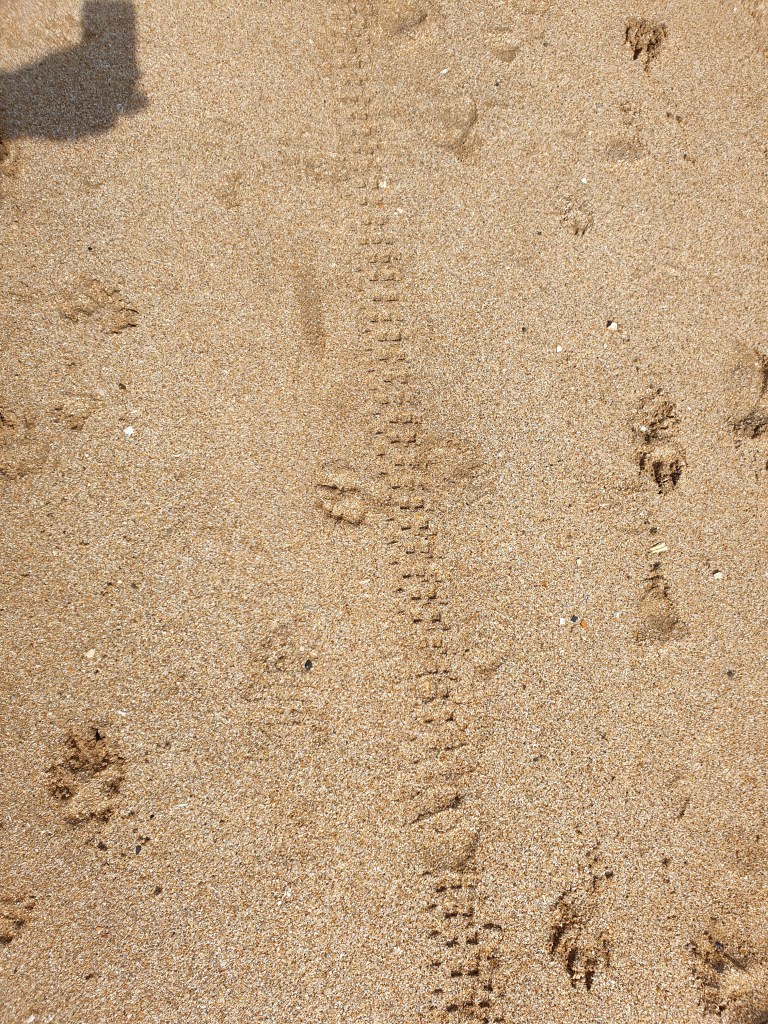
Not everything that travels on a beach is animal or human. Sometimes you can find tracks from bikes or even tractors that are launching boats into the sea.
Lugworms
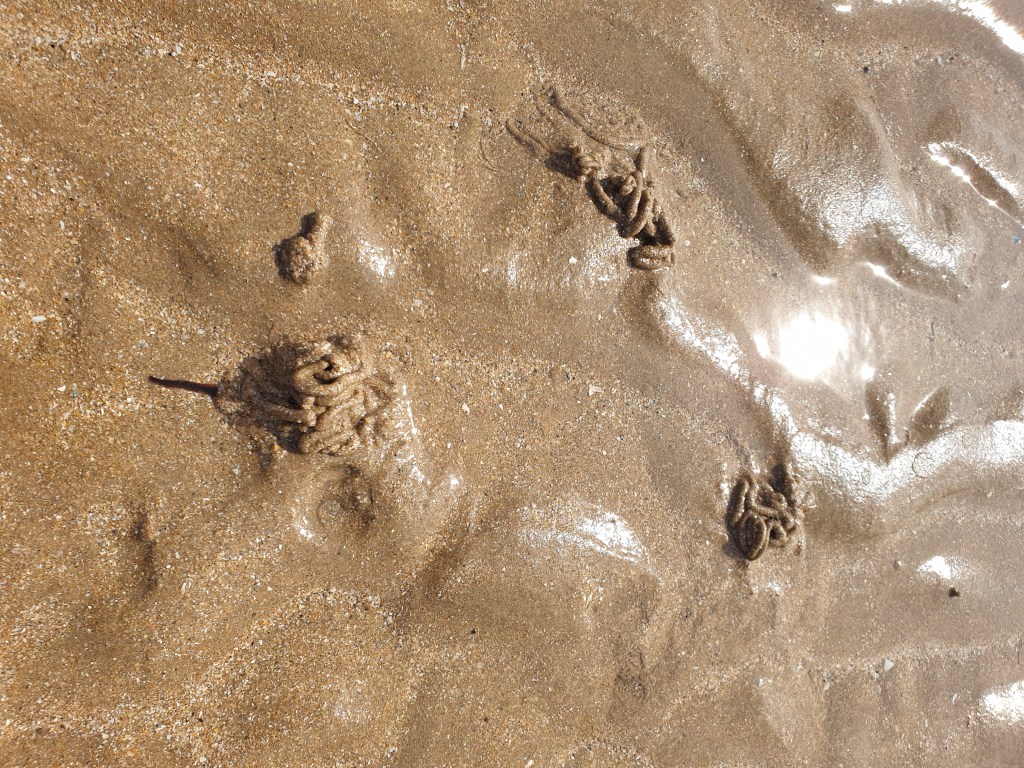
“Lugworms” or “Arenicolidae” can be found on sandy beachea and mud flats. They leave a sand cast on top of their burrow which shows where they are.
Lugworms are normally greenish or yellow-black in colour.
Razor Shells
Razor Shells come in many types under a genus called “Ensis” Such as
- Ensis siliqua
- Ensis ensis
- Ensis arcuata
There are other types under the family ” Solenidae”
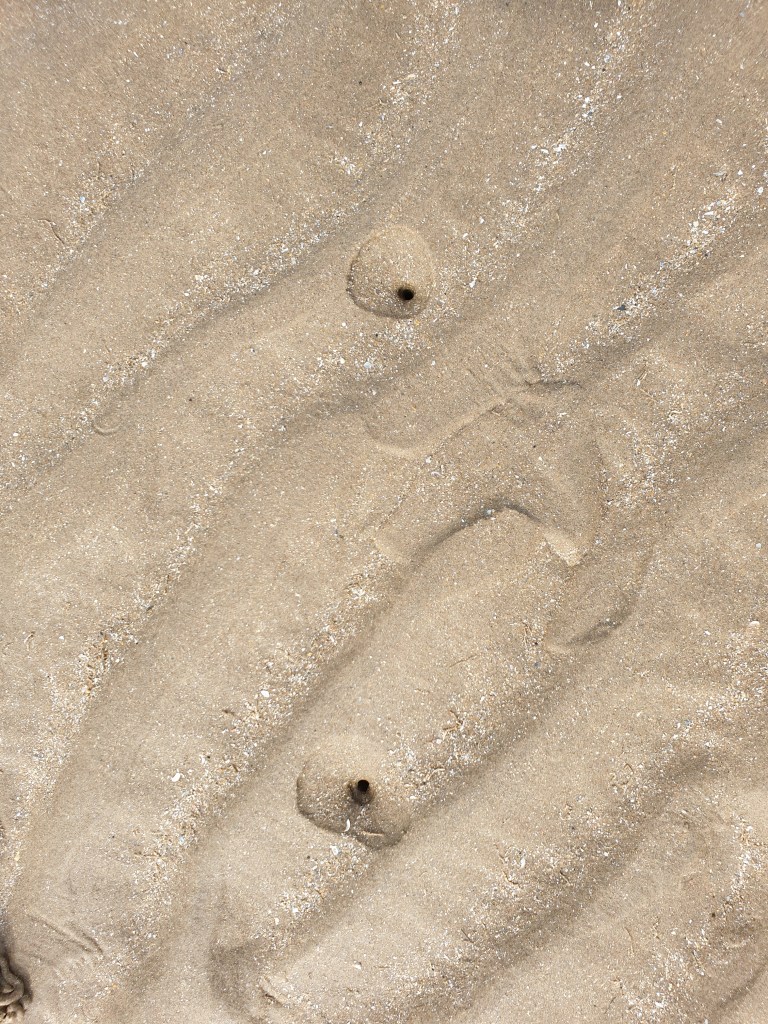
They burrow vertically in the sand and extend downwards with their bodies (short syphon and large foot).
The burrows are normally a small indentation or hole in the sand. (Lugworms also have holes in the sand before they have casts of sand).
Water – Sea
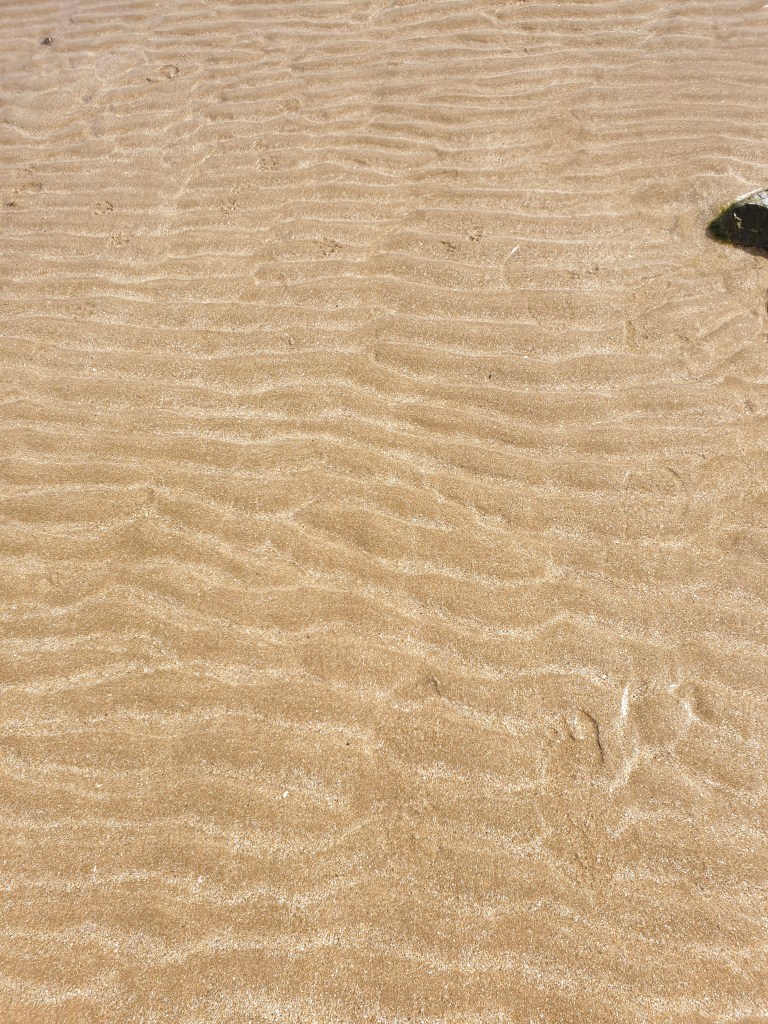
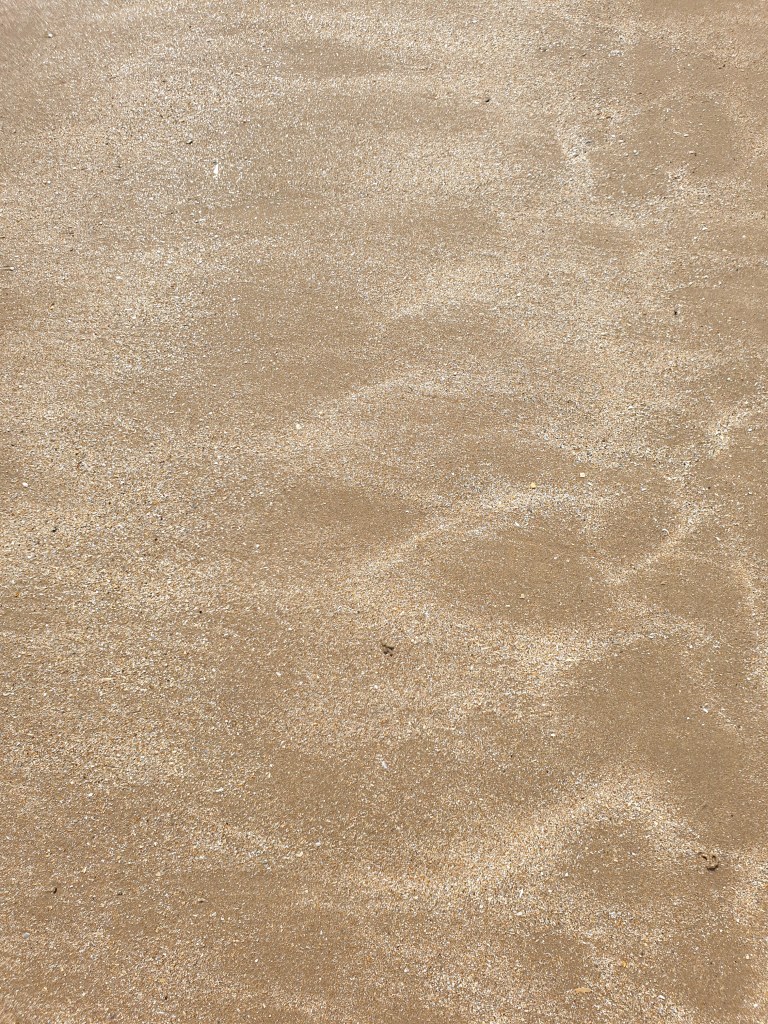
The sea can make tracks in the sand such as tide lines and ripples.
Water – Fresh Water
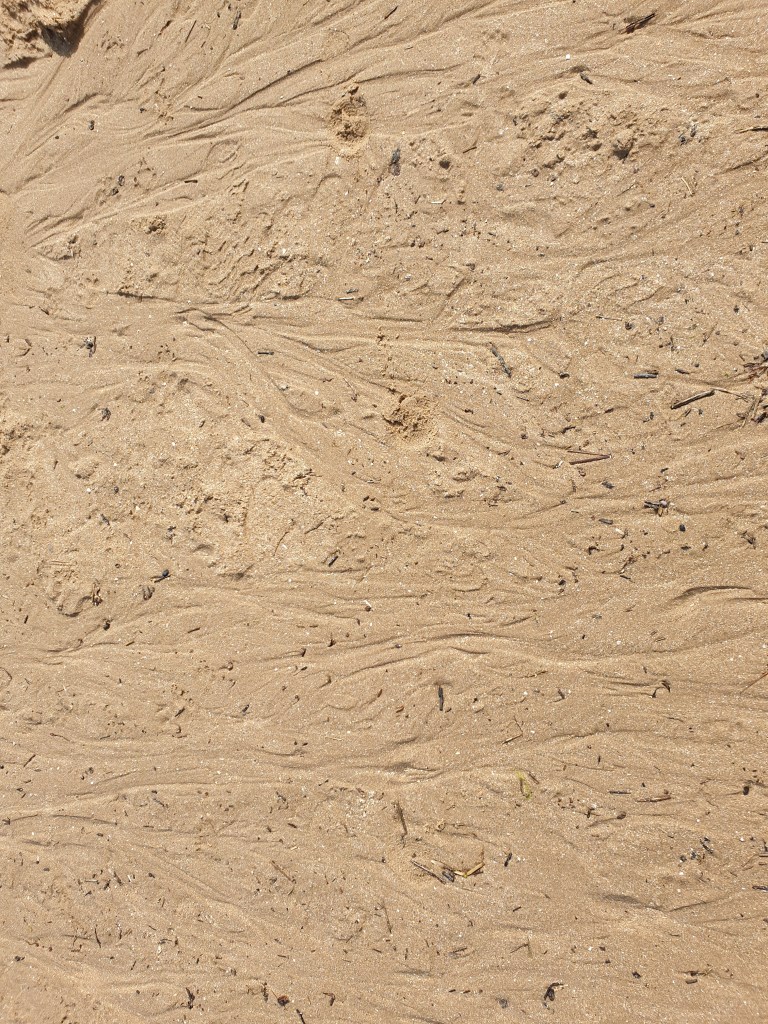
Fresh Water come down to the sea can also form patterns in the sand as it races to join the sea.
There is lots to see and track at the beach. What will you discover on your next visit?
 Sparrowhawk Bushcraft