30 Days Wild 2021 – Day 12 – Ponds/Lakes – Coots

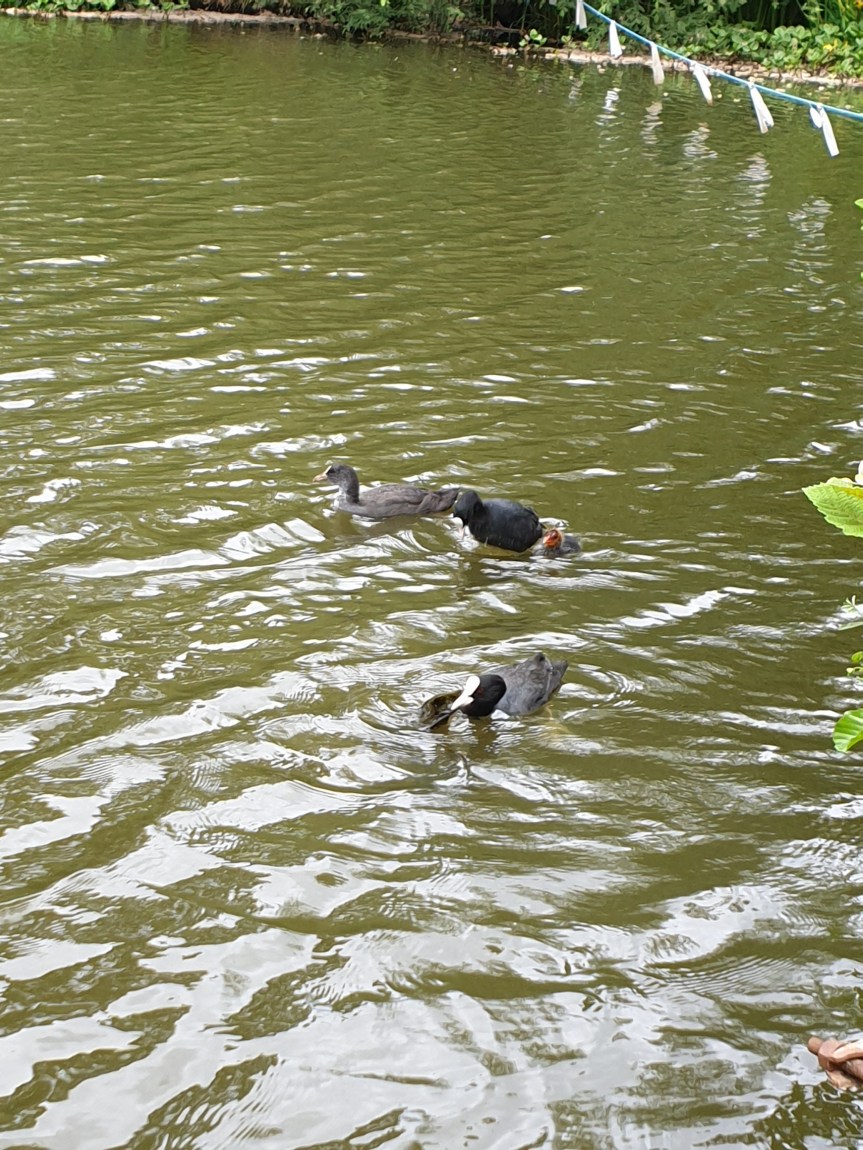
Sitting at the fishing lake today, a family of Coots (Fulica atra) were swimming around. The family were, mum, dad, juvenile and a baby.

Bit sad that there was only one baby with the as last weekend there were 2 others making 3. Thats the circle of life. Possibly taken by predators such as Pike, Heron or Fox. More likely to be a Pike as there are a couple of big ones on the pond/lake.

Coots are a water bird that make their nests in reedbeds or along the banks in cover. At the pond, they make a nest on a floating island so protected from preadators. Until they come out in the open.
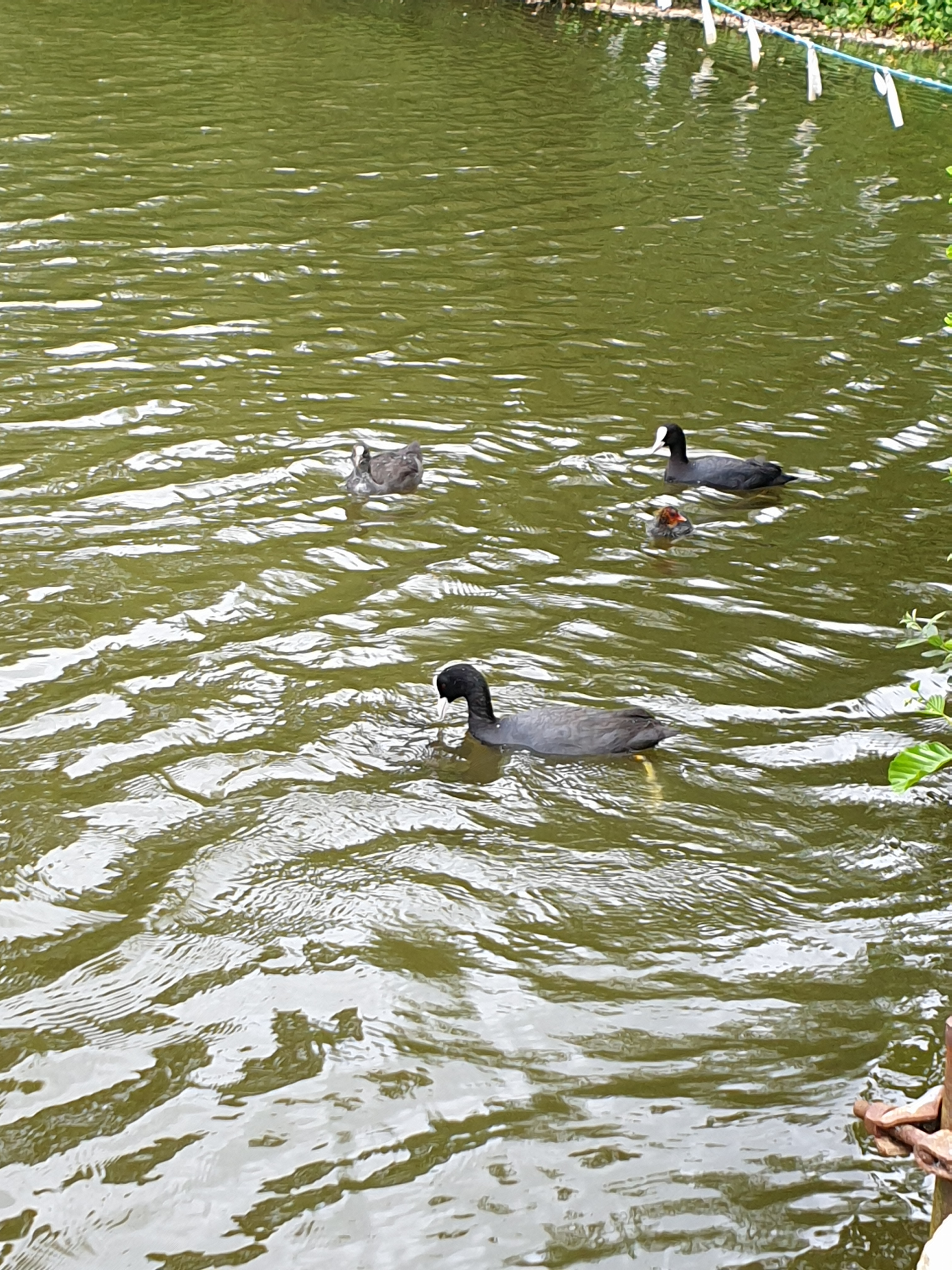
The Coot has a distinctive shield white bill marking on the front of their heads.

Hopefully this family will survive as is going forward.

There are other species of Coots that fall under the Genus Fulica.
30 Days Wild 2021 – Day 9 – Ponds/Lakes – Water Iris

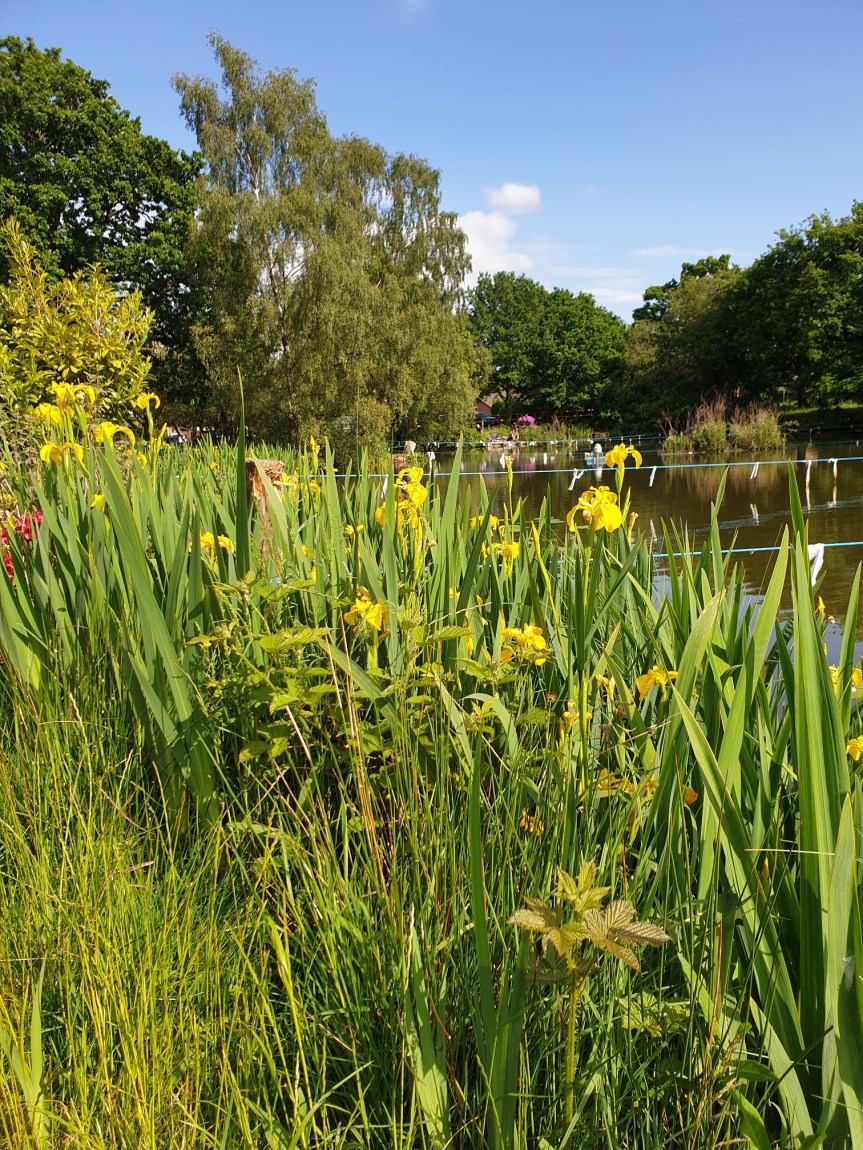
There are many species of Iris, an in the Water Iris area, again a lot of different species. For this blog post I am looking at the one that I see the most around Ponds/Lakes local to me which is the Yellow Flag Iris (Iris pseudacorus).

As you can see from the picture, it is growing in abundance at the local Pond/Lake.

This is a herbaceousperennial plant which flowers with a bright yellow flowers (up to 10cm in width) in the Spring. An Iris can grow between 100cm and 150cm tall and grows from a rhizome (root that runs horizontally in the ground). Due to the rhizome the Yellow Flag Iris can spread quickly along a bank of a pond/lake.

Once the flowers die away, they reveal a seed pod which can produce water-dispersed seeds which also allow the plant to spread.

It thrives in wetlands and banks along water.

If you keep one of these in your own pond you should repot or thin out every 2-3 years due to its growth spread.

The thick Iris provides a great habitat for insects, arachnids, dragon flies etc that live near to and along the waters edge.

At this time of year its great to see the banks thrive with the yellow colours provided by the Iris and thrive with wildlife that make it home.

30 Days Wild 2021 – Day 8 – Ponds/Lakes – Common Newt

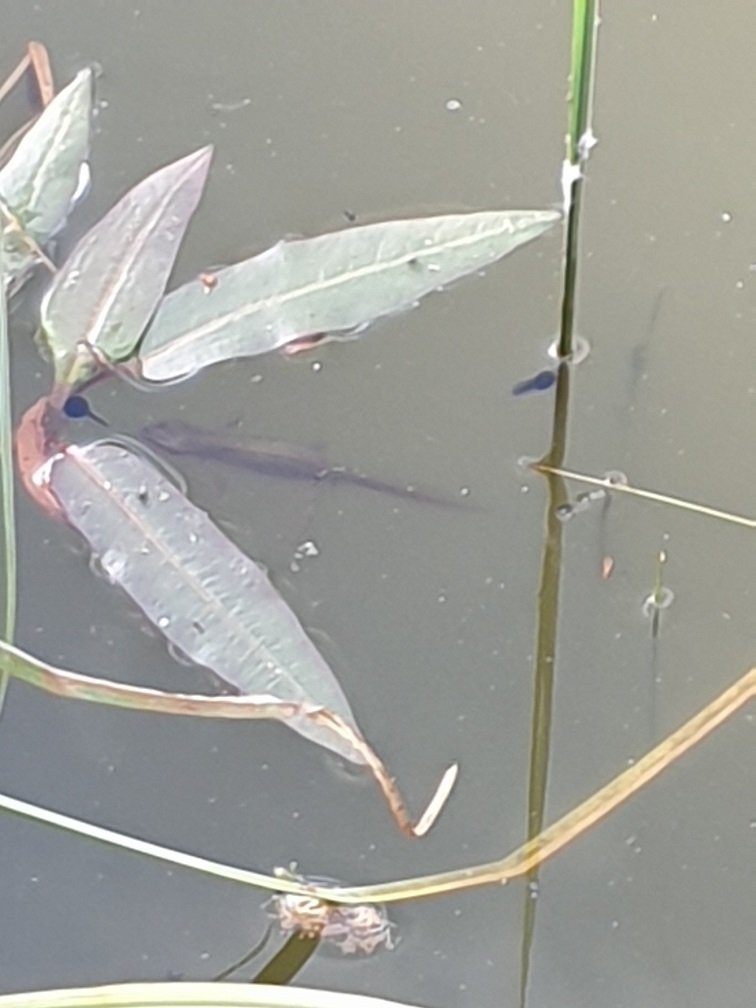
I was excited to spot a Common/Smooth Newt “Lissotriton vulgaris” in my own pond at home as well as the other day at the fishing lake. We have had frogs before, but as the pond has been establishing itself more life has appeared.

The plants in the pond needed some repotting which is when I spotted the common newt. It swam down into the pond weed before I could get a photo, but I’m sure it will be back to the surface sometime for its photo shoot.

There are several other species of Newts in the UK, Palmate Newt “Lissotriton helveticus” which is found in acidic soils such as heathlands and the Great Crested Newt “Triturus cristatus” which is found in ponds.

I could tell the one in my pond was a smooth/common newt due to its colouring (Grey/Brown) and smooth skin.

Adults grow between 8 and 11 cm long.

The smooth/common newt is the most widespread throughout the UK and Ireland.

Its great to have both Frogs and Newts in the garden to help with the control of grubs and insects.

Image below is of a smooth/common newt taken at the fishing lake/pond.

The bamboo cage around the pond is holding strong against the Heron which is back this year again, eyeing up the all you can eat buffet of fish, so at least this will help to protect the frogs and newts as well.

30 Days Wild 2021 – Day 7 – Nature Walking – Ponds/Lakes

I am lucky to have a small lake/pond nearby that I use on a regular basis for fishing (member of a club) and often sit on the bank not catching much, but appreciating the nature that is around. Its an open season pond so not affected by the course closed season on most rivers.

People often stop and ask, why do you fish? my response is simple. Just stop, listen for 5 minutes then you will understand. The stillness of the water, the bird song filling the air, the flowers around, its not always about catching any fish, but being with nature.

This is one of my favourite times of year as a lot of things happen, such as the Lilly Pads start to appear and the flowers will soon follow. The banks are alive with plant and insect life.

Whilst I was on the bank it was great to watch the myriad of tadpoles rising to the surface for a bit and then diving back down to the depths. A newt appearing and basking in the sun, just under the surface, whilst water boatmen skim along the surface as easy as we walk along the pavement.

Yellow flowers of the Iris that adorn the bankside blooming, whilst the nettles and brambles try to take hold.

I will break down more about the pond in future blogs.

Next time your at a pond or lake, stop, listen and see – what will you discover.

A Pond – 30 Days Wild (Day 1)

Pond30 Days Wild is run by the Wildlife Trusts (https://www.wildlifetrusts.org/). There is still time to sign up to the 30 days wild and recieve your downloadable pack and activities.

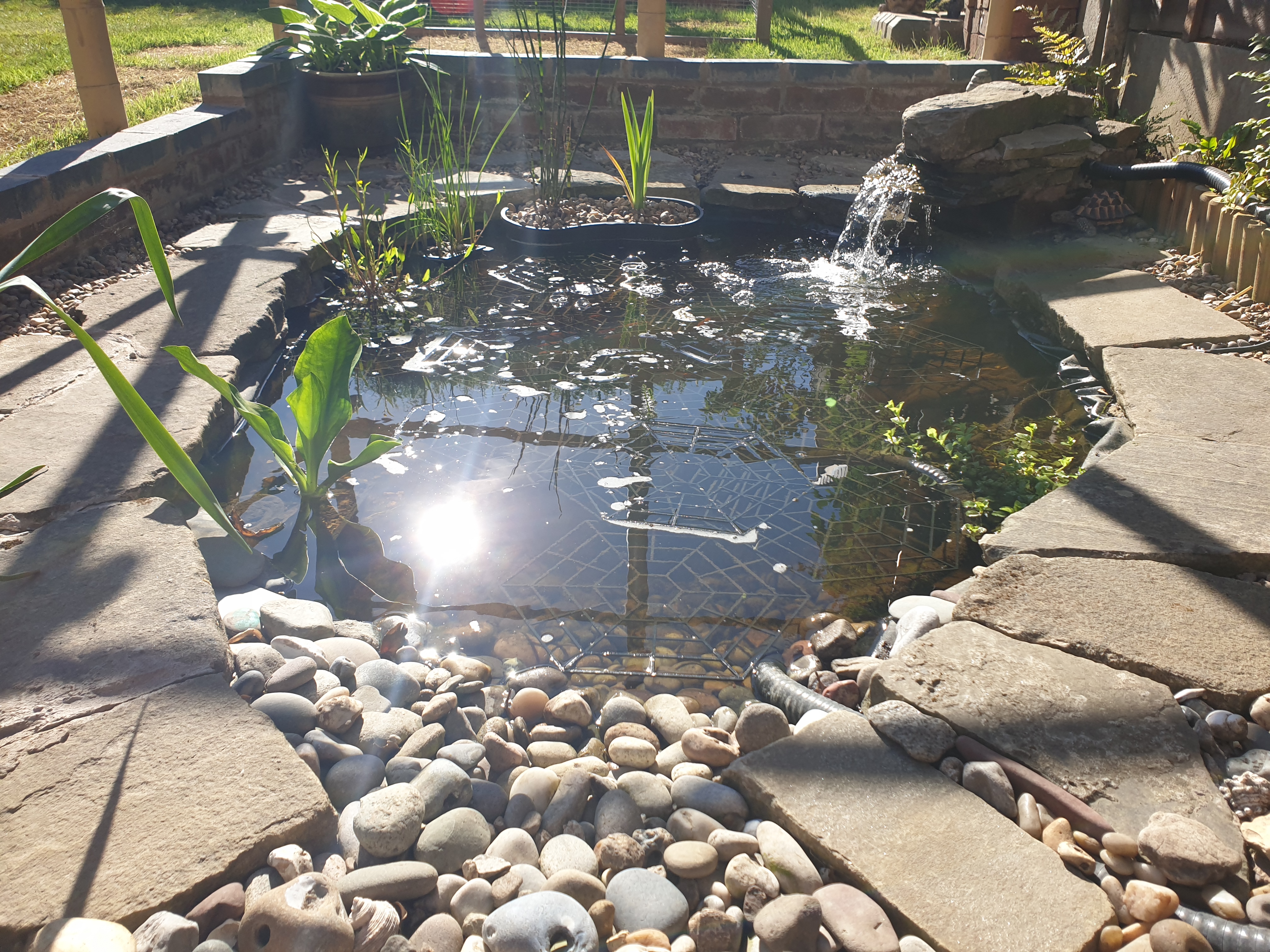
For the first day here is the Pond I set up in my garden. The build started back in September last year digging out the ground. I have gone for a 1 shelf design with a deeper part for wildlife to be safe during the colder winter months.

One part of the design that was important to bring in is the sloping shelf on the front of the pond to allow any wildlife to get out of the pond such as frogs, but also incase anything falls in an needs to get out. This is where the stones come in on a slope to give a good footing and escape route.

The plants put in are growing well and provide balance with absorbing nitrates etc from the water.

There are a few goldfish and the hexagons on top of the pond help deter the local Heron who has paid a visit to the gardens around before. Added some tubes at the bottom of the pond for the fish to hide in as well which they like.

A waterfall helps provide a way to oxygenate the water as well as some pond weed and plants.

What is amazing is the way that nature finds ponds. We already have frogs and tadpoles as well as some pond snails.

With all the warm weather recently the pond has become an oasis for widlife with Bumble Bees landing on the stones to take a drink before carrying on their journey.

Of course you dont need to go to this full extent of building a big pond. An old washing up bowl buried into the garden and filled with water and maybe a couple of pond plants is enough to attract wildlife into your garden.

Building homes for nature in our gardens is important to help maintain the balance in your gardens and in life.