30 Days Wild 2022 – Day 1 – Pond Update

Another year on and 30 Days June is here again. My posts have been seriously lacking in between and hope to fix that going forward. Though I would start this years 30 Days of June with an update on my pond.

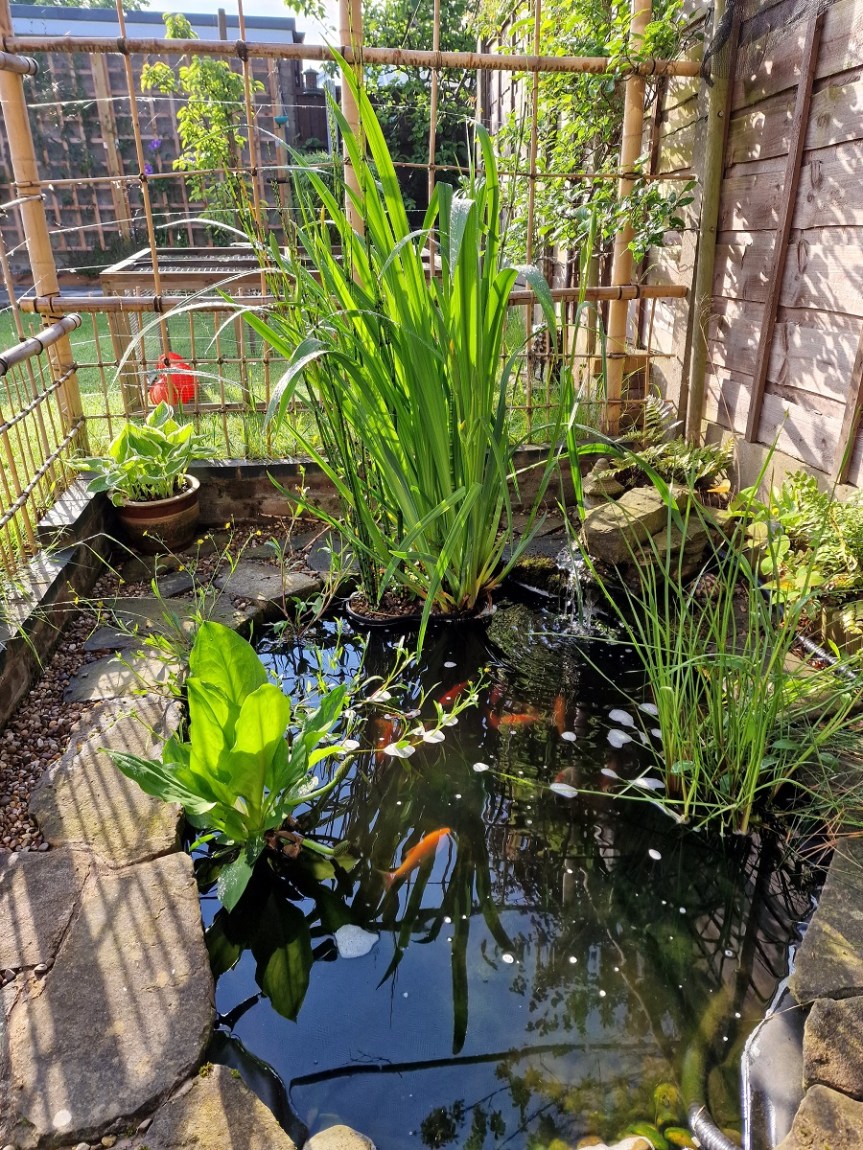
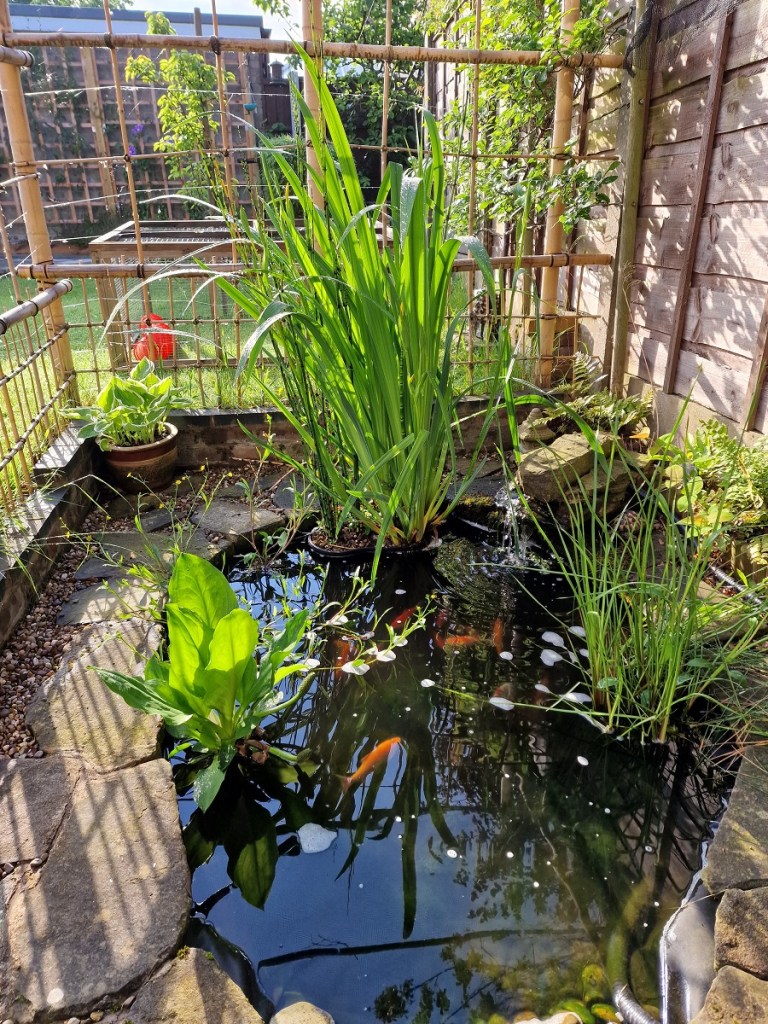
Since building the pond a few years ago it has become established and a focal point for wildlife in the garden. The Heron still appears and can only look at the all you can eat Heron buffet without the eating part due to the bamboo cage. Most of the lashing had to be replaced on the cage as the twine I first used had degraded, but it is holding strong. The cage provides a lot of nooks and places for spiders to hide and build their webs on feasting on the flies and insects that visit the pond.

Frogs have visited and their offspring have become tadpoles which hide well from the fish within the stones and pebbles forming the slope at the end of the pond offering any animal that wanders in an easy way out of the water.

The plants are thriving well and providing a source of shade and stability to the water. The Iris has grown from a small garden centre purchased plant to a large feature and looks like it might actually flower this year.

Having a pond in a garden no matter how big, is a great way of attracting wildlife of all sizes and worth while investment of time in making it and sitting and watching it flourish.
30 Days Wild 2021 – Day 29 – Ferns

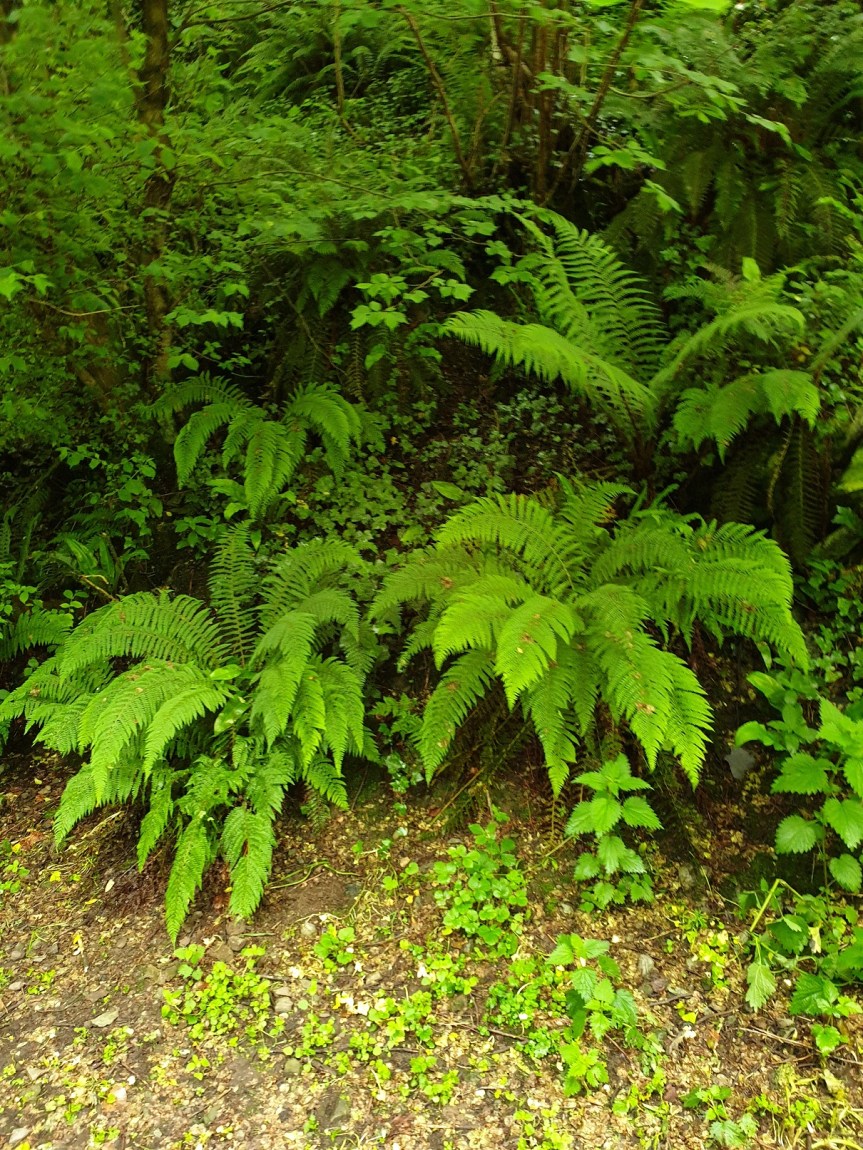
Ferns (Pteridological) have been around a very long time in terms of the history of the earth, around 360 million years ago.

The Victorians had a craze for Ferns adding then to many gardens and features, also creating large Fernery’s in which to display them.

Ferns are part of the UK’s landscape from Coastal to Woodlands and host a variety of species. They provide cover for animals and homes for others, big and small.

The British Pteridological Society have an excellent Fern Guide PDF that you can download to help identify species. Covers:

  • Hart’s tongue fern (Asplenium scolopendrium)
  • Hard fern (Blechnum spicant)
  • Common polypody (Polypodium vulgare)
  • Male fern (Dryopteris filix-mas)
  • Golden-scaled Male-fern (Dryopteris affinis)
  • Soft shield fern (Polystichum setiferum)
  • Lemon-scented mountain fern (Oreopteris limbosperma)
  • Lady fern (Athyrium filix-femina)
  • Broad buckler-fern (Dryopteris dilatata)
  • Hay-scented buckler-fern (Dryopteris aemula)
  • Bracken (Pteridium aquilinum)
  • Oak fern (Gymnocarpium dryopteris)
  • Beech fern (Phegopteris connectilis)
  • Maidenhair spleenwort (Asplenium trichomanes)
  • Wall-rue (Asplenium ruta-muraria)
  • Black spleenwort (Asplenium adiantum-nigrum)
  • Rusty-back fern (Asplenium ceterach)

Additional Reading

30 Days Wild 2021 – Day 28 – Nature Walk – Honeysuckle

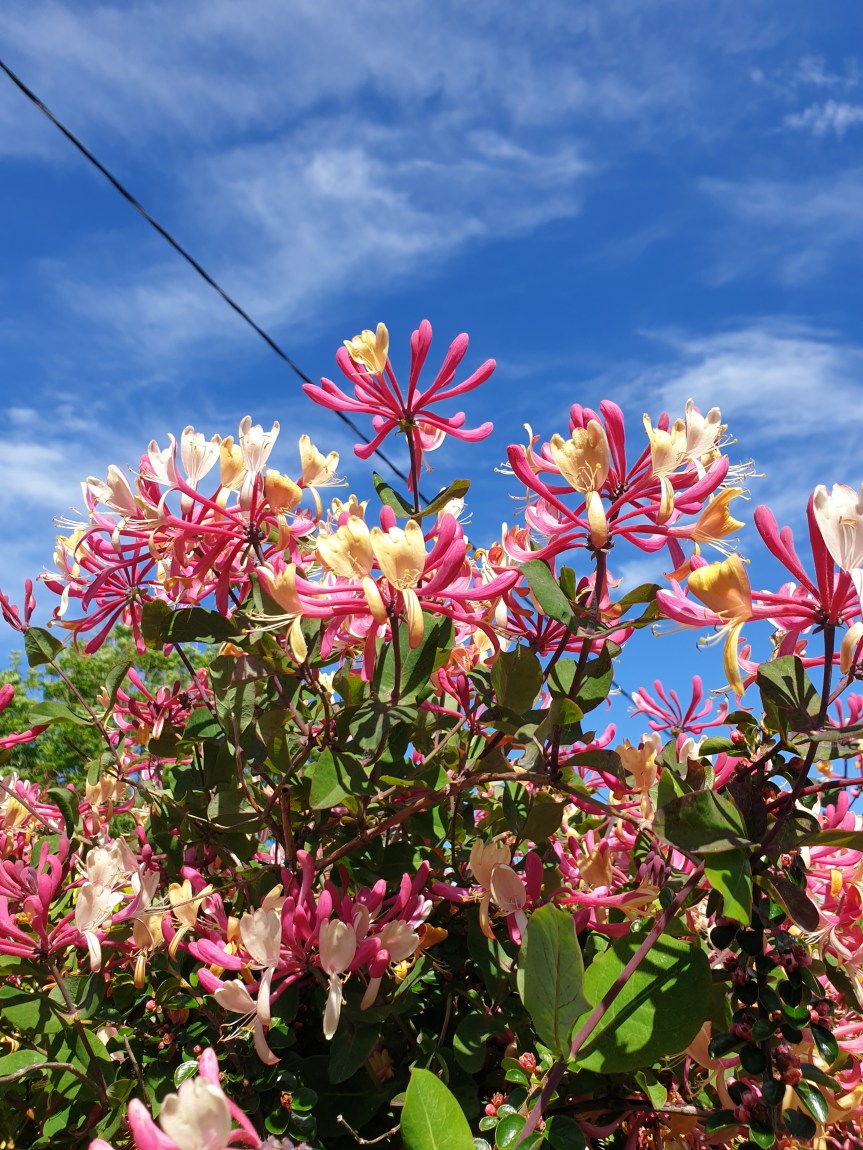
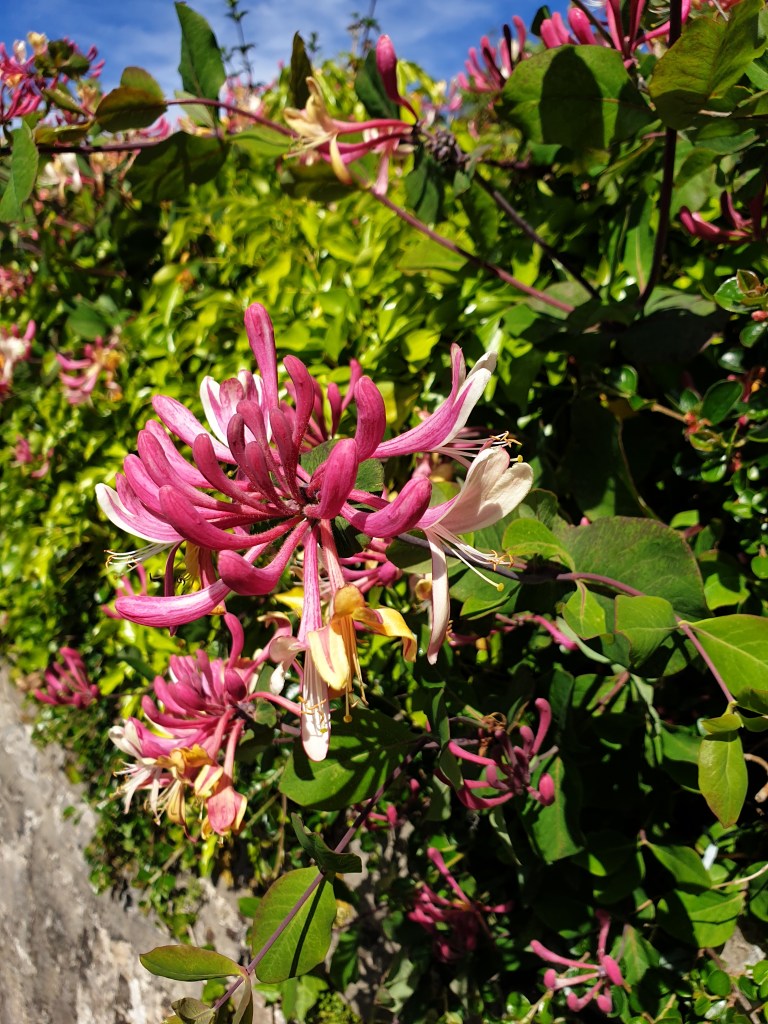
Honeysuckle (Lonicera aaaa) insert name where aaaa equals one of around 180 species is another plant that you can find in both gardens and hedgerows.

The Honeysuckle is both a hardy climber and a shrub with scented flowers that attract a myriad of insects, butterflies and bees to feast on the nectar. In the autumn the flowers change to bright red berries that birds feed on helping to spread its seeds.

There are many different flowers colours, but the one that I normally come across is the pink and cream flowers that are shown in the pictures.

Honeysuckle flowers can be used to make a sweetly scented tea, however the berries are poisonous so stay away from them. Do your research first of course on how to make the tea and forage sensibly and within the law.

30 Days Wild 2021 – Day 27 – Nature Walk – Ivy

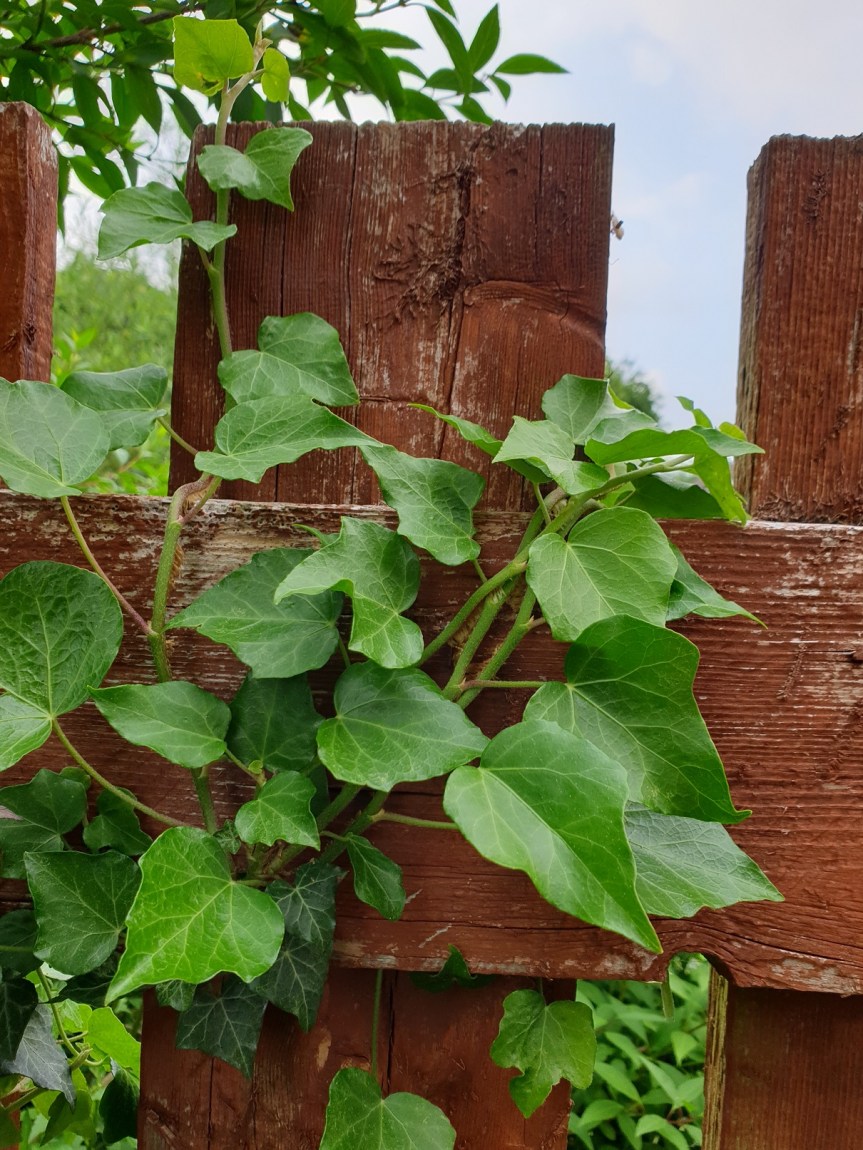
Ivy is one of those plants that makes its home where it wants to and grows along the ground or up trees and structures.

Its tendrils sprout roots every so often that take old in wood or brick and help anchor the plant to its position, so it can continue its journey upwards or outwards.

It can transform a building into looking idyllic with a green covering over the bricks or add a green foliage to the trunk of a tree and make it look green throughout the seasons. Underneath though the Ivy is slowly sucking moisture out of the wood and bricks making it dry, soft and brittle.

Several varieties of Ivy have been classed as an invasive species due to their spread and damage.

In the right places Ivy can look good, but in the wrong places it can cause untold damage.

Ivy belongs to the genus Hedera and there are many species across the world.

Ivy has some good uses such as a cordage when the vines are soft and supple. It can also be used to weave baskets.

Certain Ivy’s have been shown to have medicinal properties and have anti-inflammatory properties.

Ivy is also associated with Christmas and is often a component of wreaths and other festive decorations.

In some countries though certain species of Ivy is poisonous and should only be handled in the correct method and wearing protective equipment.

30 Days Wild 2021 – Day 26 – Nature Walk – Poppy

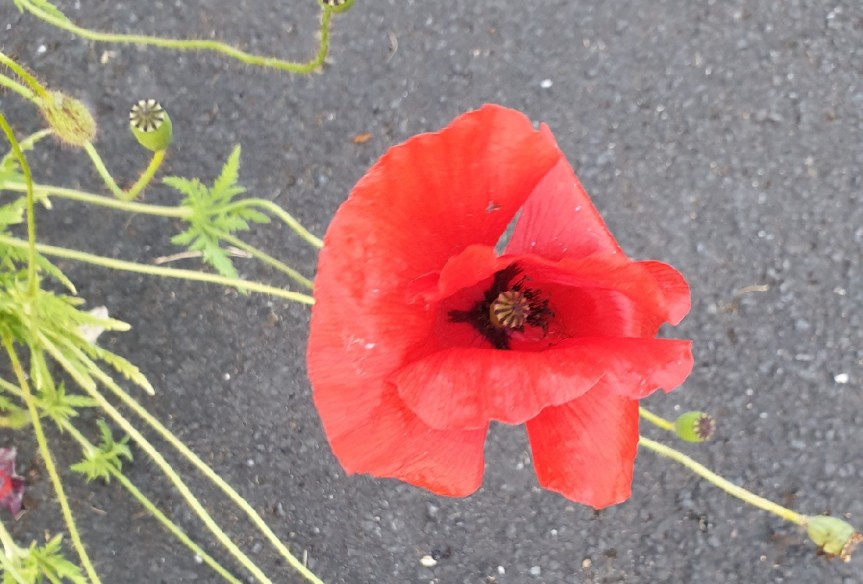
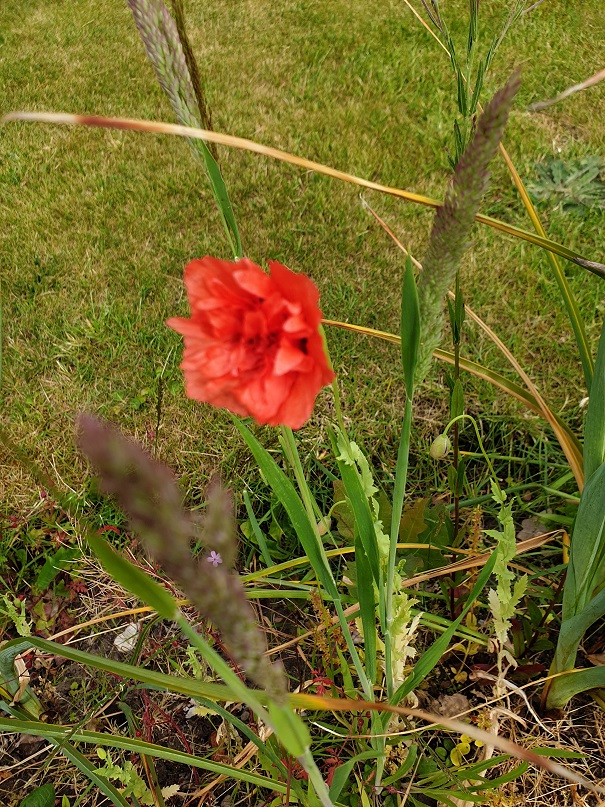
The Poppy is one of the most recognisable flowers of the UK countryside and across the world due to its links to remembrance parades and the poppies growing in the fields of previous war battles (Flanders Fields). It is also used in medicine to produce pain killers and other uses.

Growing in fields, along roadsides and in gardens the Poppy is easily recognisable due to its red flowers, however poppies are not always red and can be yellow, purple, orange or even white.

Poppy seeds are used in culinary dishes such as Turkish poppy seed cake or sprinkled across the top of bread.

There are many different varieties of poppy (List below from Wikipedia) that grow across the world.

When the poppies age towards autumn, they form dried seed pods that act as shakers in the wind and spread the Poppy Seeds for the next plants to grow.