30 Days Wild 2022 – Day 1 – Pond Update

Another year on and 30 Days June is here again. My posts have been seriously lacking in between and hope to fix that going forward. Though I would start this years 30 Days of June with an update on my pond.

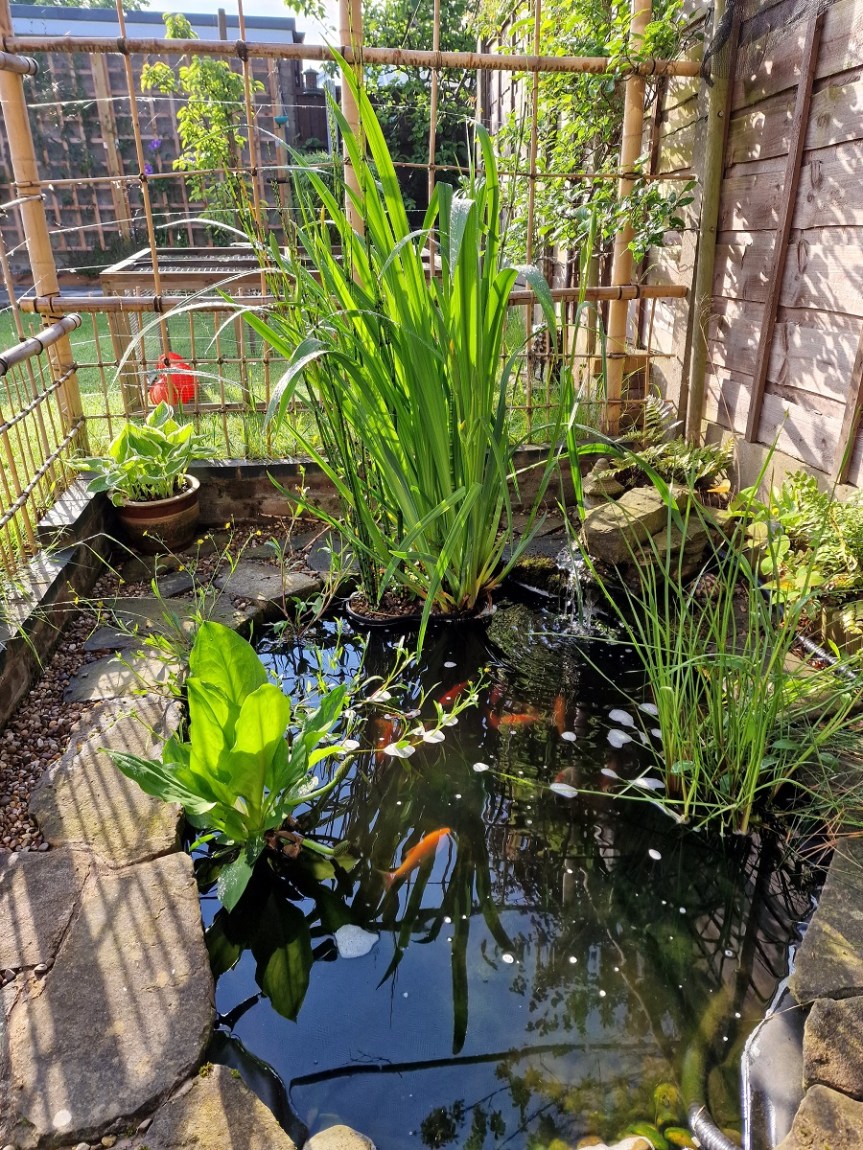
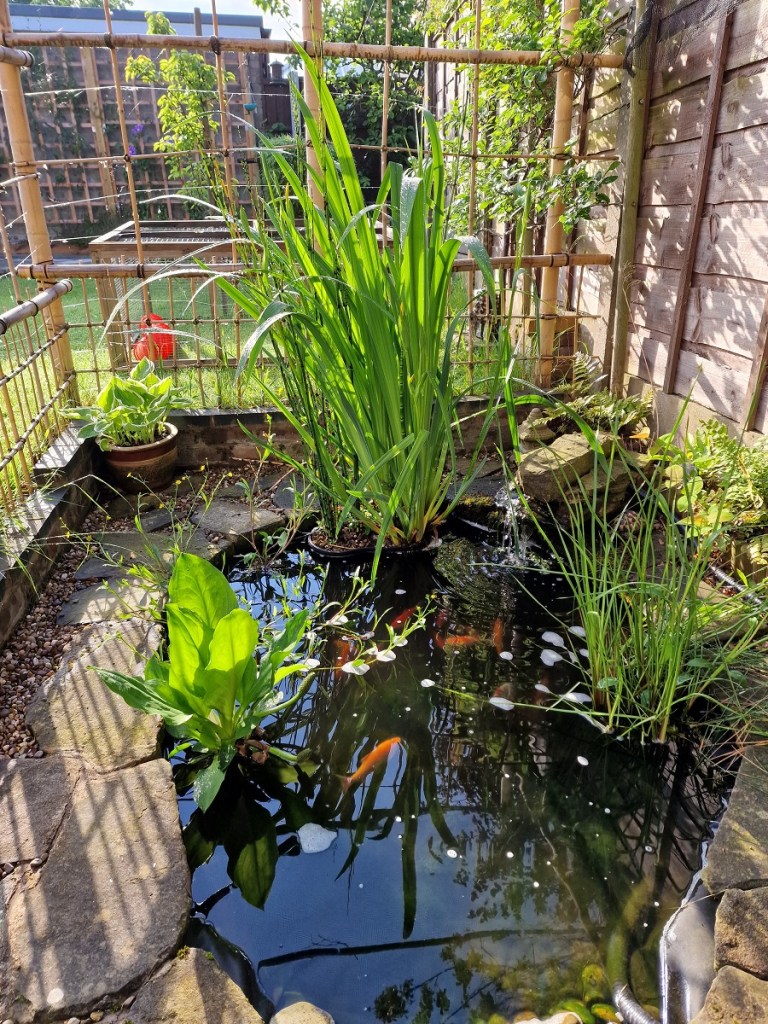
Since building the pond a few years ago it has become established and a focal point for wildlife in the garden. The Heron still appears and can only look at the all you can eat Heron buffet without the eating part due to the bamboo cage. Most of the lashing had to be replaced on the cage as the twine I first used had degraded, but it is holding strong. The cage provides a lot of nooks and places for spiders to hide and build their webs on feasting on the flies and insects that visit the pond.

Frogs have visited and their offspring have become tadpoles which hide well from the fish within the stones and pebbles forming the slope at the end of the pond offering any animal that wanders in an easy way out of the water.

The plants are thriving well and providing a source of shade and stability to the water. The Iris has grown from a small garden centre purchased plant to a large feature and looks like it might actually flower this year.

Having a pond in a garden no matter how big, is a great way of attracting wildlife of all sizes and worth while investment of time in making it and sitting and watching it flourish.
30 Days Wild 2021 – Day 20 – Ponds/Lakes – Ruffe

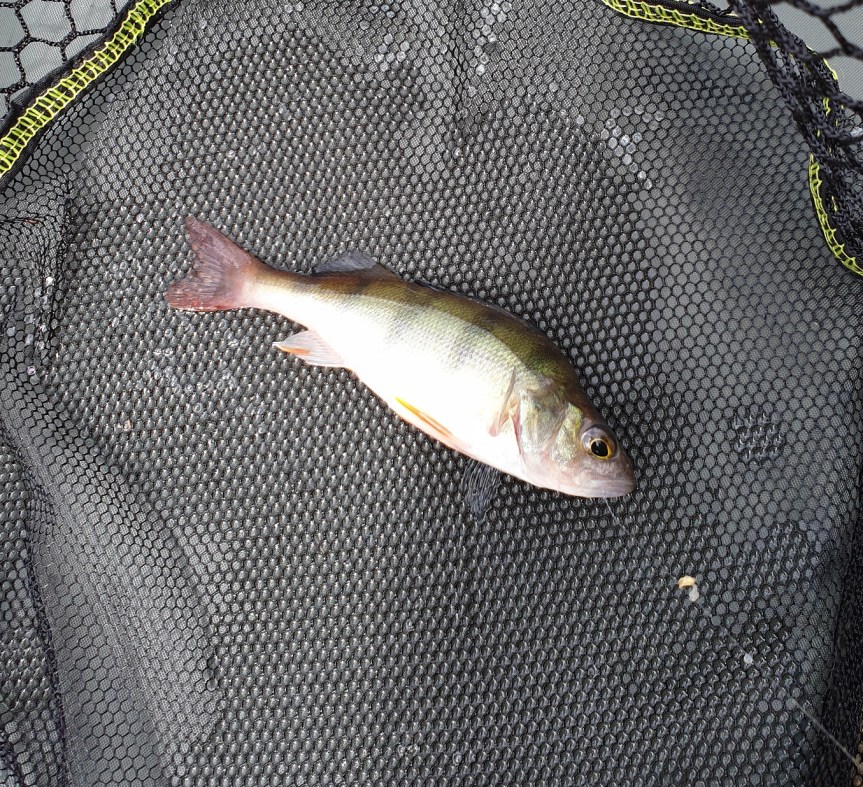
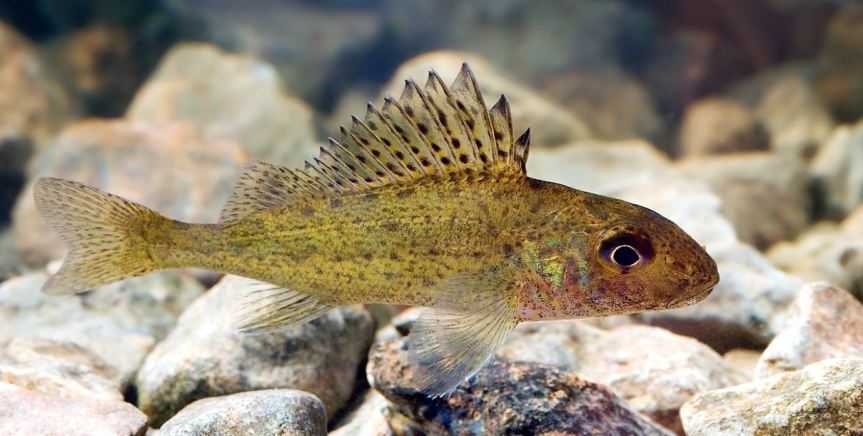
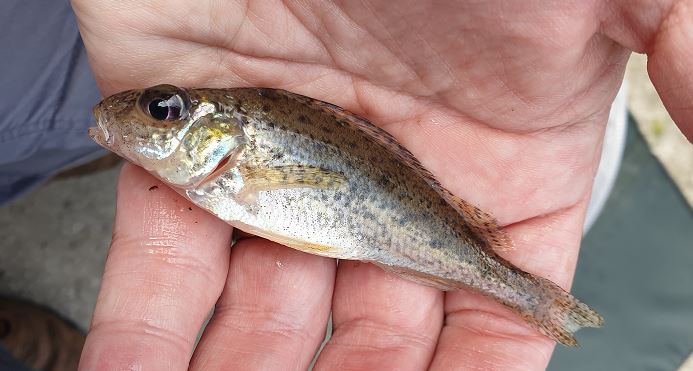
The Ruffe (Gymnocephalus cernuus) was a fish that I wasn’t really aware of until I caught one at the weekend during one of my fishing trips. After doing some research into this fish, its surprising what you find out.

Sometime referred to as Pope or Tommy Ruffe, the Ruffe is related to the Perch and is often mistaken as a Perch by Anglers who have not seen one before.

A shoal fish that likes slow waters such as canals, lakes and some slow rivers, it can grow as big as 25cm, but normally found around 10cm (ish).

In some areas of the world, the Ruffe is causing some issues, such as in Lake Superior in the US and Loch Lomond in Scotland, where it is having an effect on the ecology of the lake eating larvae, small aquatic bugs and fish eggs of other spawning species. Its a fast breeder with a single female laying between 130,000 to 200,000 eggs a year.

Like the Perch its important to watch the spikey dorsal fin when unhooking and returning to the water.

30 Days Wild 2021 – Day 14 – Ponds/Lakes – Perch

Following on from yesterdays post on Pike, today I am looking at the Perch (Perca fluviatilis), another predator in Ponds and Lakes.

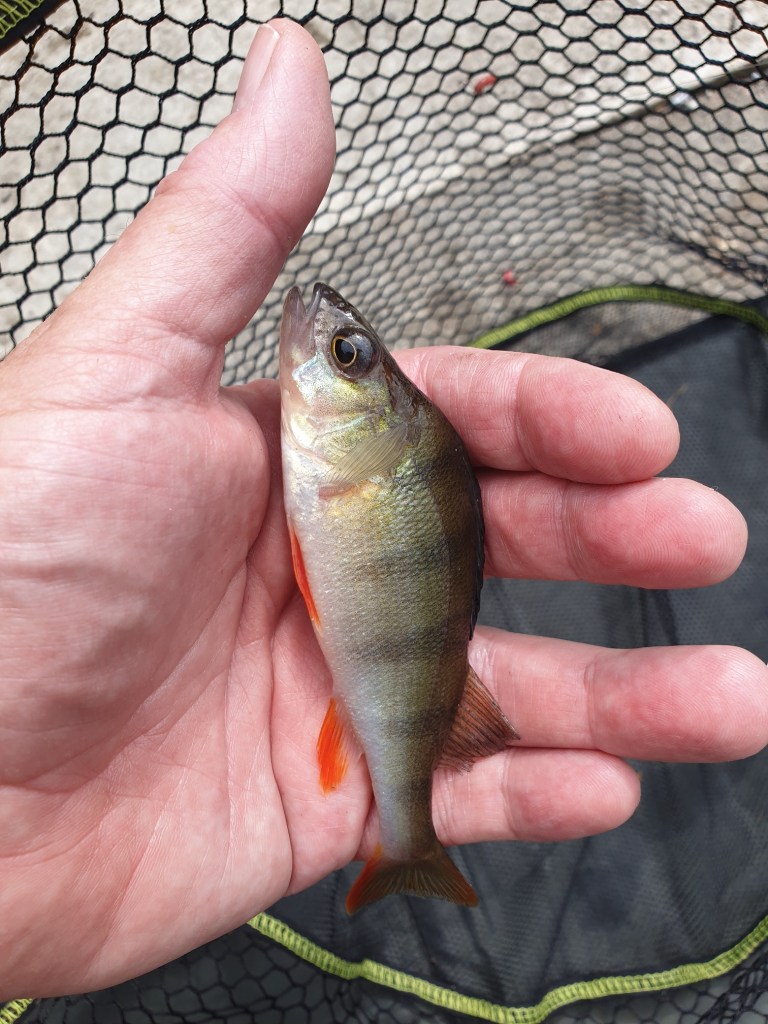
The Perch is one of my favourite fish and one that I do catch more than any other. It has a set of distinctive tiger strip markings of a deep green that stand out against the lighter greens along is body. Although the two Perch in these photos are small ones, the biggest Perch in the UK caught weighed in at 6lb 3oz, but its is expected that a bigger Perch is out there to be caught.

Along the back of the Perch a spiny dorsal fin gives it a distinctive look when in the water. Almost like its supposed to be in Jurassic Park.

A typical Perch can live between 10 and 12 years and lives in most of the UK’s canals and waterways.

Perch hunt for smaller fish and crayfish along waterways and thrive in gravel pits.

As with all my catches, fish care is number 1.

30 Days Wild 2021 – Day 13 – Ponds/Lakes – Pike

Following on from yesterdays post about Coots, today I’m looking at the Pike (Esox), which has most probably eaten a couple of the Coots babies as they paddled around on the surface. To a Pike the dark silhouette of something small making some splashing patterns is easy prey. They have also attacked people before – Man attacked reaching from sunglasses after they have fallen into a canal.

Don’t panic though and “We won’t need a bigger boat!“. As an angler, this is a fish that deserves respect and definitely care when handling as these fish can be big and do have some sharp teeth. They are strong and can easily thrash about when caught and its one to learn how to handle them before going to catch one. After care is essential!

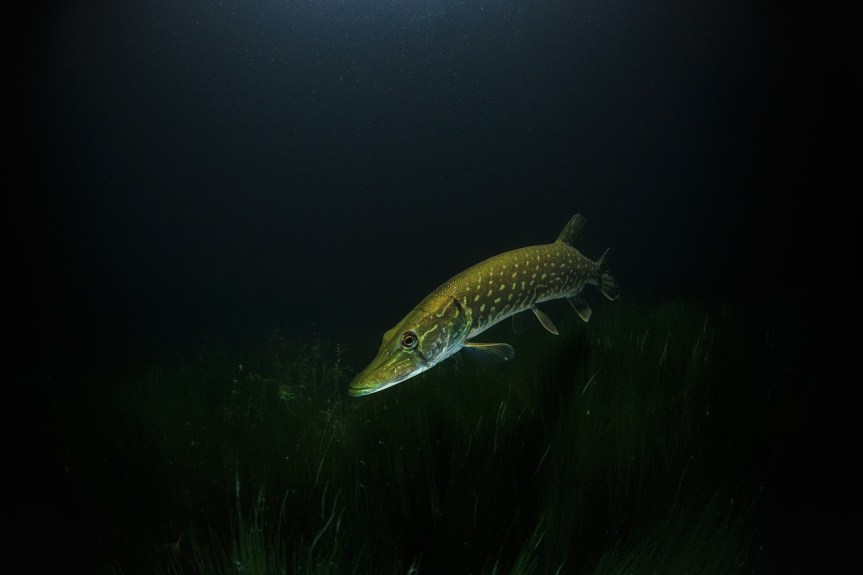
Pike live in ponds/lakes, canals and rivers and are one of the top predators of the water. They belong to a genus called “Esox”. The Pike that live in the UK are Northern Pike (Esox lucius) and grow to around 50cm.

There have been some record Pike caught measuring up to 150cm and weighing around 28kg.

Pike can breed from the age of 2, and Pike have been known to change sex if there are only males in a water.

Where food sources are scarce Pike will turn to cannibalism and eat other Pike for food. Newborns start with small prey such as daphnia and then as they grow, they move to bigger prey. Large Pikes have been seen to take an adult duck.

They glide effortlessly in the water and will use bursts of energy to chase down any prey the sight. Certainly one of the top predators in UK waters.