If you have been looking on the beach, lifted up a rock and spotted small creatures resembling a shrimp like shape and moving around on their sides. These are probably Sandhoppers.
Normally located between the upper and lower tide marks under rocks and in seaweed.
Sandhoppers or “Amphipods” tend to move on their sides rather than hop with a sprung tail, but when they do can reach a good distance. Usually when disturbed.
Following on from yesterday’s post on Seaweed, today I am concentrating on the humble Shore Crab and another that we found a Masked Crab.
Shore Crab
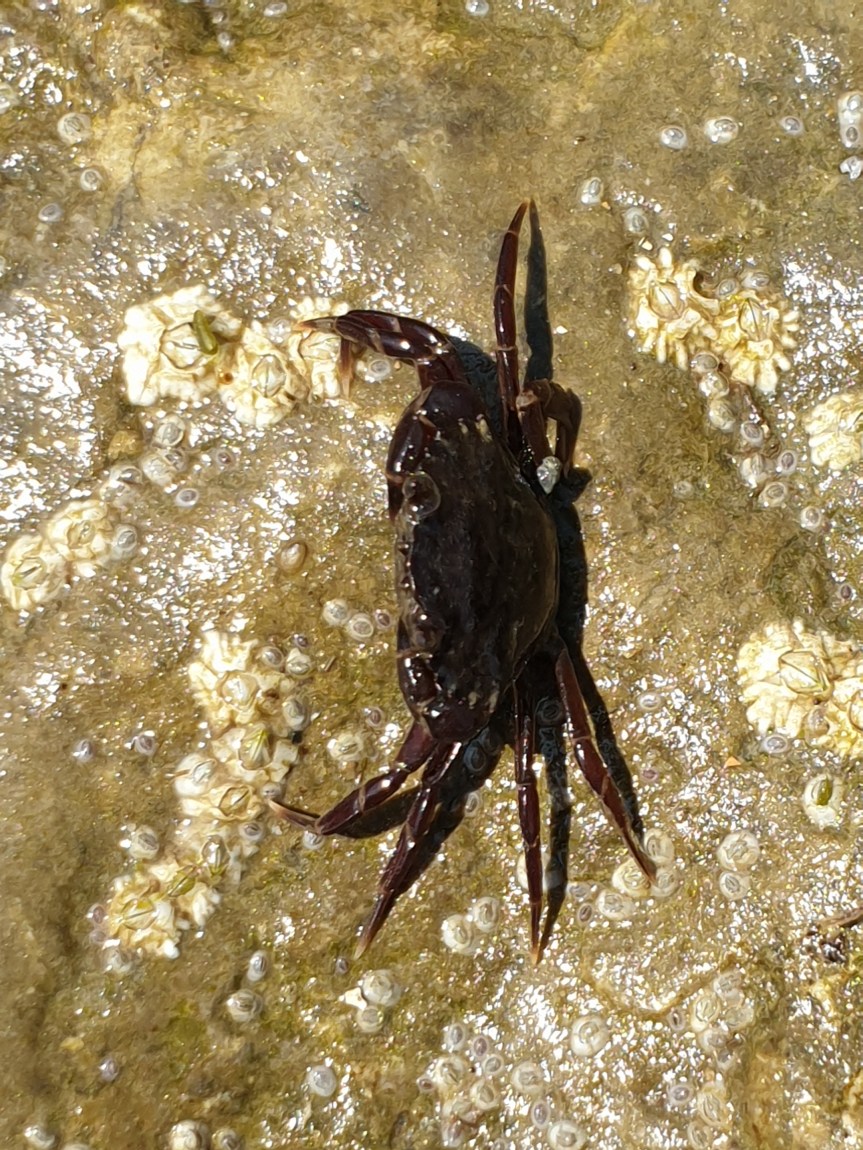
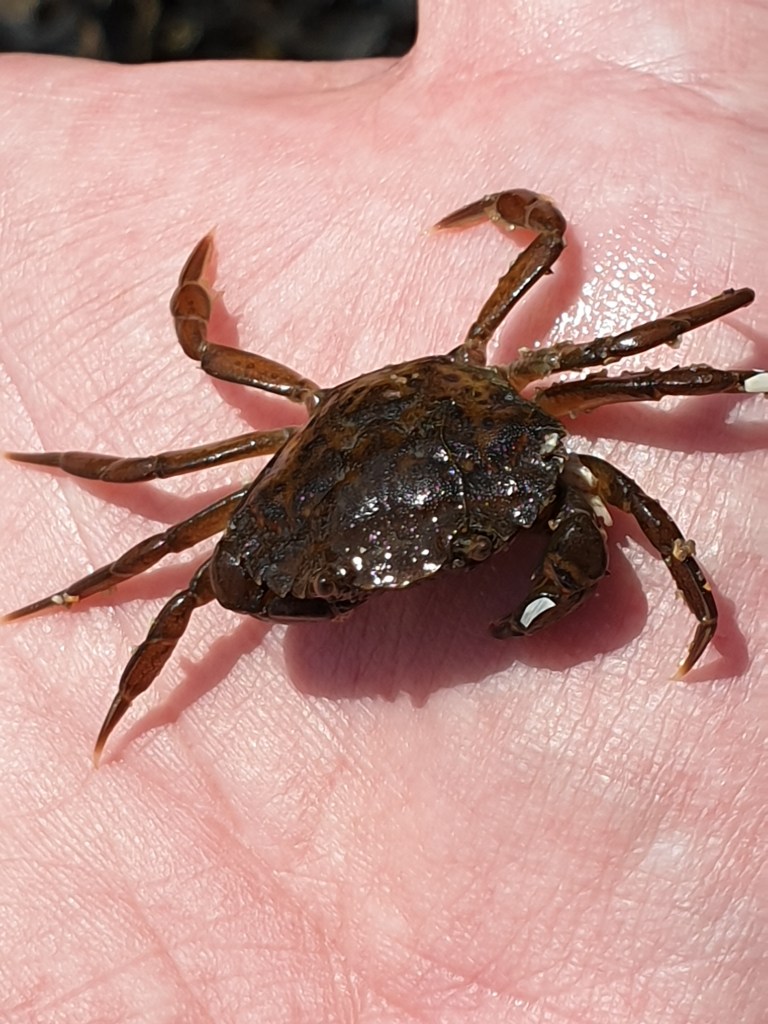
The Shore Crab is is the most common crab that you will find when Rockpooling or lifting Seaweed and Stones on the beach.
“Carcinus maenas” the “Shore Crab” also known as “Green Shore Crab” can be found on the majority of beaches in the British Isles.
Shore Crab “Carcinus maenas”
Shore Crabs can grow between 1 to 4 inches. Its shell/carapace typically has three blunt teeth between its eyes, however on smaller Shore Crabs the may be indistinct. On each side of the shell past the eyes there are five sharper teeth.
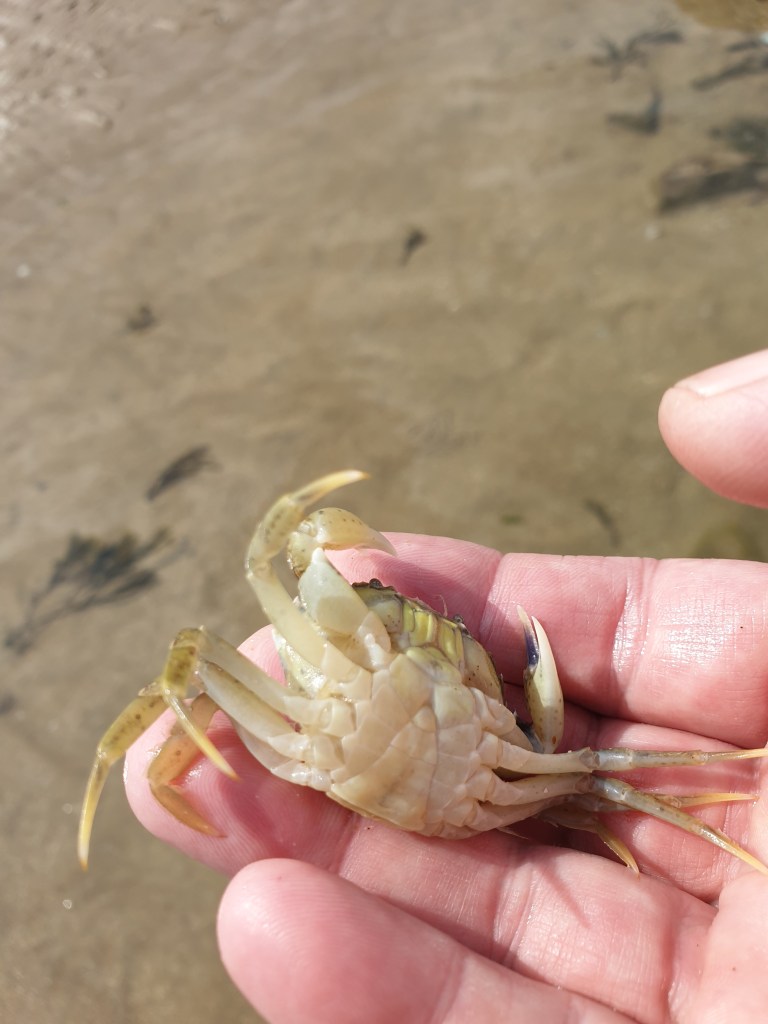
The way that you can tell a male and female crab apart is down to the number of joints on its tail. Yes a crab has a tail, which is folded under its belly and you can see it when you turn them over. Carefully of course and especially if you are holding a larger crab with big pincers!
Underside of the crab. The tail is the triangle towards the rear. This one is a male.
A male has a five jointed tail, whereas a female has seven joints.
As with most crabs there are 4 pairs of legs and a set of pincers. If you look at the back legs you will see that they are flatter and used to help the crab swim.
Masked Crab
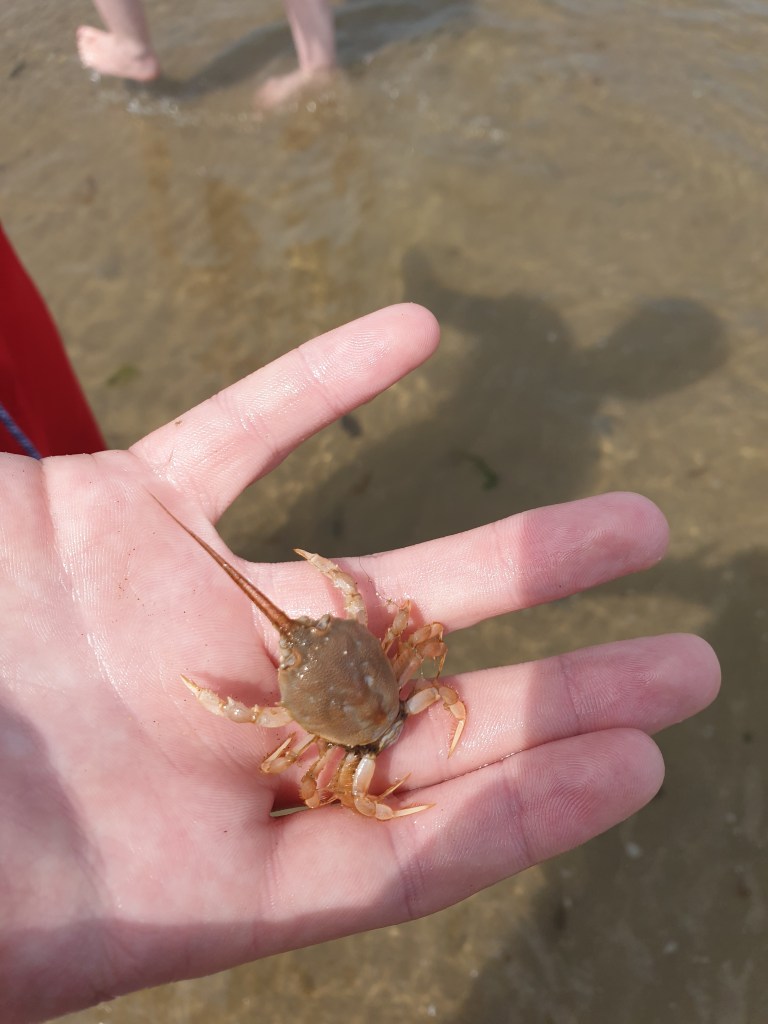
We did find another species called a “Masked Crab” or “Corystes cassivelanus”. A distinctive shape with long antenna at the front.
The Masked Crab is between 1 and 1.5 inches long. The marking on the shell can look like a human face.
Masked Crab – “Corystes cassivelanus”
Males have pinchers twice the length of the body whereas the females are not longer then their body. With three teeth marked in the shell on either side of the carapace.
This was a female and was laiden with eggs so she went straight back where we found her.
Once you have found and looked at the crab, put it back where you found it and put any Seaweed and rocks back in place.
A beach is a great place to discover wildlife as well as catch some rays of sun.
If you go to a beach with rocks, you can usually find a lot of different species in the rockpools. You don’t always need to look in rockpools either.
The beach I have recently been on only had a few shallow rockpools that didn’t hold much, but had lots of seaweed covered rocks. The seaweed was very dense and I could imagine the tide being in and it forming a vast underwater forest for sea life to habitat.
So whilst the normal person was happy looking in the few rockpools, I was moving seaweed gently to find an abundance of life.
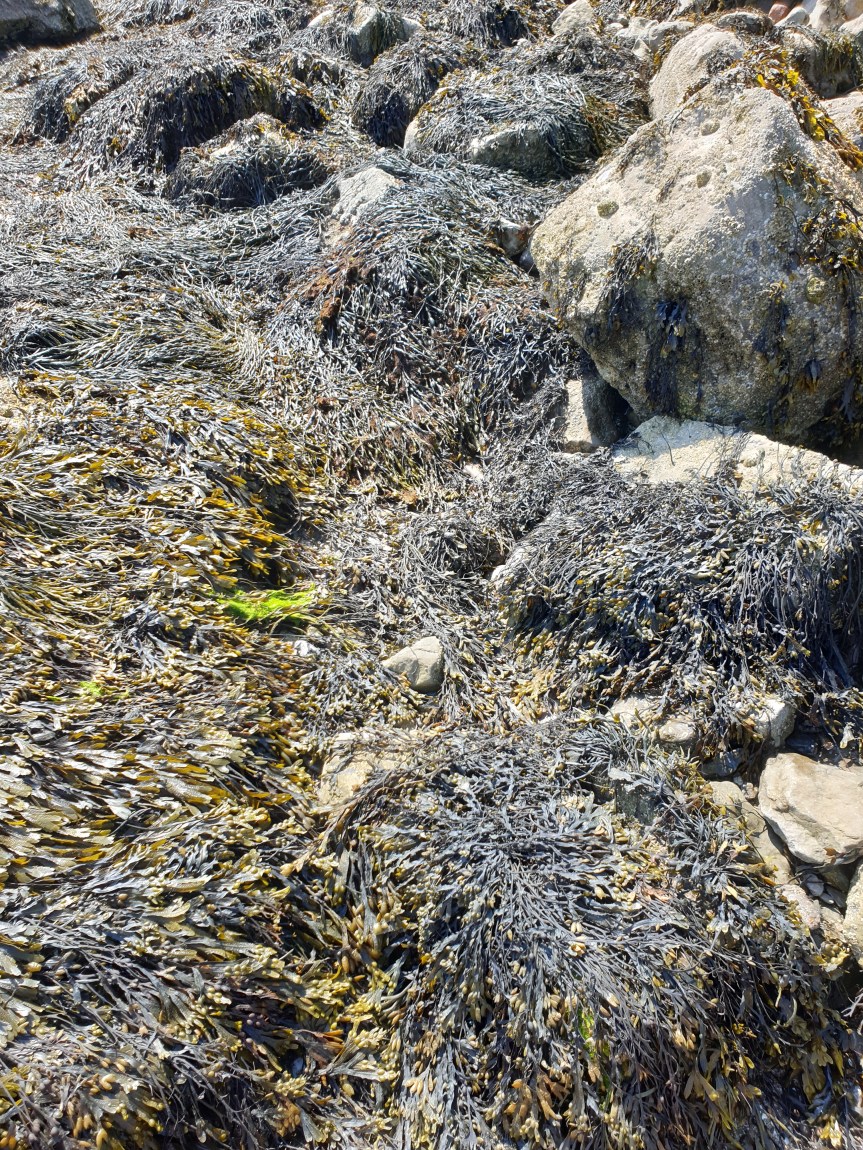
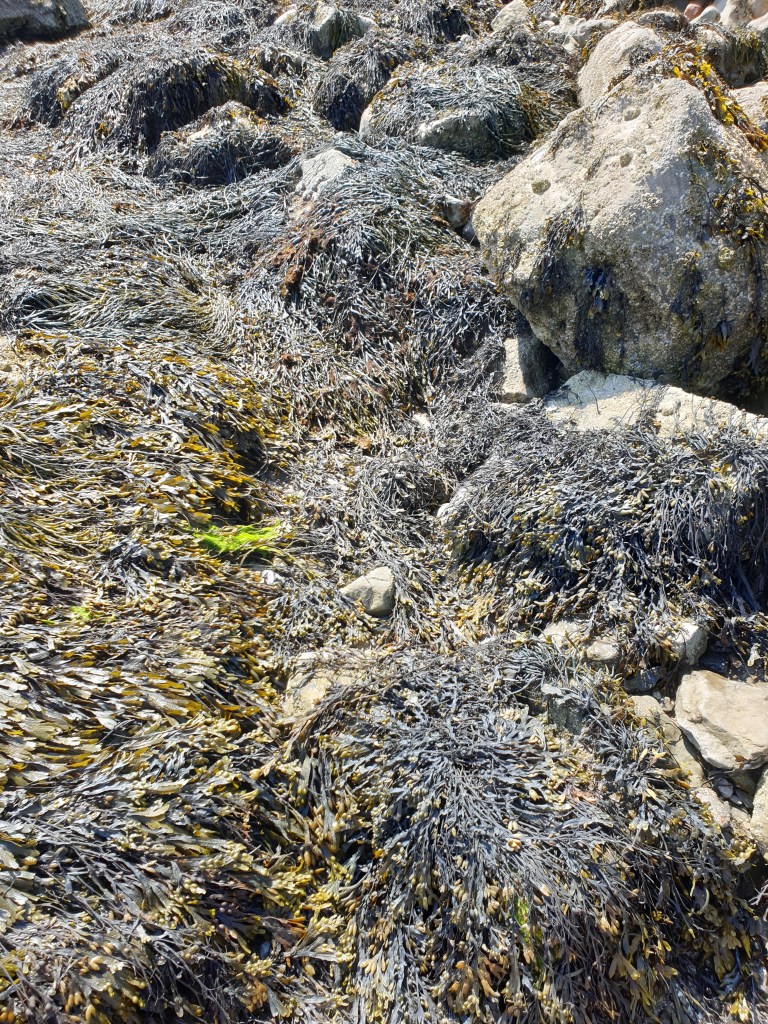
The bulk of the seaweed was “Fucus Vesiculosus” otherwise known as “Bladder Wrack“. Olive-brown in colour and having a leathery feel. Its distinctive fronds with air sacs arising from a foot/disc that anchors it to the rocks. Growing at around 2ft in length.
Bladder Wrack “Fucus Vesiculosus”
The picture above is where I was looking on the beach.
Under the top layer of the Bladder Wrack that was drying in the sun, the under layers were still wet and hid small stones that when lifted exposed small creatures such as:
Shore Crabs
Anemones
Hermit Crabs
Limpets
Barnacles
Sandhoppers
The list can go on…. what will you find on the beach on your next visit?
It is important after looking for creatures in a rockpool or under seaweed, to put back anything you have disturbed during your adventure.
June is a great month to get out and enjoy nature. The weather is getting better (fingers crossed) and the days are getting longer with more time to spend outside.
Every year I like to sign up to the 30 Days Wild with the Wildlife Trust and do something outside each day.
If you haven’t yet signed up for 30 Days Wild there is still time. What activities will you be doing over June?
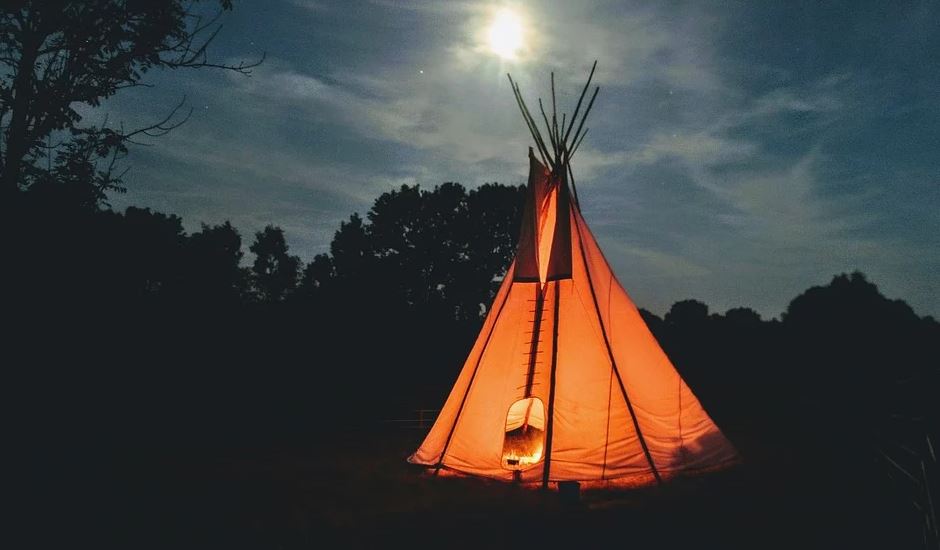
Camoing outside is on of those things that not everyone likes to do, however until you have tried give it a go.
In the current climate though it may not be possible with lockdown restrictions to go to a campsite and pitch your tent. But that does not mean you can’t camp out in your own garden.
If you dont have a tent a den will work when we have good weather. A sheet to make a tent out of (make sure its not raining).
If you dont have a garden, you can still camp indoors and make a den getting an experience before you have a change to go outside and do it for real at a camp site.
Camping is a great way of switching off from the mainstream and getting back to some basics. You can listen to the birds and insects chirping at Dawn whilst watching some sunrises and also at Dusk.



 Camoing outside is on of those things that not everyone likes to do, however until you have tried give it a go.
 Sparrowhawk Bushcraft