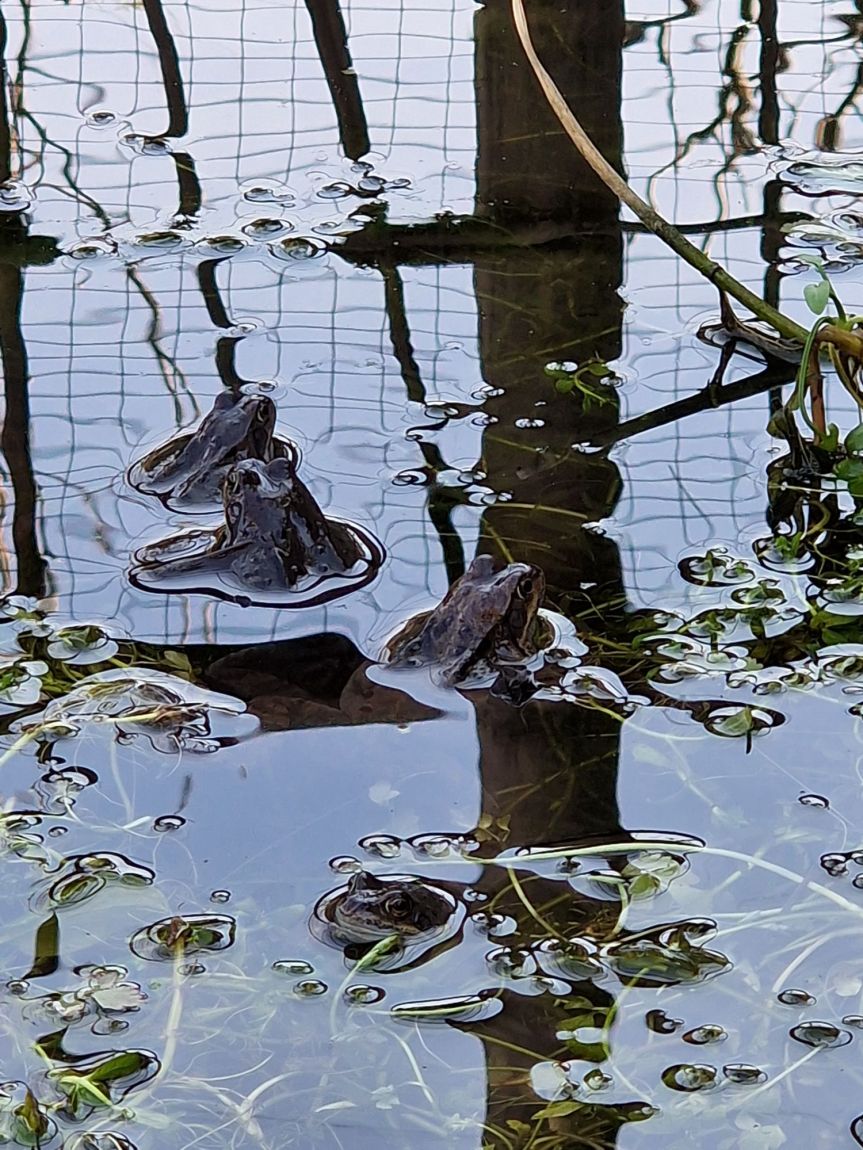
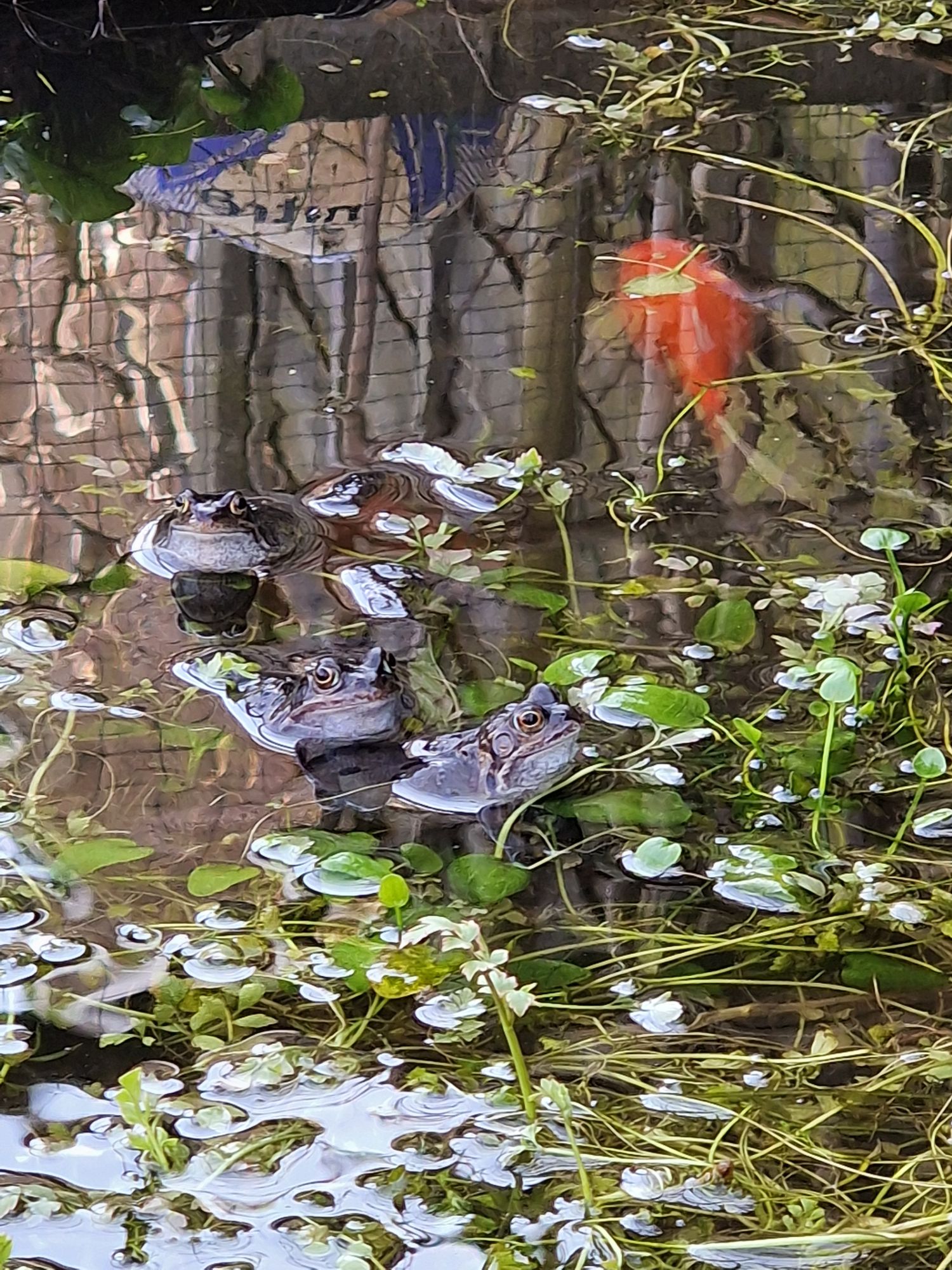
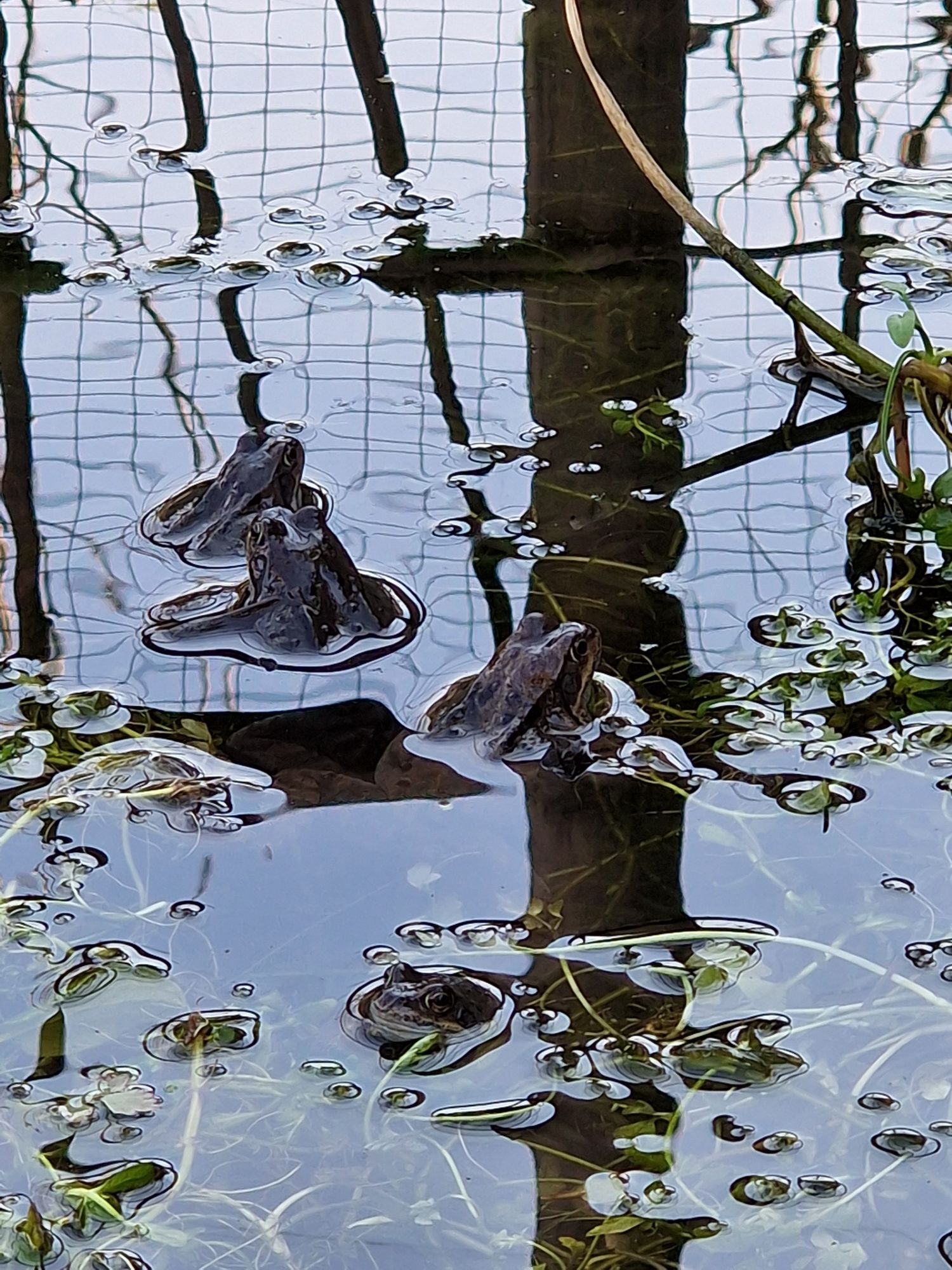
A good sign that spring is on the way is when you hear the chorus of frogs in your pond.
Counted 8 frogs sat in the plants and weed with a couple croaking away this afternoon.
A large amount of frogspawn has also appeared. Although you can find forgspawn from as early as January, typically in my pond, it’s March time.
Do you know the difference between frog and toad spawn? Frog is normally clumped together, whilst toad is strung in a line.
Whilst tempting to move spawn from a pond to somewhere else, it is not advisable as you could introduce contaminants from one pond to anthoer (diseases, invasive species etc.)
This time of year is great to just sit and watch the pond life and nature take its course.
Another year on and 30 Days June is here again. My posts have been seriously lacking in between and hope to fix that going forward. Though I would start this years 30 Days of June with an update on my pond.
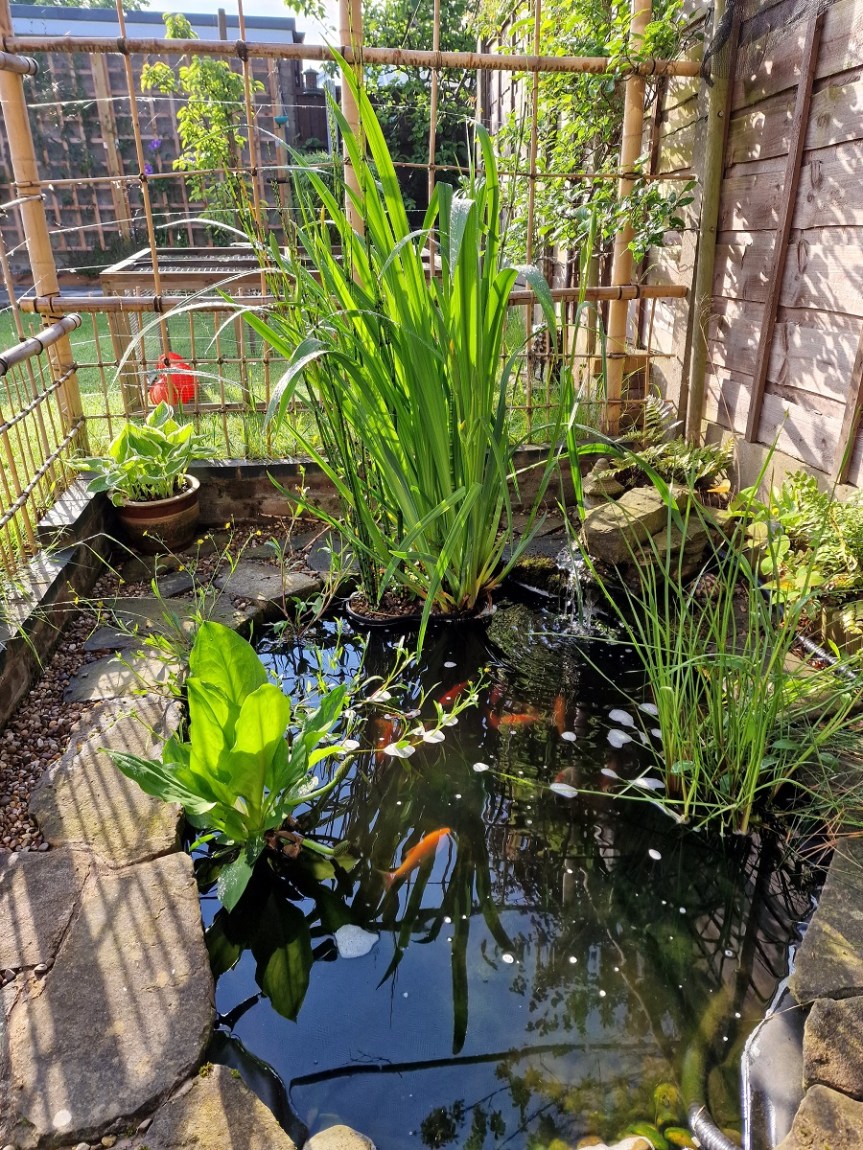
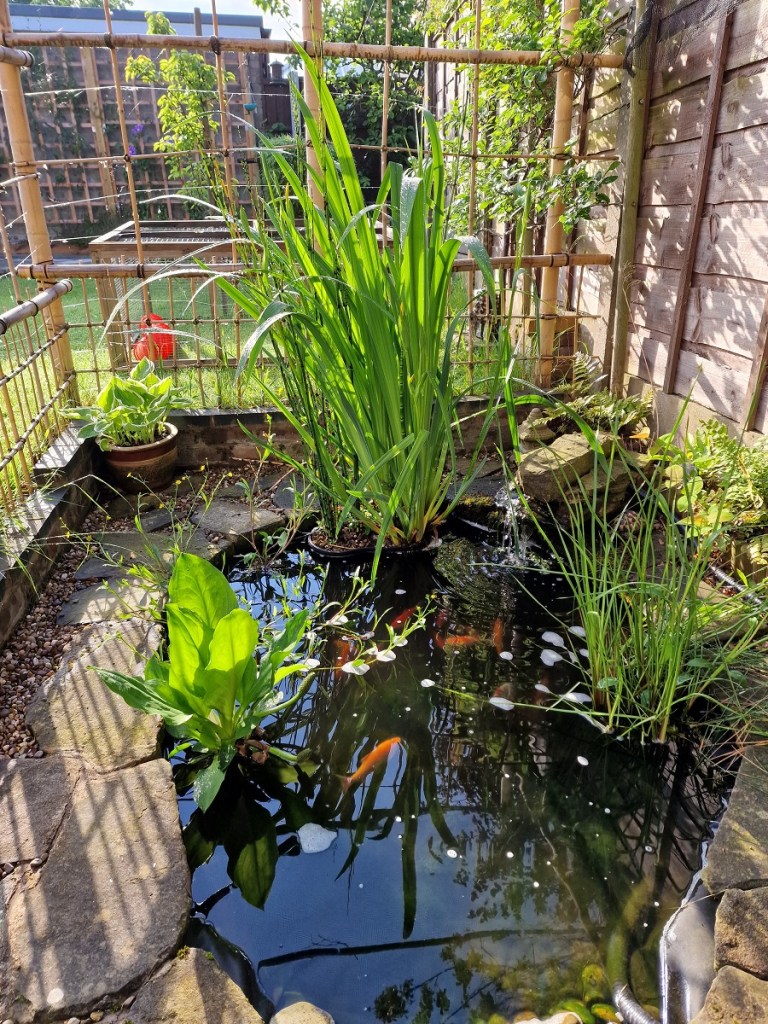
Since building the pond a few years ago it has become established and a focal point for wildlife in the garden. The Heron still appears and can only look at the all you can eat Heron buffet without the eating part due to the bamboo cage. Most of the lashing had to be replaced on the cage as the twine I first used had degraded, but it is holding strong. The cage provides a lot of nooks and places for spiders to hide and build their webs on feasting on the flies and insects that visit the pond.
Frogs have visited and their offspring have become tadpoles which hide well from the fish within the stones and pebbles forming the slope at the end of the pond offering any animal that wanders in an easy way out of the water.
The plants are thriving well and providing a source of shade and stability to the water. The Iris has grown from a small garden centre purchased plant to a large feature and looks like it might actually flower this year.
Having a pond in a garden no matter how big, is a great way of attracting wildlife of all sizes and worth while investment of time in making it and sitting and watching it flourish.
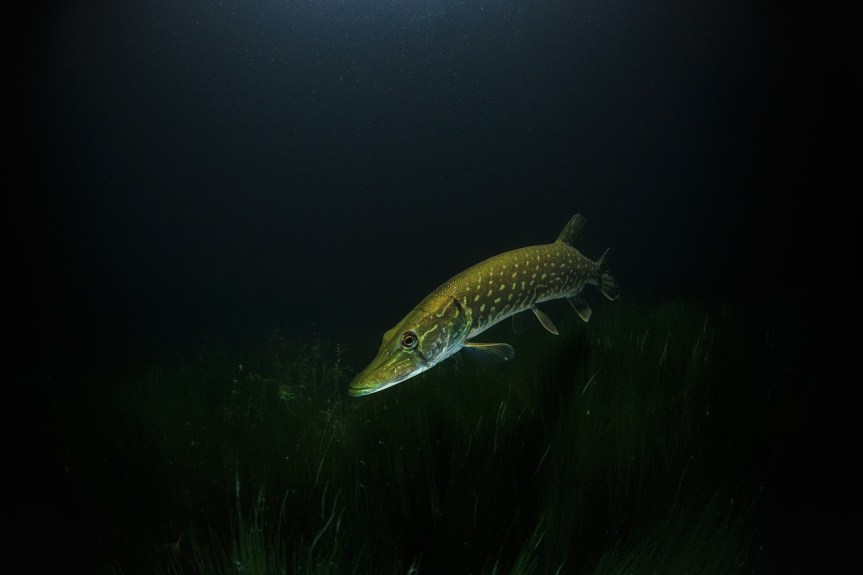
Following on from yesterdays post about Coots, today I’m looking at the Pike (Esox), which has most probably eaten a couple of the Coots babies as they paddled around on the surface. To a Pike the dark silhouette of something small making some splashing patterns is easy prey. They have also attacked people before – Man attacked reaching from sunglasses after they have fallen into a canal.
Don’t panic though and “We won’t need a bigger boat!“. As an angler, this is a fish that deserves respect and definitely care when handling as these fish can be big and do have some sharp teeth. They are strong and can easily thrash about when caught and its one to learn how to handle them before going to catch one. After care is essential!
Pike live in ponds/lakes, canals and rivers and are one of the top predators of the water. They belong to a genus called “Esox”. The Pike that live in the UK are Northern Pike (Esox lucius) and grow to around 50cm.
There have been some record Pike caught measuring up to 150cm and weighing around 28kg.
Pike can breed from the age of 2, and Pike have been known to change sex if there are only males in a water.
Where food sources are scarce Pike will turn to cannibalism and eat other Pike for food. Newborns start with small prey such as daphnia and then as they grow, they move to bigger prey. Large Pikes have been seen to take an adult duck.
They glide effortlessly in the water and will use bursts of energy to chase down any prey the sight. Certainly one of the top predators in UK waters.
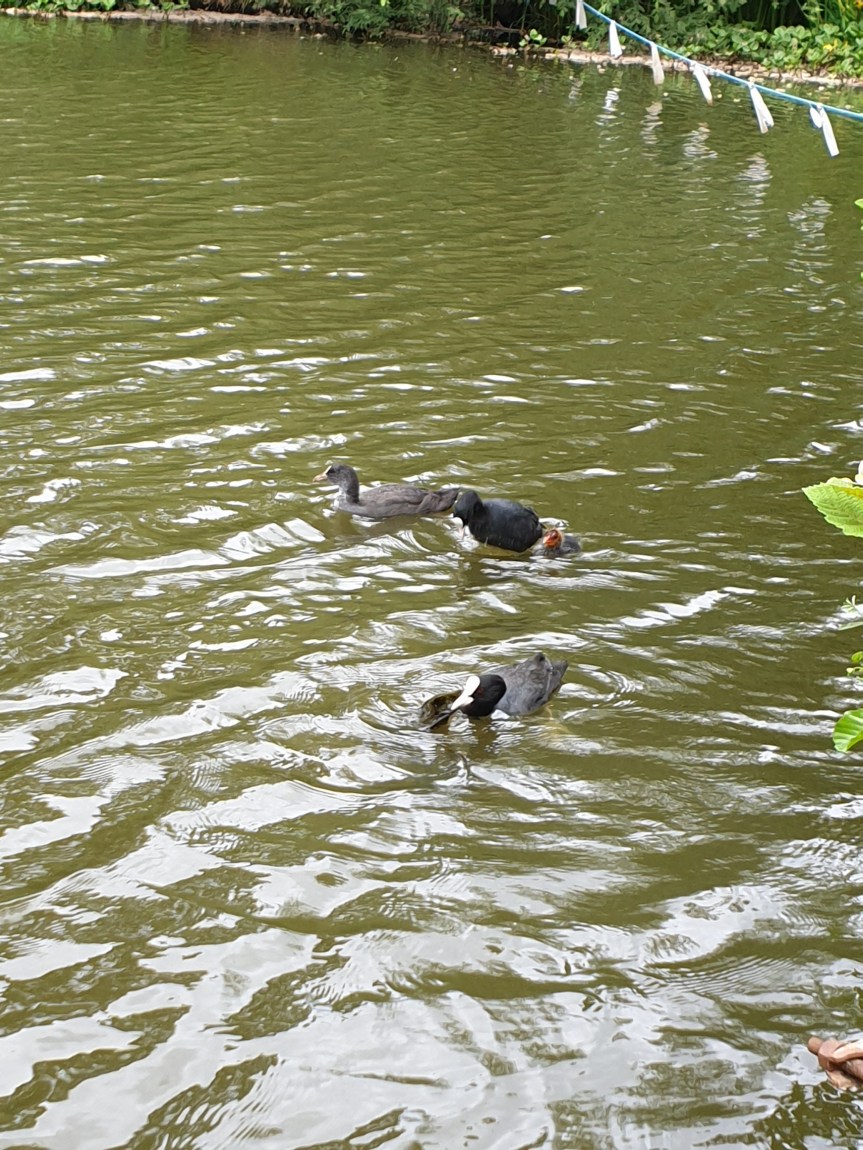
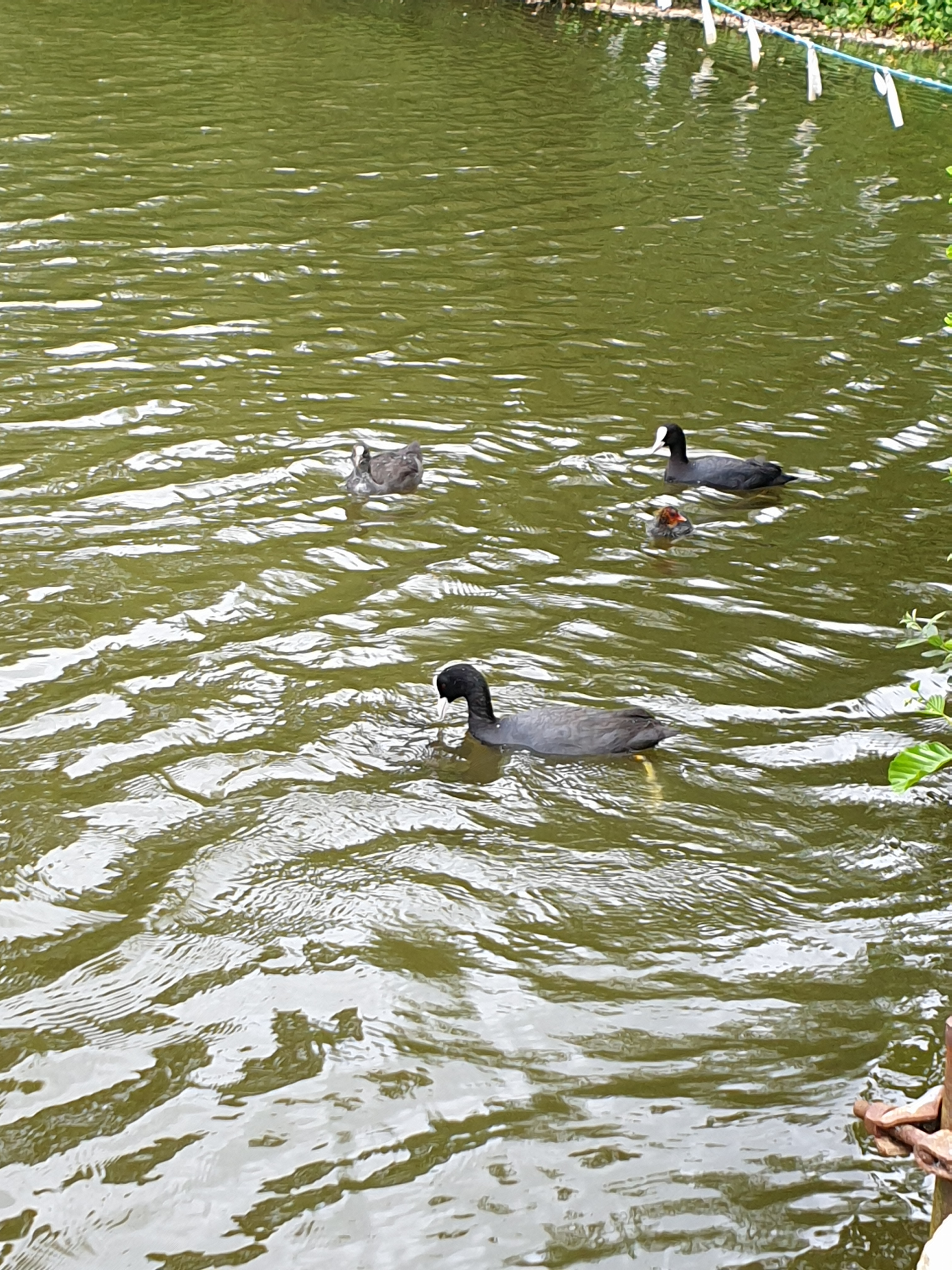
Sitting at the fishing lake today, a family of Coots (Fulica atra) were swimming around. The family were, mum, dad, juvenile and a baby.
Bit sad that there was only one baby with the as last weekend there were 2 others making 3. Thats the circle of life. Possibly taken by predators such as Pike, Heron or Fox. More likely to be a Pike as there are a couple of big ones on the pond/lake.
Coots are a water bird that make their nests in reedbeds or along the banks in cover. At the pond, they make a nest on a floating island so protected from preadators. Until they come out in the open.
The Coot has a distinctive shield white bill marking on the front of their heads.
Hopefully this family will survive as is going forward.
There are other species of Coots that fall under the Genus Fulica.




 Sparrowhawk Bushcraft