
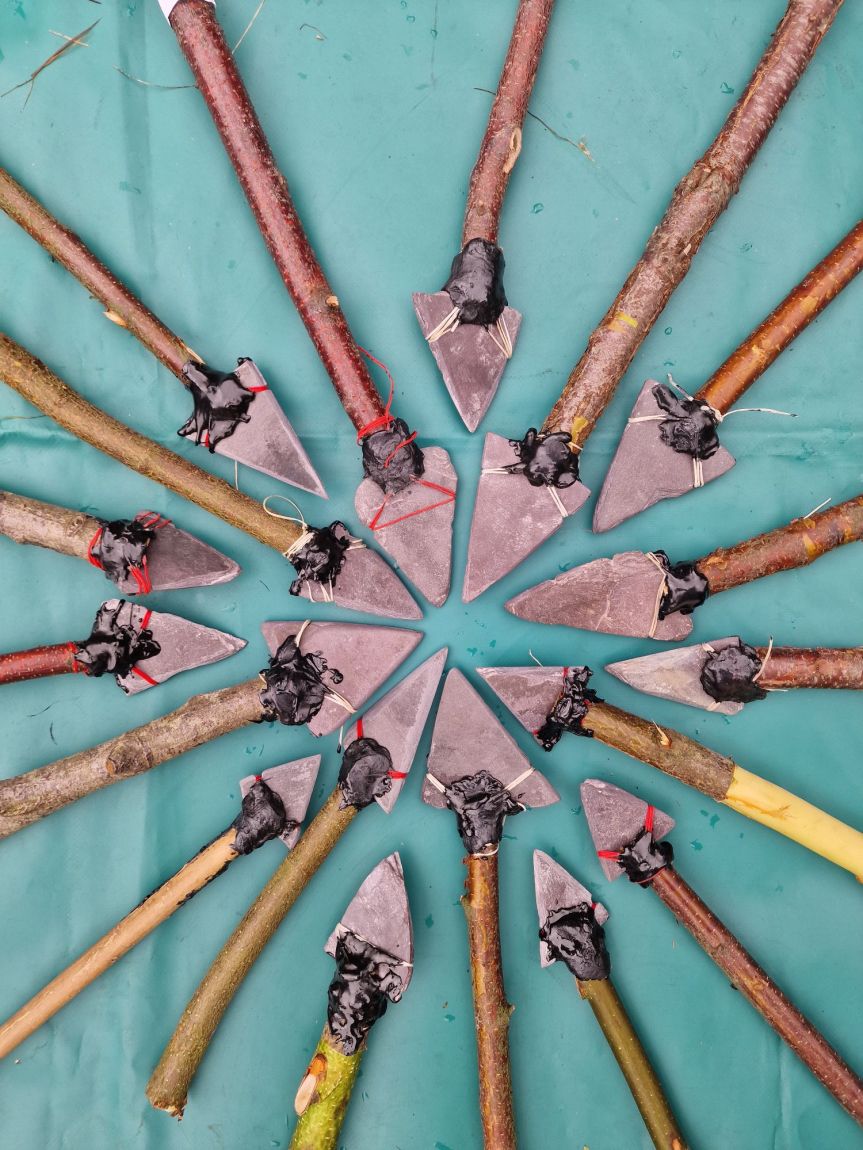
Recently I was on a Scout Camp and one of the weekend’s most memorable highlights was instructing on a hands-on project that wove together wilderness know-how and the ingenious traditions of ancient peoples. Each Scout was tasked with crafting a slate arrowhead, an exercise that demanded patience, creativity, and a steady hand. Carefully, they chipped and shaped the cool, flat stone, learning to see potential in raw materials that, at first glance, appeared unremarkable.
The arrowheads were shaped with care and patience, using rough sandpaper fixed to a wooden block to gradually wear down the slate’s edges. Scouts carefully dipped the slate pieces into water as they worked, which not only kept the stone cool under friction but also prevented dust and fragments from scattering. This process allowed for finer control, turning each nondescript shard of slate into a symmetrical, pointed arrowhead.
Once each arrowhead was formed, the real challenge began: securely fastening it to a sturdy stick to create a functional projectile. Instead of modern glue, Scouts employed artificial sinew—tough, waxed thread that echoes the resilience of real animal tendons used by early craftspersons. To finish the binding, they turned to one of nature’s oldest adhesives: pine pitch. This sticky mixture, painstakingly made from melted pine resin, a dash of beeswax for flexibility, and finely powdered charcoal for strength, was heated gently over the campfire. As the pitch simmered, it filled the air with a rich, pine aroma which helped to keep away any midges.
There was a lot of pride as Scouts compared their handiwork between themselves. Each unique arrowhead a testament to perseverance and newfound knowledge. The experience illuminated how ancient crafts can still inspire creativity, connection, and a deep appreciation for the world’s natural resources.

 Sparrowhawk Bushcraft