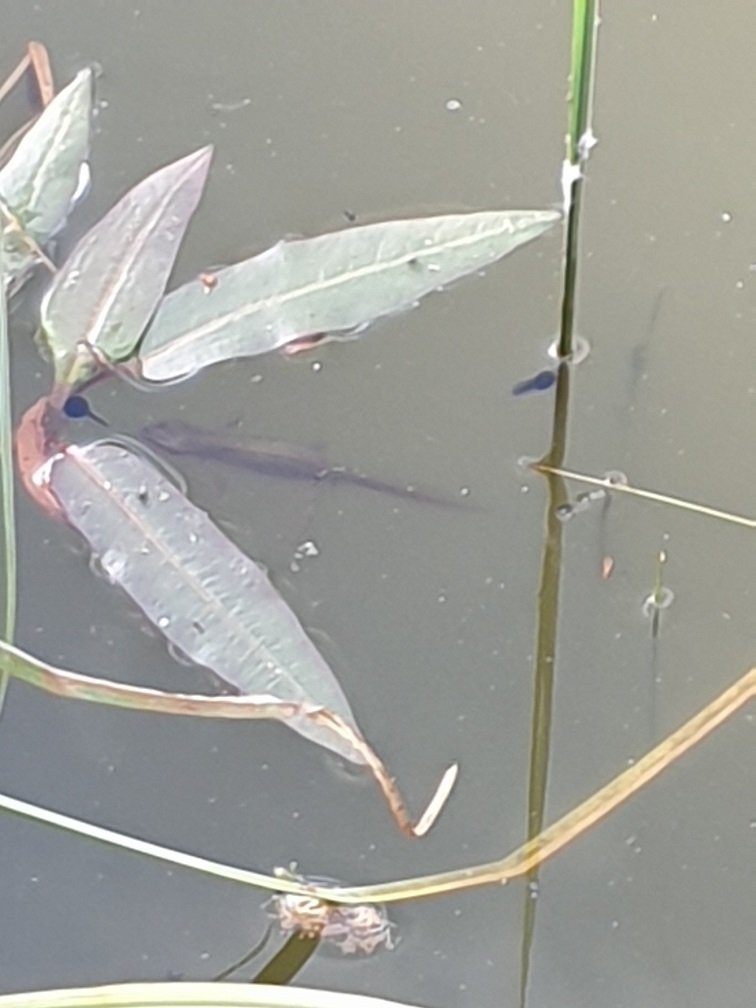
I was excited to spot a Common/Smooth Newt “Lissotriton vulgaris” in my own pond at home as well as the other day at the fishing lake. We have had frogs before, but as the pond has been establishing itself more life has appeared.
The plants in the pond needed some repotting which is when I spotted the common newt. It swam down into the pond weed before I could get a photo, but I’m sure it will be back to the surface sometime for its photo shoot.
I could tell the one in my pond was a smooth/common newt due to its colouring (Grey/Brown) and smooth skin.
Adults grow between 8 and 11 cm long.
The smooth/common newt is the most widespread throughout the UK and Ireland.
Its great to have both Frogs and Newts in the garden to help with the control of grubs and insects.
Image below is of a smooth/common newt taken at the fishing lake/pond.
The bamboo cage around the pond is holding strong against the Heron which is back this year again, eyeing up the all you can eat buffet of fish, so at least this will help to protect the frogs and newts as well.
Taking a walk out in a wood or forest you are most likely to spot a Squirrel. More often it will probably be a Grey Squirrel, which has taken over a good proportion of the UK and has helped in the reduction in numbers of our native Red Squirrel. There are however some protected areas where only the Red Squirrels are, such as Formby, Isle of Wight, Anglesey and Brownsea Island (there are other areas as well).
There are two species of squirrel in the UK; Red Squirrels and Grey Squirrels. Populations are currently estimated at approximately 140,000 red squirrels and 2.5 million grey squirrels. Red squirrels are our native species and have lived in the UK for around 10,000 years, Grey squirrels were introduced to the UK from North America by the Victorians in the 1800s, the first record of them escaping and establishing a wild population is 1876.
Well there is actually another Squirrel that has made its way to the UK.
Black Squirrels are the result of “interbreeding” between their grey cousins and the North American fox squirrel, a study has concluded.
There are thought to be around 25,000 Black Squirrels in the UK, with numbers largely concentrated in Bedfordshire, Hertfordshire and Cambridgeshire. The first wild Black Squirrel was recorded in Woburn in 1912, and was believed to have escaped from a private zoo having been imported from the United States.
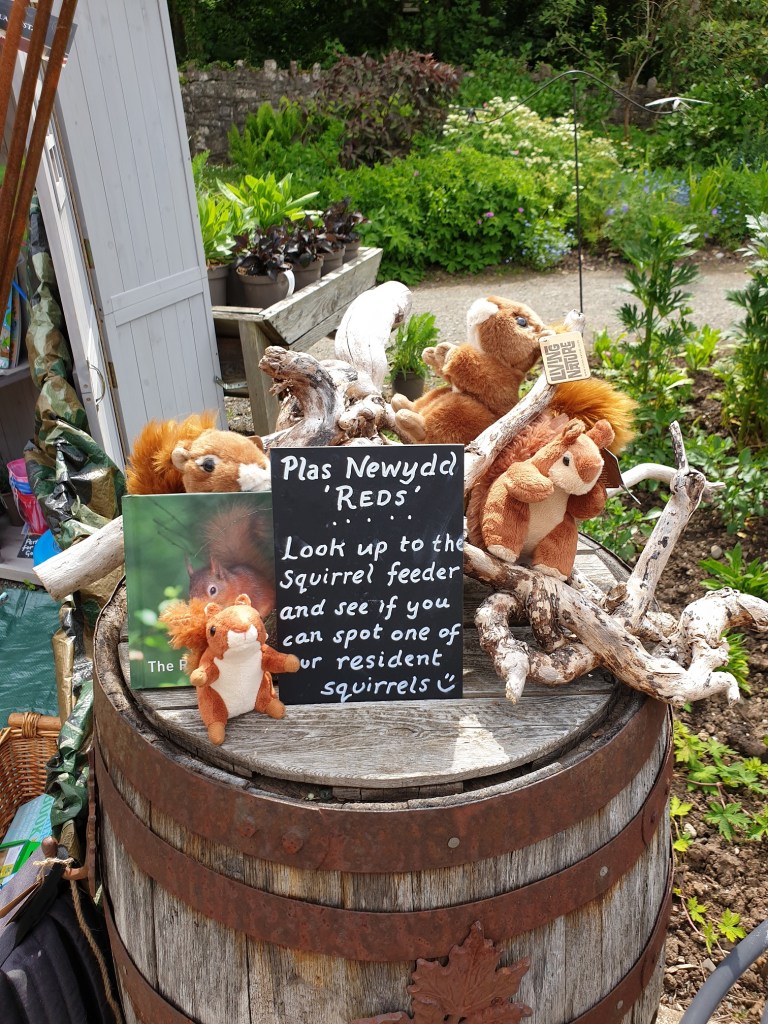
Whilst out on Anglesey recently on a nature walk we went to several areas where Red Squirrels are regularly sighted. The first was Plas Newydd, which is a National Trust property and grounds. Unfortunately we were too late in the morning to spot any. You need to be up early to see them out for their morning forage.
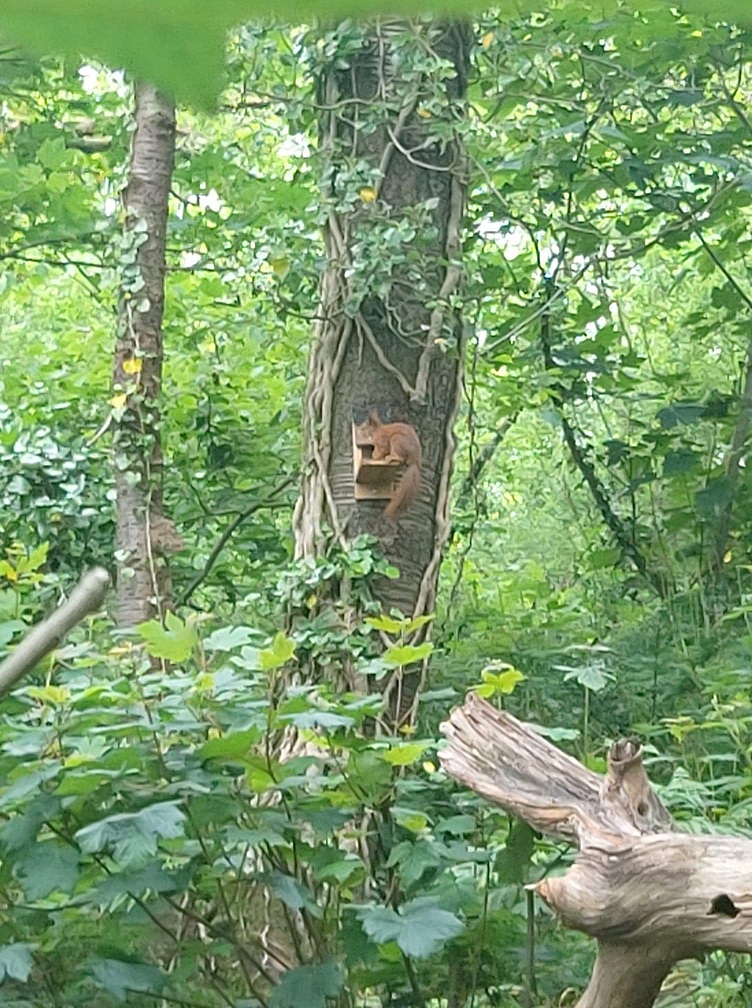
Next we moved on to a Dingle Woodland where they are often spotted. We were up early enough to spot them and came across two near to some feeders that were placed in the area. Keeping our distance the only picture we managed to get this time was a bit blurred due to the phone camera zoom.
Its always great to see a Red Squirrel in its natural habitat.
Red Squirrels live in nests called Dreys or Dens. Dreys are built in broad-leaved and coniferous trees mainly, unless a Squirrel Box has been put up to encourage breeding. They normally build their nests at around 6 meters or more for protection or the thick canopy. Dens are built in the trunks or branch forks of deciduous trees after the leaves have fallen to protect the Squirrels from the elements.
A Red Squirrels Year
JANUARY – Peak mating chases. Male and female fully reproductively active. (Many males run over on roads whilst ranging in search of females).
FEBRUARY – First litters born. Females refurbish or build litter dreys.
MARCH – Peak spring litters born. 1-6 young, usually 3.
APRIL – Young squirrels first emerge from litter drey but do not yet leave it. Spring moult.
MAY – Spring litters weaned and leave litter drey to become independent.
JUNE – Light-weight summer dreys of grass start to appear, often built by new juveniles.
JULY – Peak summer litters born. Dispersal of spring young. Begin to grow new ear-tufts and hair tails.
AUGUST – Squirrels fatten for autumn on hazel. Moult into winter coat.
SEPTEMBER – Male squirrel testes regress. Summer juveniles become independent.
OCTOBER – Dispersal of summer young. Males inactive.
NOVEMBER – Male squirrels start to become reproductively active as testes descend into scrotum and grow.
DECEMBER – Young squirrels near full size; spring young may become reproductively active for next season – particularly males. Adulty males capable of fertilizing females. First females in oestrous at end of month.
Squirrels by Jessica Holm – Whittet Books
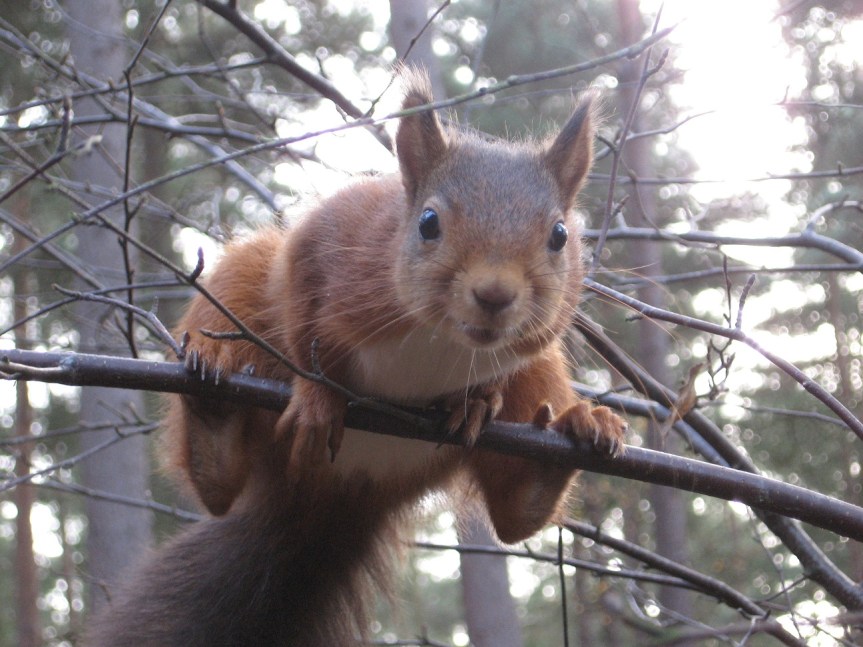
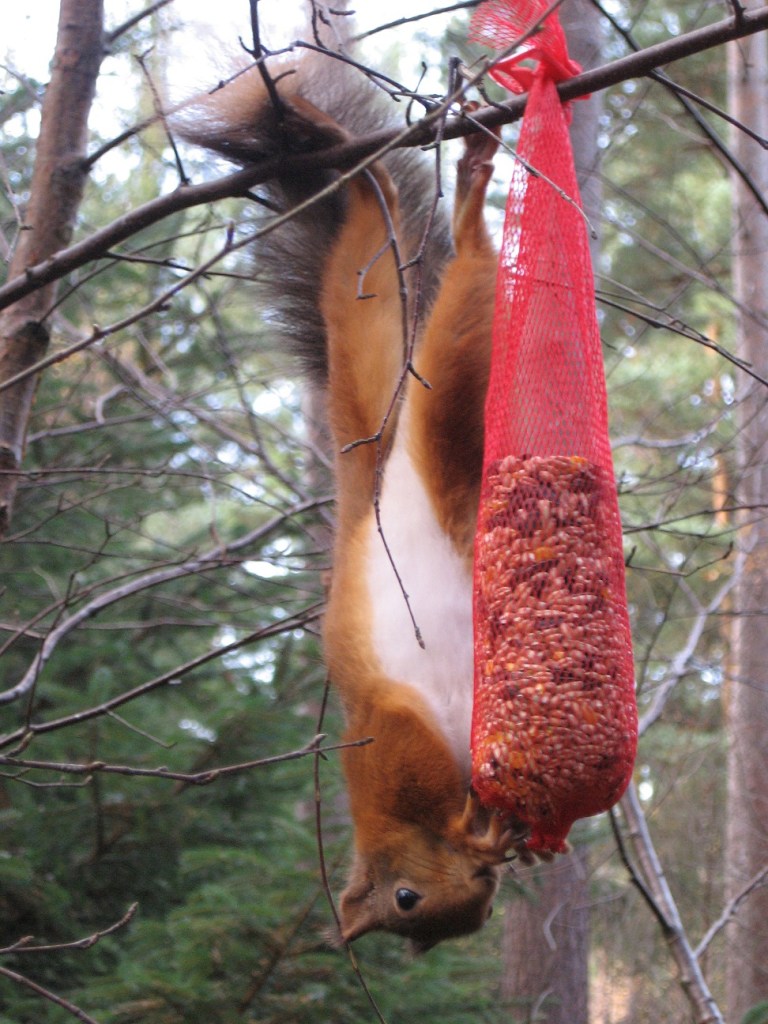
The picture above is one I took a few years back whilst on holiday in a Centre Parcs near Perth. The Red Squirrels loved the bird feed that we left out.
Typically they will eat:
Cached food
Catkins
Flowers (e.g. Blackthorn and Oak)
Fungi
Hips
Insects
Seeds – Acorns, Beachnuts etc
Shoots
Tree Bark
Squirrels also peel back bark to eat the sweet sap beneath.
The main threats to the Red Squirrel are Humans and Grey Squirrels.
The grey squirrel is the main reason for the decline of the red squirrel. Habitat loss has also contributed to the red squirrel’s decline. This occurs when areas of woodland are destroyed or become separated by development and changing land-use. This leads to isolated areas which cannot sustain viable populations of wildlife, including red squirrels in some places. Squirrelpox virus is fatal to red squirrels but is carried by grey squirrels without causing them any harm.
Other threats are predator’s such as Birds of Prey, Foxes, Pine Martins and Stoats.
Red squirrels that survive their first winter have a life expectancy of 3 years. Individuals may reach 7 years of age, and 10 in captivity. Survival is positively related to the availability of autumn-winter tree seeds; on average, 75–85% of juveniles die during their first winter, and mortality is approximately 50% for winters following the first.
June is a great month to get out and enjoy nature. The weather is getting better (fingers crossed) and the days are getting longer with more time to spend outside.
Every year I like to sign up to the 30 Days Wild with the Wildlife Trust and do something outside each day.
If you haven’t yet signed up for 30 Days Wild there is still time. What activities will you be doing over June?
30 Days Wild is run by the Wildlife Trusts (https://www.wildlifetrusts.org/). There is still time to sign up to the 30 days wild and recieve your downloadable pack and activities.
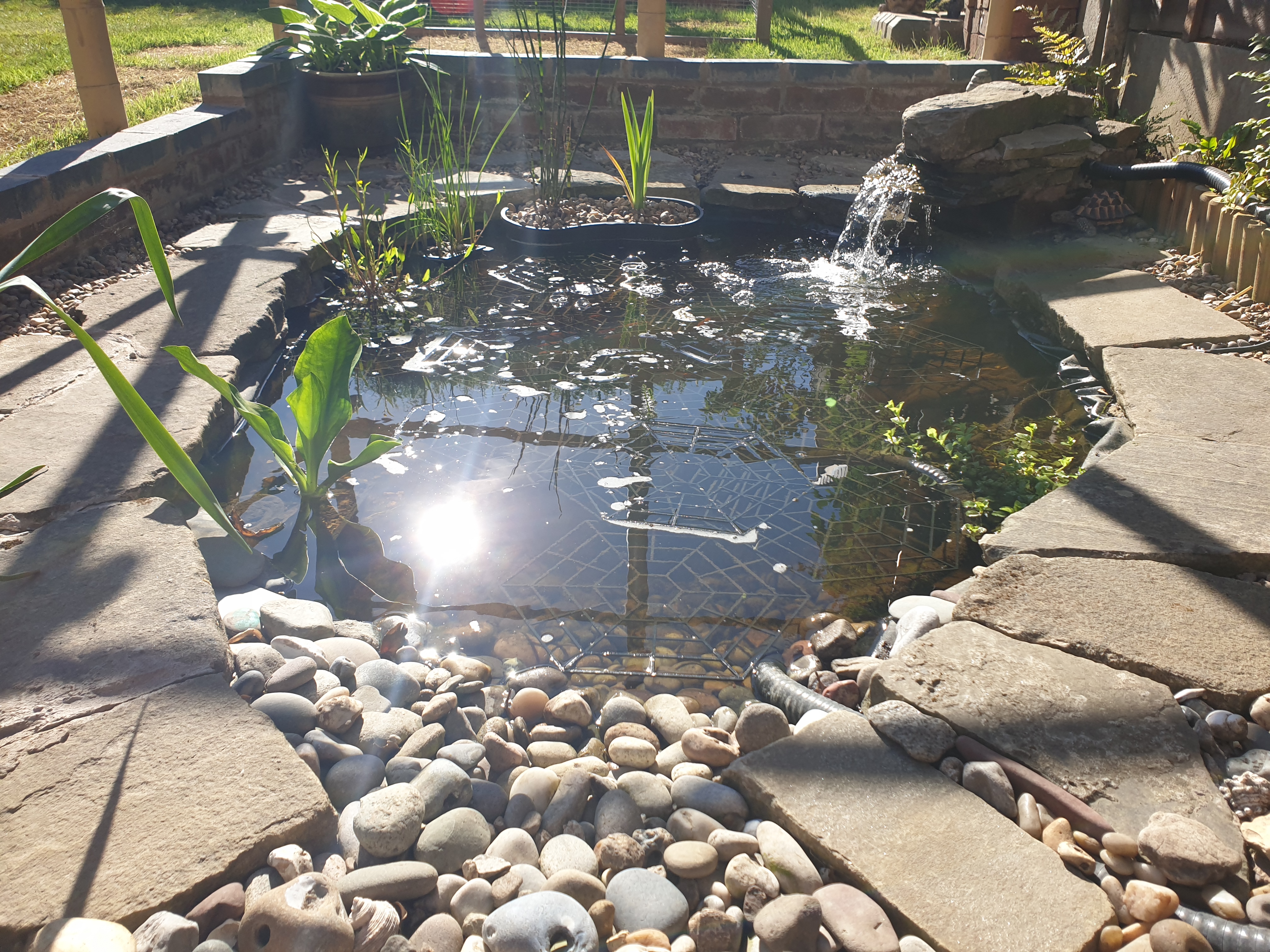
For the first day here is the Pond I set up in my garden. The build started back in September last year digging out the ground. I have gone for a 1 shelf design with a deeper part for wildlife to be safe during the colder winter months.
One part of the design that was important to bring in is the sloping shelf on the front of the pond to allow any wildlife to get out of the pond such as frogs, but also incase anything falls in an needs to get out. This is where the stones come in on a slope to give a good footing and escape route.
The plants put in are growing well and provide balance with absorbing nitrates etc from the water.
There are a few goldfish and the hexagons on top of the pond help deter the local Heron who has paid a visit to the gardens around before. Added some tubes at the bottom of the pond for the fish to hide in as well which they like.
A waterfall helps provide a way to oxygenate the water as well as some pond weed and plants.
What is amazing is the way that nature finds ponds. We already have frogs and tadpoles as well as some pond snails.
With all the warm weather recently the pond has become an oasis for widlife with Bumble Bees landing on the stones to take a drink before carrying on their journey.
Of course you dont need to go to this full extent of building a big pond. An old washing up bowl buried into the garden and filled with water and maybe a couple of pond plants is enough to attract wildlife into your garden.
Building homes for nature in our gardens is important to help maintain the balance in your gardens and in life.
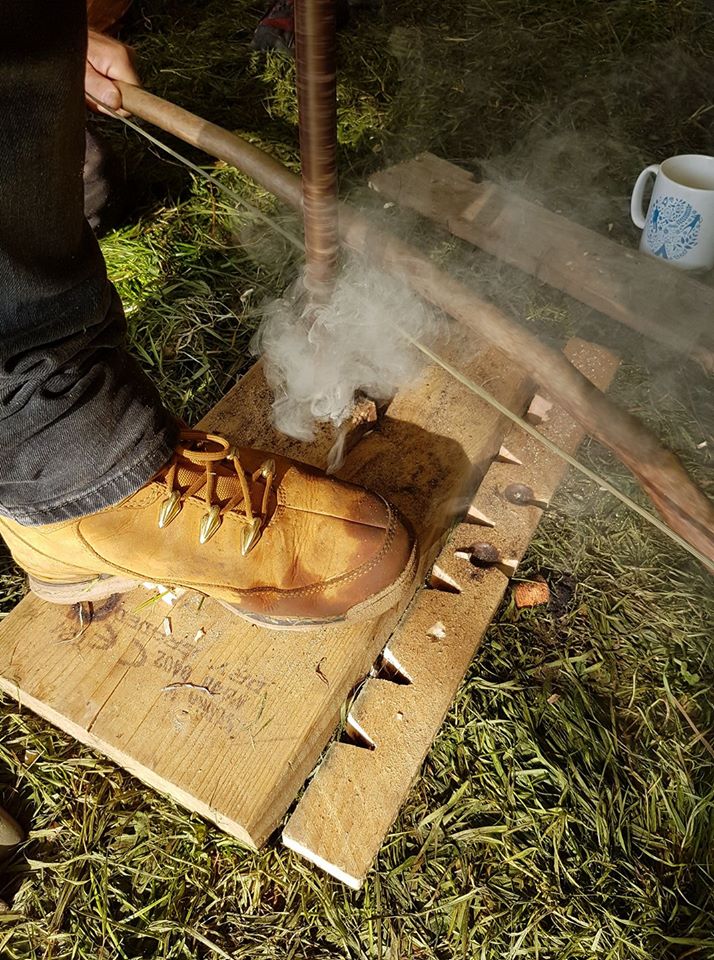
I have been meaning to start a blog for Sparrowhawk Bushcraft for some time and have finally got round to it. I have previously written some articles for The Bushcraft Journal as well as posts on Facebook and Twitter.
My articles have ranged from making a tent to story discs. So here is to many more articles going forward.



 30 Days Wild is run by the Wildlife Trusts (
 I have been meaning to start a blog for Sparrowhawk Bushcraft for some time and have finally got round to it. I have previously written some articles for
  Sparrowhawk Bushcraft