Returning to the beach today to have a broad look at Sand Dunes.
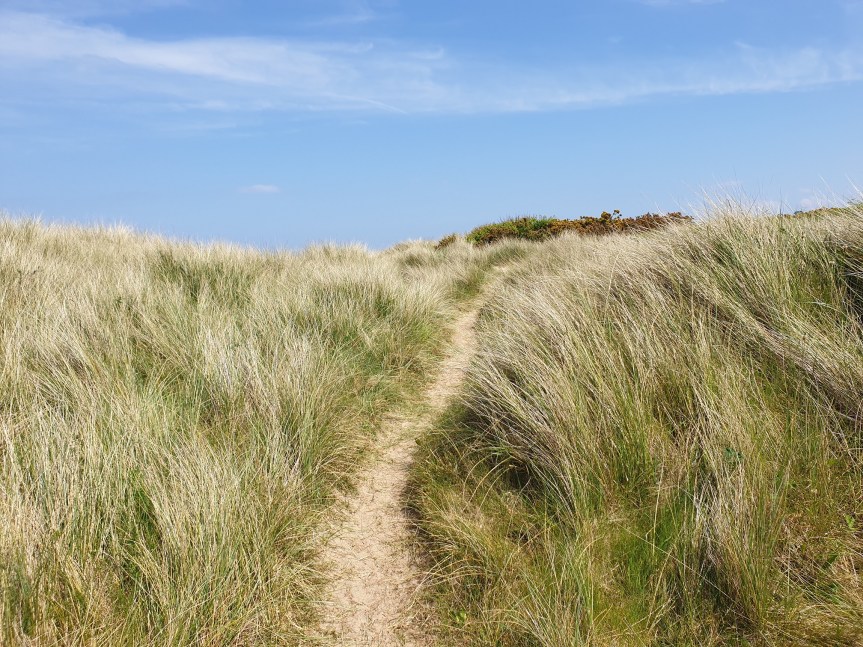
Around the UK you will find Sand Dunes that form small or even large mounds of sand that are bound together with different grasses and plants. Typically Sand Couch (Sporobolus virginicus) and Marram Grass (Ammophila) make up the grass varieties with deep roots that hold the sand together.
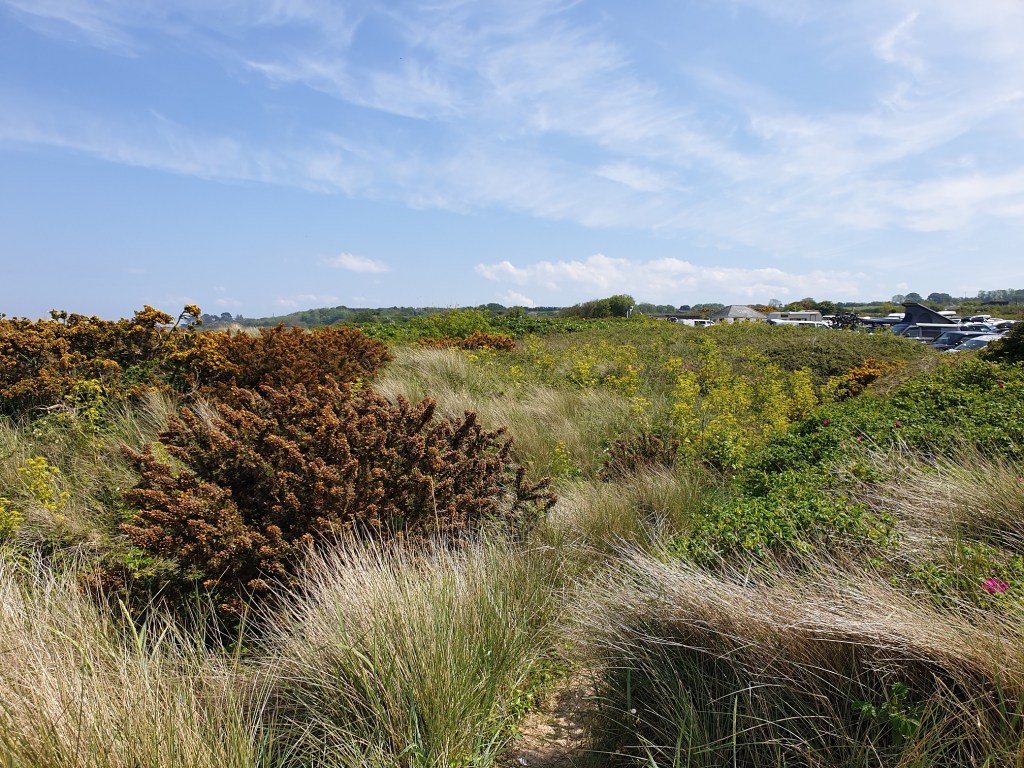
Mixing in between the grasses, plants and shrubs also take root and hold the sand dunes together. These all provide a special habitat for wildlife to live from Birds to Reptiles and Insects.
These are special places and there are some protected dunes to keep these habitats safe. When crossing dunes it is important to keep to the paths and not disturb the rest of the dune.
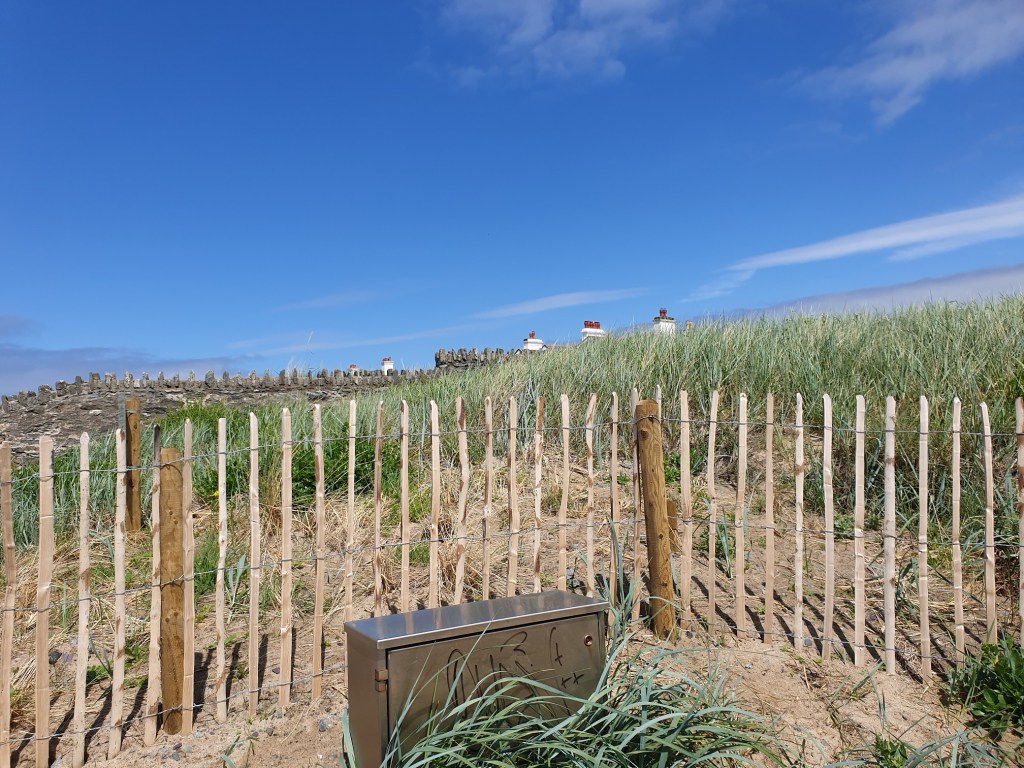
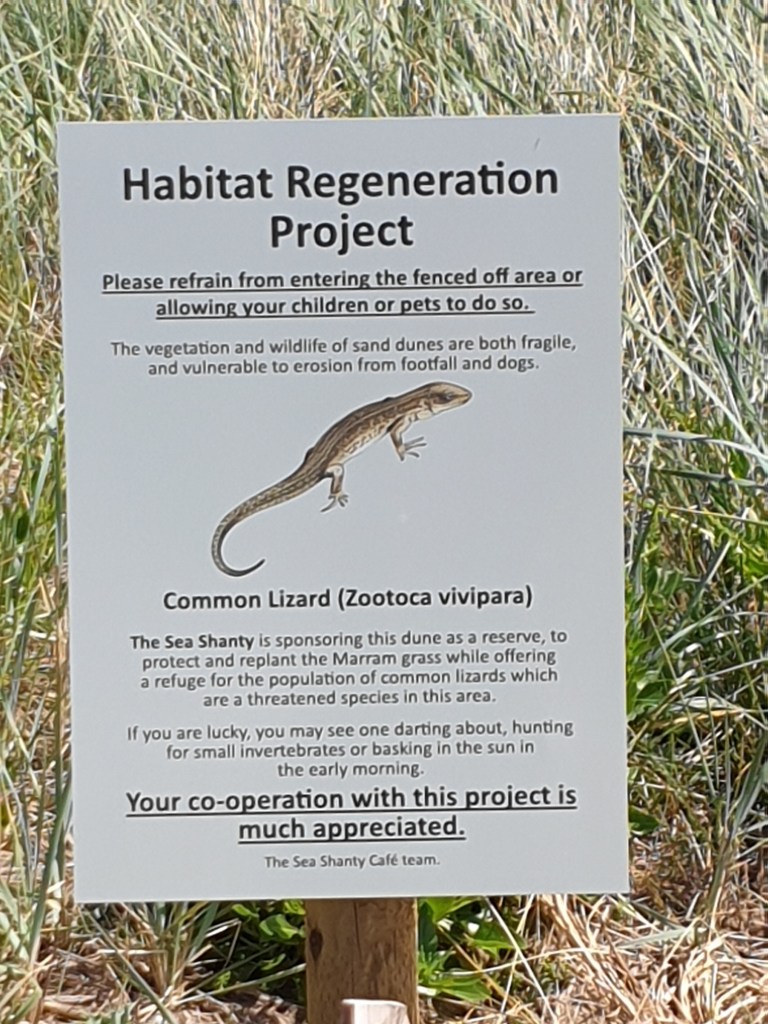
Some area such as the one pictured below in Anglesey is fenced to protect the Common Lizard (Zootoca vivipara), which makes its home and breeds in the dunes.
Most people cross dunes to get from a car park to a beach and often miss the wildlife hidden. Next time you are at some sand dunes, take a moment to stop and look around and see what you can spot. Remember to stay on the paths though!
The beach is a great place to track footprints. Okay so they are typically Human and Dog but look closer qnd you will find other types of track and sign.
The best place to look for these is when the tide is out and on the wet sand. Although you can find sign (something disturbed or left) on dry sand, prints and some sign can dissappear quickly.
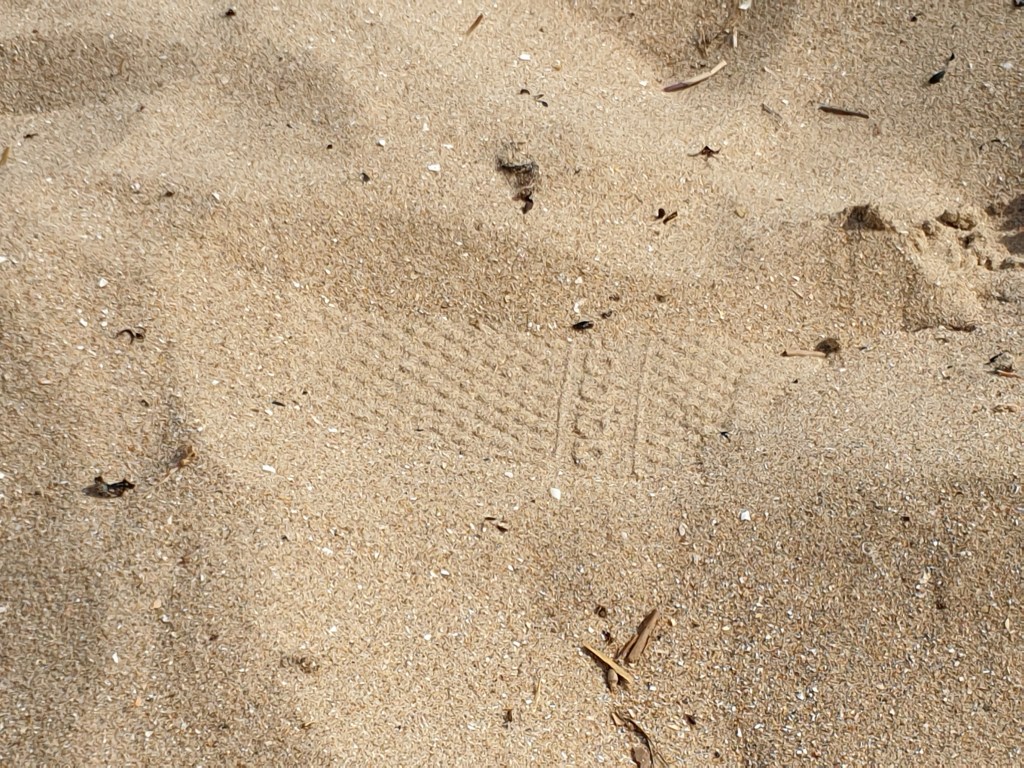
Shoe print in soft beach sand
There is a lot to tracking, but in a basic form, looking at a print or sign you can determine what left it, its direction and how quickly it was going.
Lets start with the obvious prints and sign first.
Humans
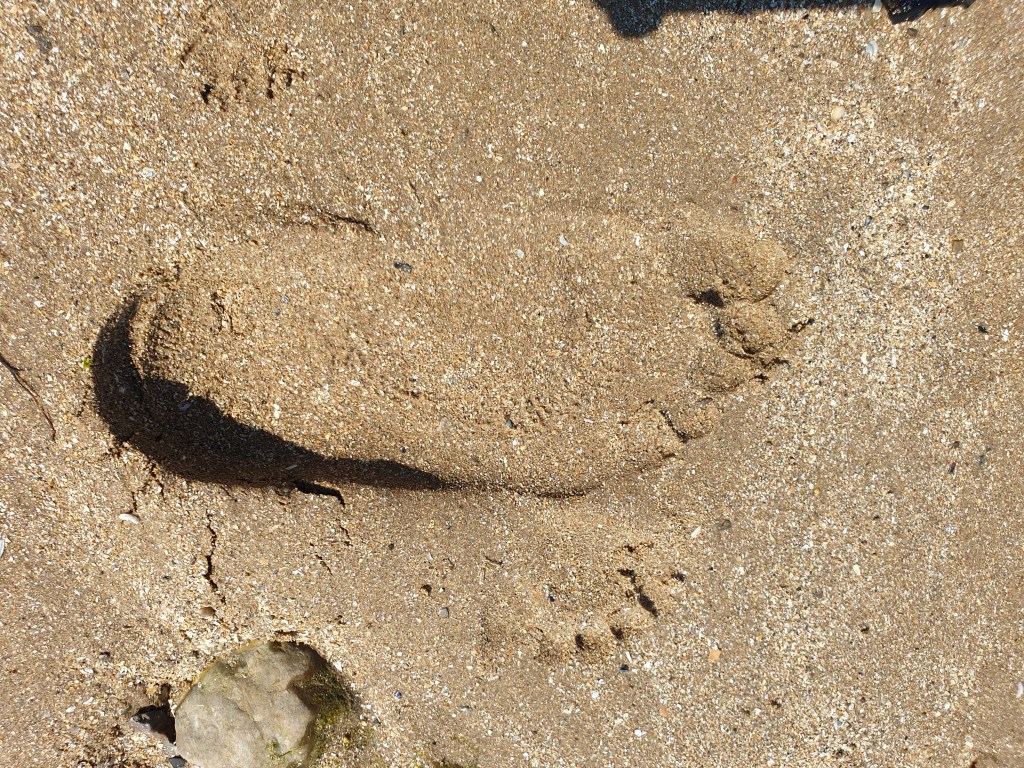
Lots of footprints on a busy beach or less so on a less crowded one. Some in footwear of different types and others barefoot.
Male adult footprint in wet sand.
Not all prints will be full. You may only see a partial print depending on how that person was walking or even running.
The great part of tracking is to work out what they were doing, direction etc.
Dog
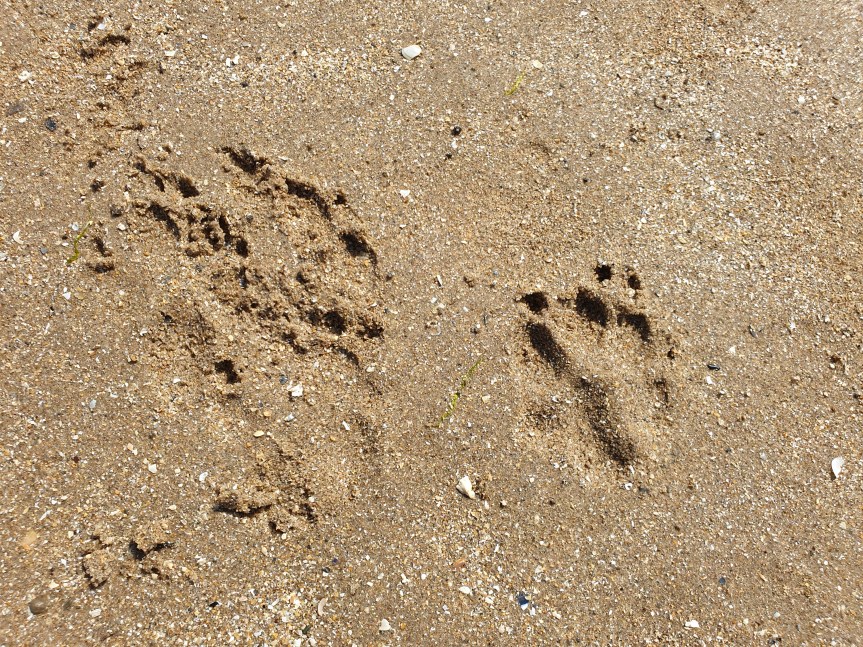
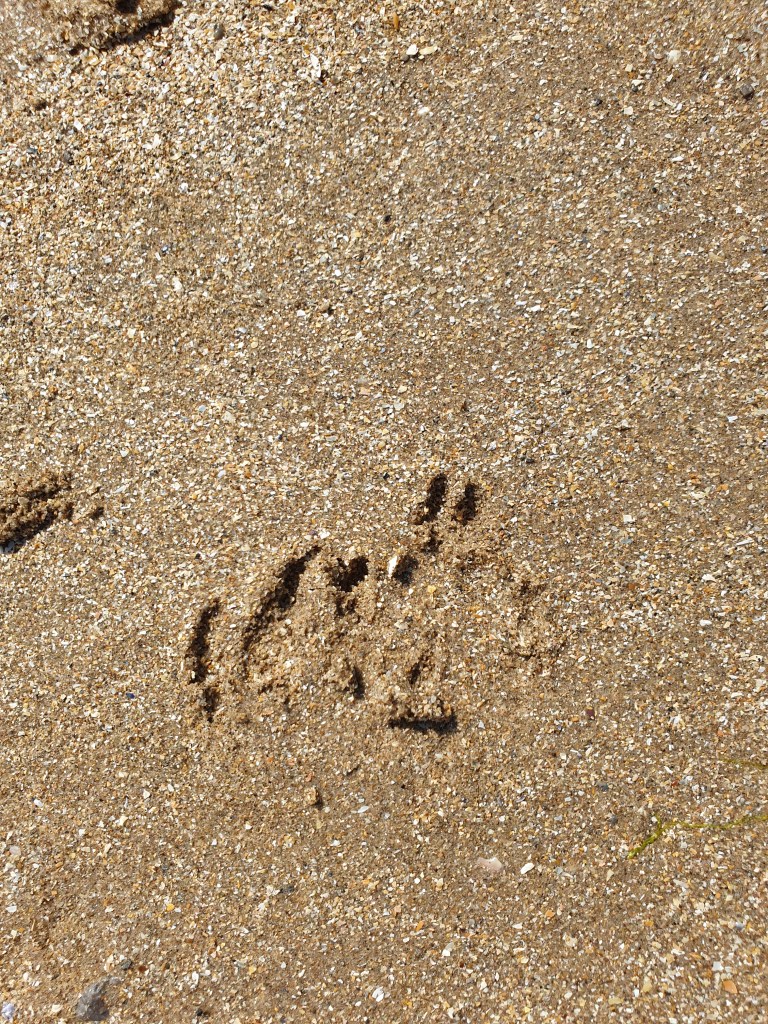
On a beach that allows dogs you may come across a set of tracks made by one.
Dog paw prints in wet sand.
Like the human print the depth will depend on if the dog was running or walking. The pattern on the prints will depend upon the dogs gait. The gait is the pattern of movement from the animals limbs.
Different breeds of dogs of course leave different prints and spacing depending on their size.
Mechanical Tracks
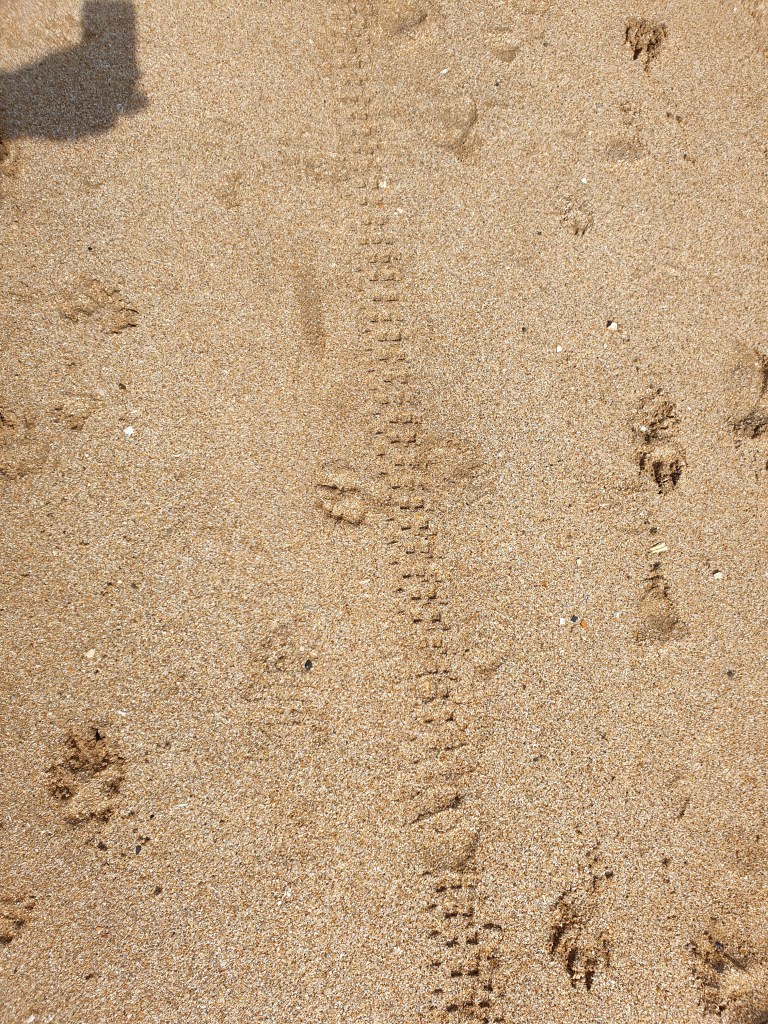
Not everything that travels on a beach is animal or human. Sometimes you can find tracks from bikes or even tractors that are launching boats into the sea.
Tracks left from a pedal bike
Lugworms
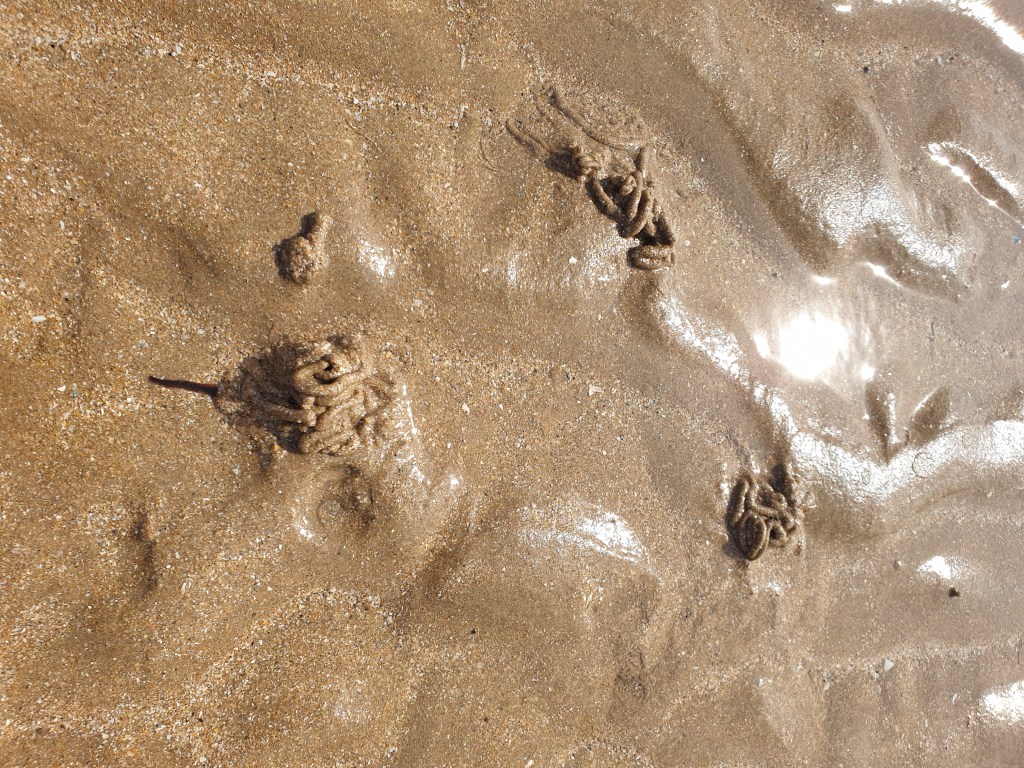
“Lugworms” or “Arenicolidae” can be found on sandy beachea and mud flats. They leave a sand cast on top of their burrow which shows where they are.
Lugworms are normally greenish or yellow-black in colour.
Lugworm – “Arenicolidae” casts on top of their burrows in the sand.
Razor Shells
Razor Shells come in many types under a genus called “Ensis” Such as
Ensis siliqua
Ensis ensis
Ensis arcuata
There are other types under the family ” Solenidae”
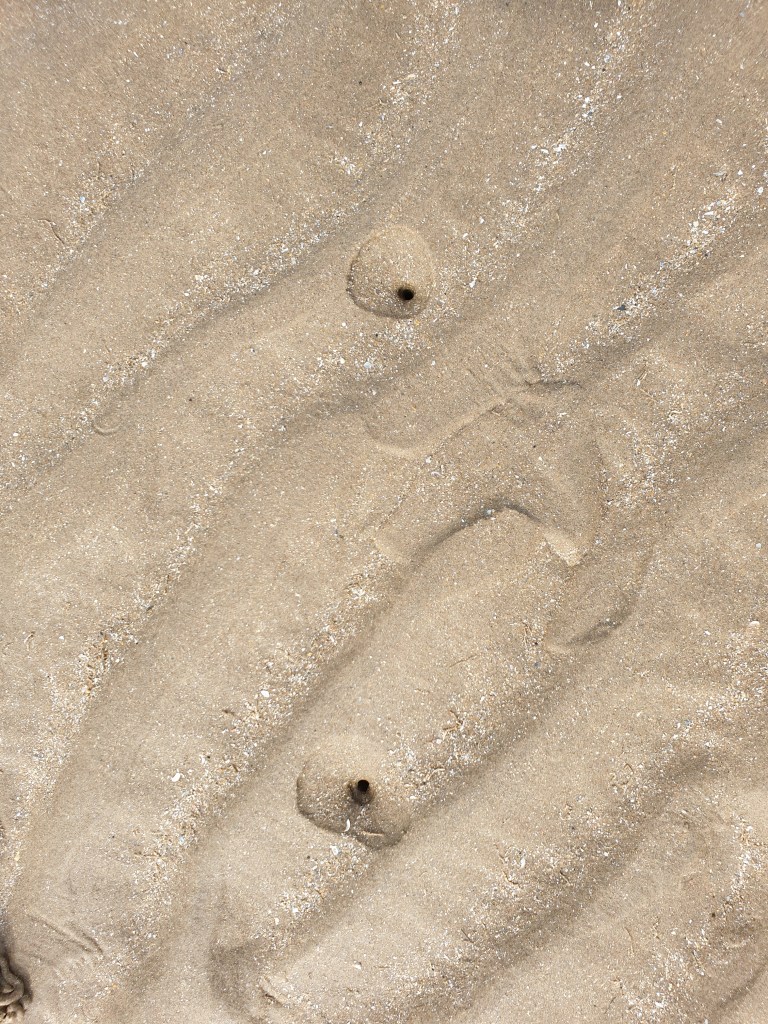
They burrow vertically in the sand and extend downwards with their bodies (short syphon and large foot).
The burrows are normally a small indentation or hole in the sand. (Lugworms also have holes in the sand before they have casts of sand).
Razor Shell burrows
Water – Sea
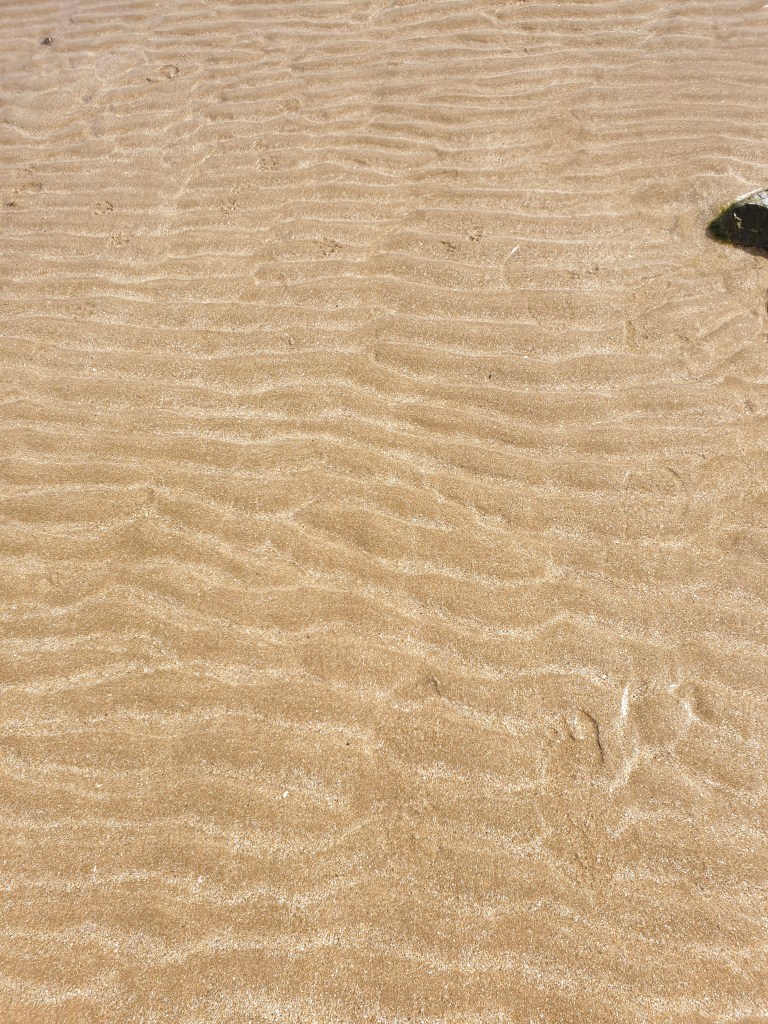
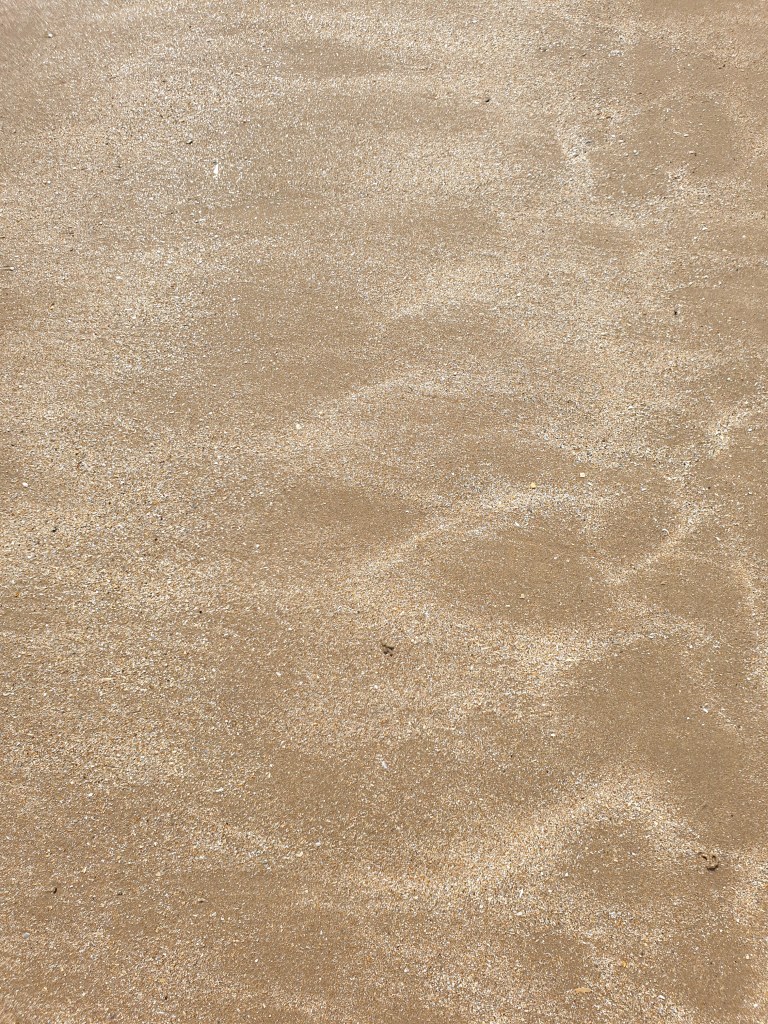
The sea can make tracks in the sand such as tide lines and ripples.
Sand ripples caused by the waves of the incomming tidePatterns in the sand formed by waves from larger fragments of sand ( broken shells)
Water – Fresh Water
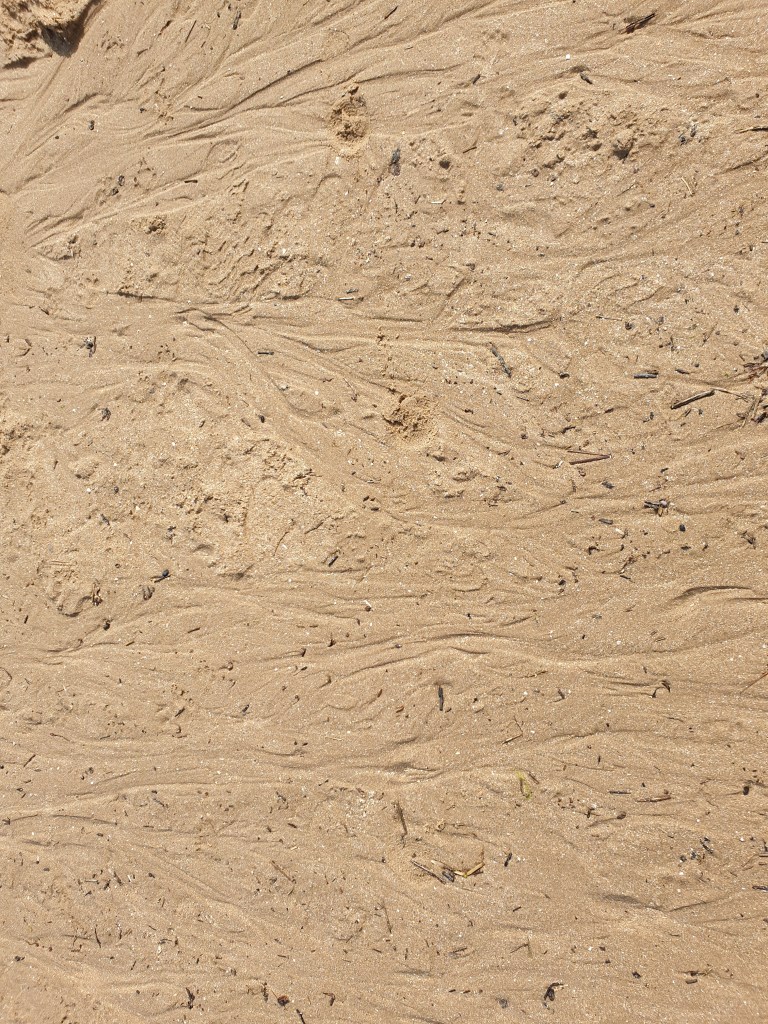
Fresh Water come down to the sea can also form patterns in the sand as it races to join the sea.
Patterns formed by fresh water heading for the sea.
There is lots to see and track at the beach. What will you discover on your next visit?
If you have been looking on the beach, lifted up a rock and spotted small creatures resembling a shrimp like shape and moving around on their sides. These are probably Sandhoppers.
Normally located between the upper and lower tide marks under rocks and in seaweed.
Sandhoppers or “Amphipods” tend to move on their sides rather than hop with a sprung tail, but when they do can reach a good distance. Usually when disturbed.
Following on from yesterday’s post on Seaweed, today I am concentrating on the humble Shore Crab and another that we found a Masked Crab.
Shore Crab
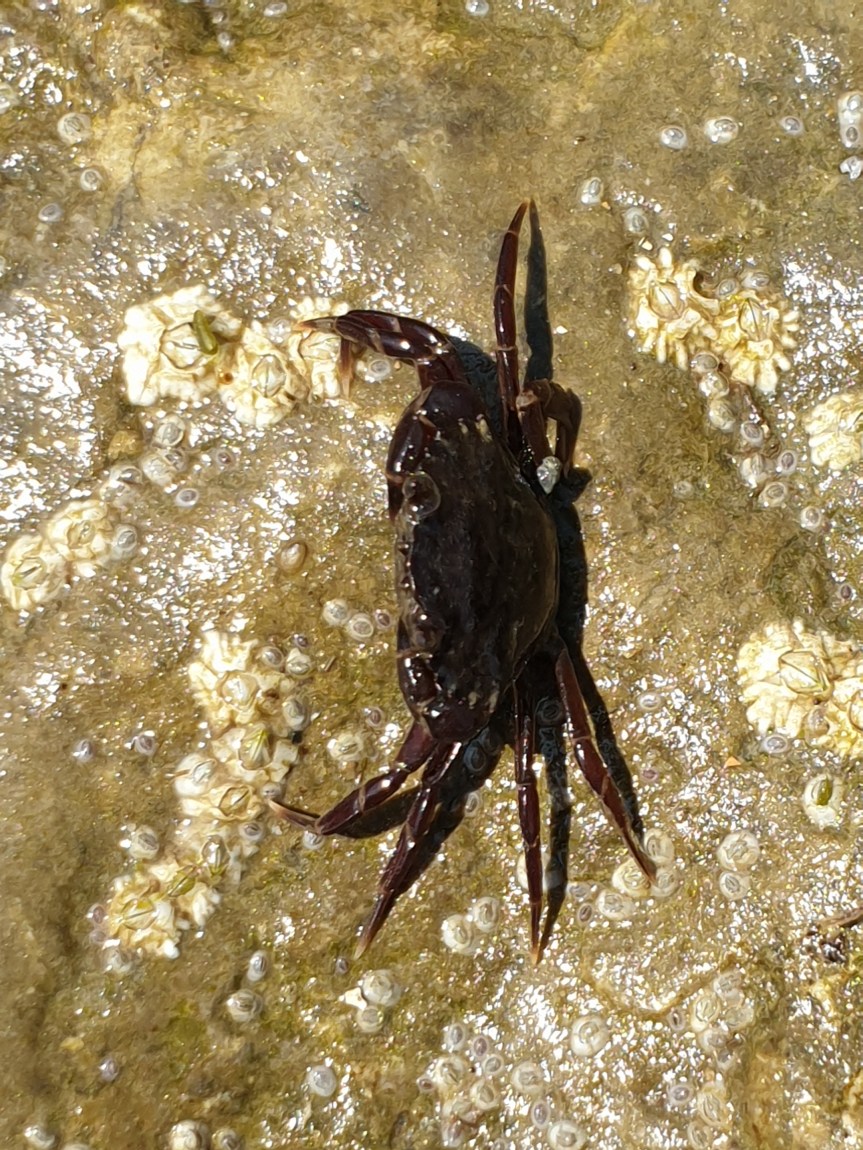
The Shore Crab is is the most common crab that you will find when Rockpooling or lifting Seaweed and Stones on the beach.
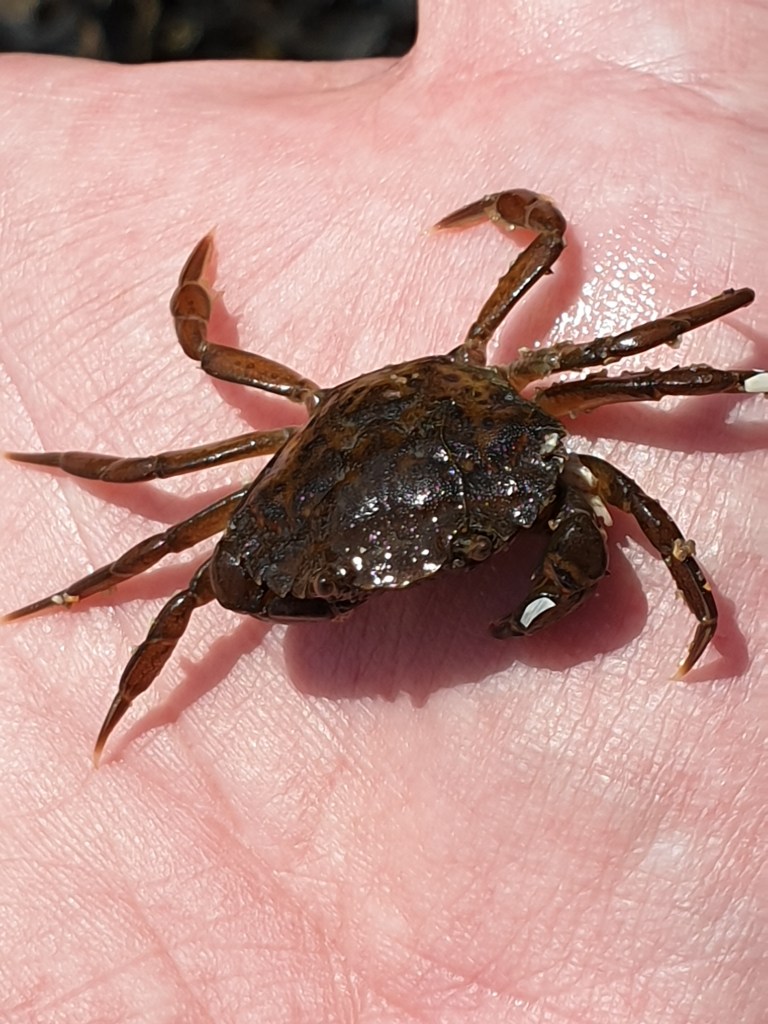
“Carcinus maenas” the “Shore Crab” also known as “Green Shore Crab” can be found on the majority of beaches in the British Isles.
Shore Crab “Carcinus maenas”
Shore Crabs can grow between 1 to 4 inches. Its shell/carapace typically has three blunt teeth between its eyes, however on smaller Shore Crabs the may be indistinct. On each side of the shell past the eyes there are five sharper teeth.
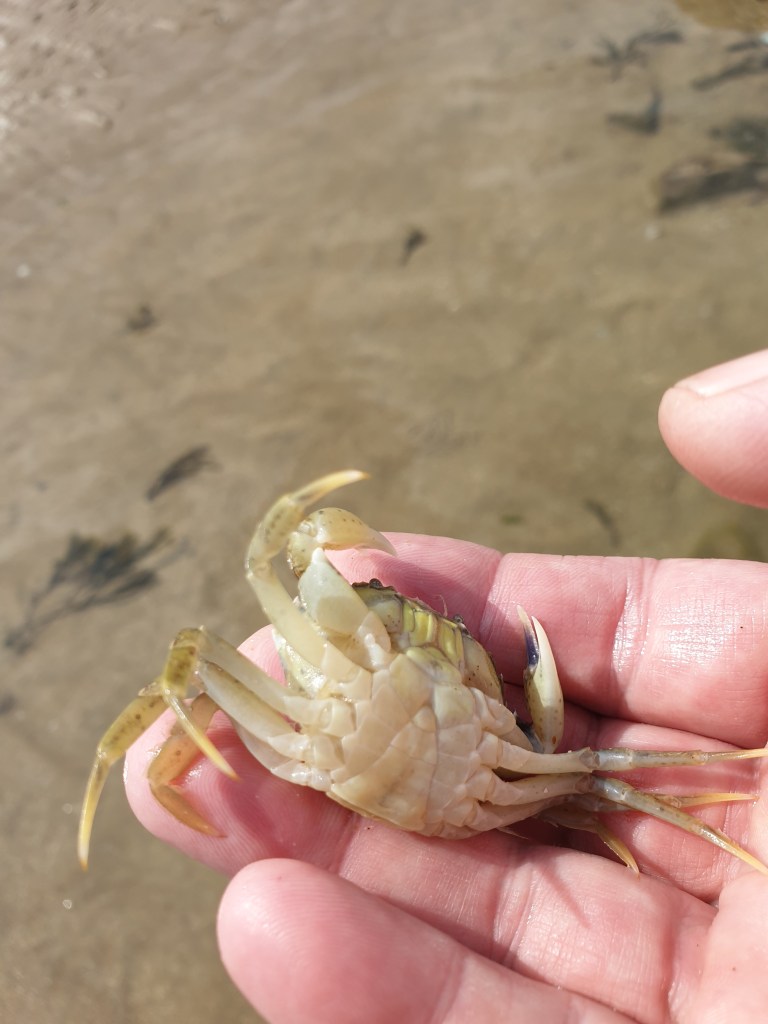
The way that you can tell a male and female crab apart is down to the number of joints on its tail. Yes a crab has a tail, which is folded under its belly and you can see it when you turn them over. Carefully of course and especially if you are holding a larger crab with big pincers!
Underside of the crab. The tail is the triangle towards the rear. This one is a male.
A male has a five jointed tail, whereas a female has seven joints.
As with most crabs there are 4 pairs of legs and a set of pincers. If you look at the back legs you will see that they are flatter and used to help the crab swim.
Masked Crab
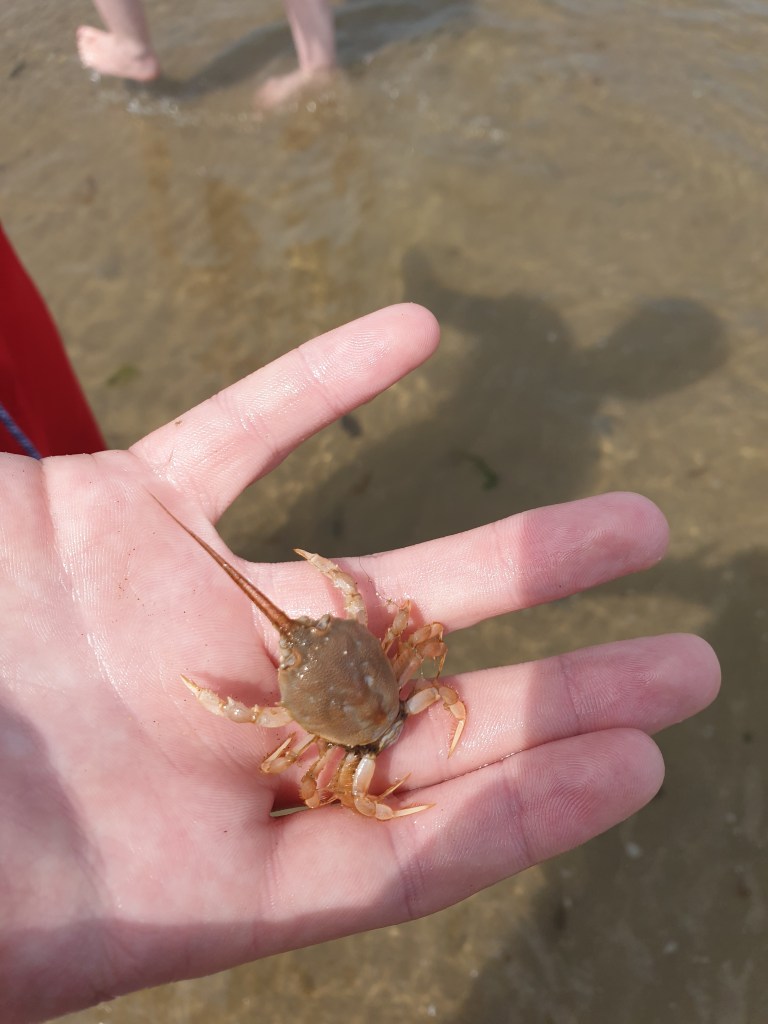
We did find another species called a “Masked Crab” or “Corystes cassivelanus”. A distinctive shape with long antenna at the front.
The Masked Crab is between 1 and 1.5 inches long. The marking on the shell can look like a human face.
Masked Crab – “Corystes cassivelanus”
Males have pinchers twice the length of the body whereas the females are not longer then their body. With three teeth marked in the shell on either side of the carapace.
This was a female and was laiden with eggs so she went straight back where we found her.
Once you have found and looked at the crab, put it back where you found it and put any Seaweed and rocks back in place.
A beach is a great place to discover wildlife as well as catch some rays of sun.
If you go to a beach with rocks, you can usually find a lot of different species in the rockpools. You don’t always need to look in rockpools either.
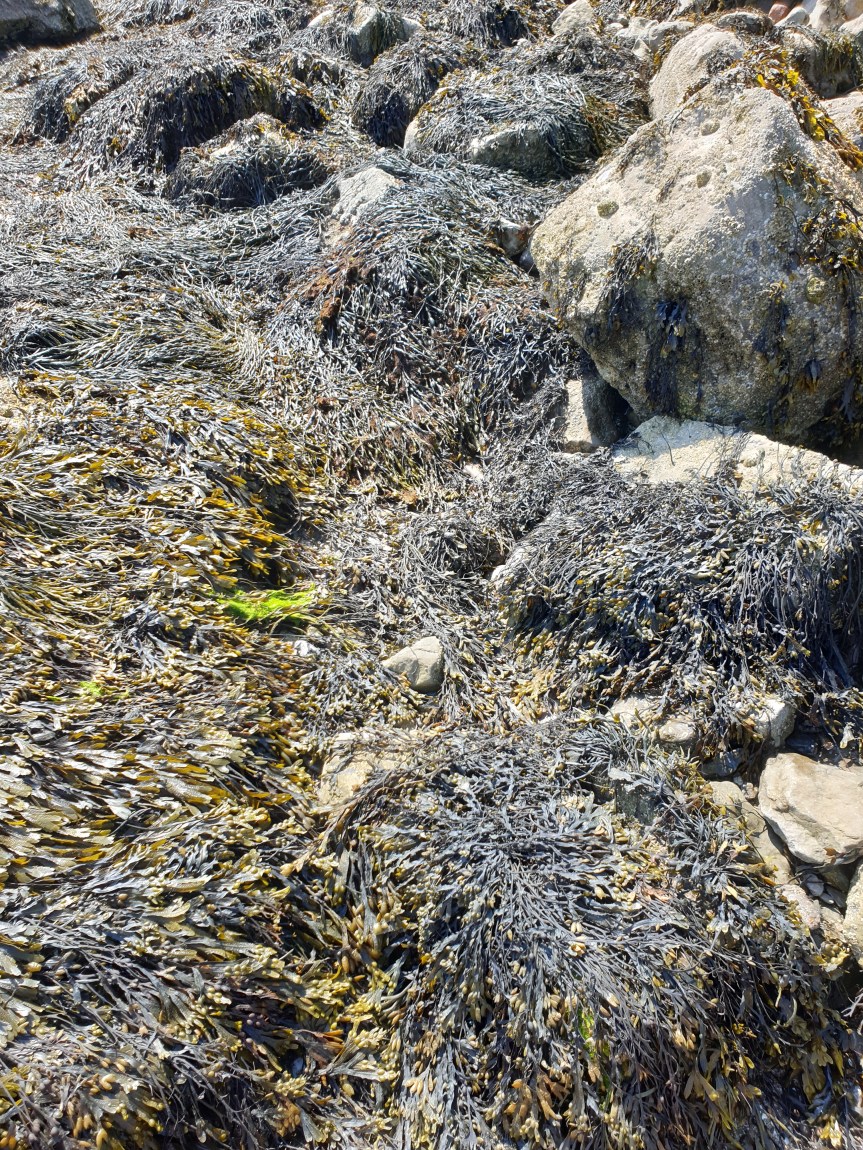
The beach I have recently been on only had a few shallow rockpools that didn’t hold much, but had lots of seaweed covered rocks. The seaweed was very dense and I could imagine the tide being in and it forming a vast underwater forest for sea life to habitat.
So whilst the normal person was happy looking in the few rockpools, I was moving seaweed gently to find an abundance of life.
The bulk of the seaweed was “Fucus Vesiculosus” otherwise known as “Bladder Wrack“. Olive-brown in colour and having a leathery feel. Its distinctive fronds with air sacs arising from a foot/disc that anchors it to the rocks. Growing at around 2ft in length.
Bladder Wrack “Fucus Vesiculosus”
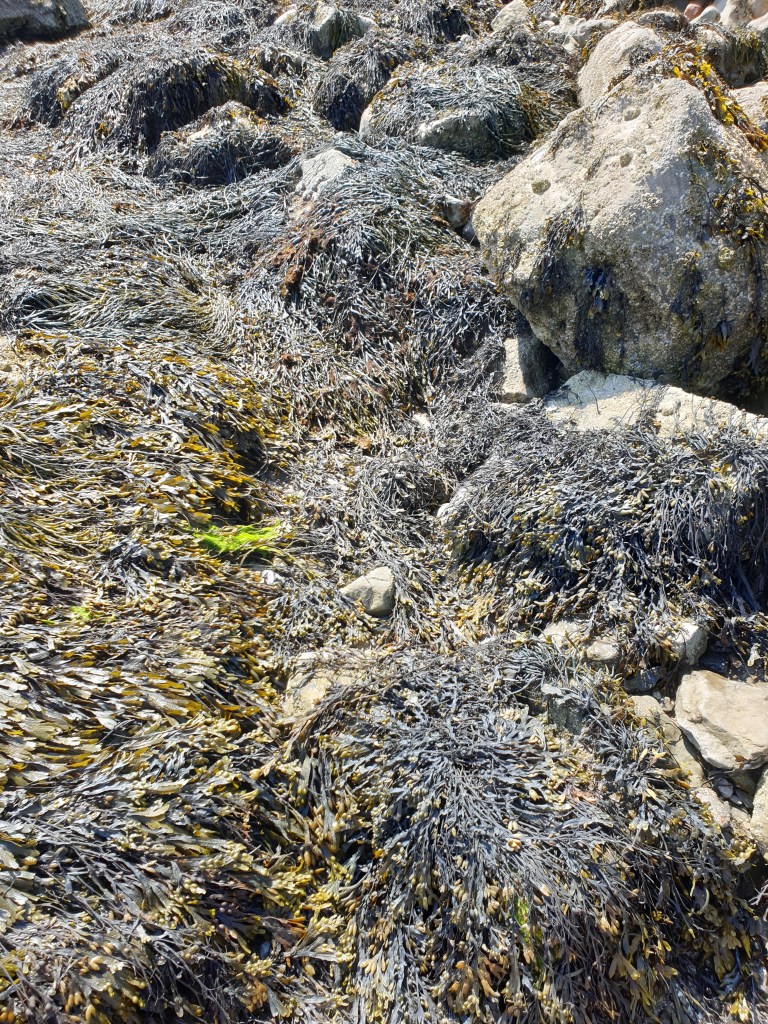
The picture above is where I was looking on the beach.
Under the top layer of the Bladder Wrack that was drying in the sun, the under layers were still wet and hid small stones that when lifted exposed small creatures such as:
Shore Crabs
Anemones
Hermit Crabs
Limpets
Barnacles
Sandhoppers
The list can go on…. what will you find on the beach on your next visit?
It is important after looking for creatures in a rockpool or under seaweed, to put back anything you have disturbed during your adventure.


 Sparrowhawk Bushcraft