A Tinder Tin

One of the key items in my kit is my brass Hudson Bay tin. It’s packed with good fire lighting material, but sometimes I need a bit of additional space to hold different types of tinder.

When I am out and about, I like to visit antique shops, and recently, I found a couple of brass tins that I thought would go well with my Hudson Bay tin.

These have aged well and show with the discoulration, however its not personal to me. So I have decided to clean these up first, then through use they will become tarnished with my memories.

Before and partial clean

I have started on one of the tins, and it needed some good elbow grease to get it partially shinny. Still some cleaning to go, but the first one is looking good.

More to go, but it’s good to polish while catching up with an episode of Alone.
Tarpology: The Art of Tarp Shelter Building

When you’re out in the wilderness, the ability to build a shelter can be a lifesaving skill. A tarp is a versatile and lightweight material that can be used to build a wide range of shelter structures. Tarpology, the art of tarp shelter building, is an essential skill for anyone who spends time in the great outdoors.

Materials Needed for Tarp Shelter Building

To build a tarp shelter, you’ll need a few materials:

  • A tarp
  • Paracord or other sturdy cordage
  • Tent stakes or other anchoring devices
  • A hiking pole (ideal for the tent setup)

Choosing the Right Tarp

There are a variety of tarps available on the market, but for shelter building, you want to look for one that is lightweight, durable, and has a reinforced edge with grommets. You also want to make sure the tarp is large enough to cover the area you want to protect. A 10′ x 12′ tarp is a good size for most shelter building applications. Personally I use a DD Tarp at 3m x 3m as a go to tarp.

Types of Tarp Shelters

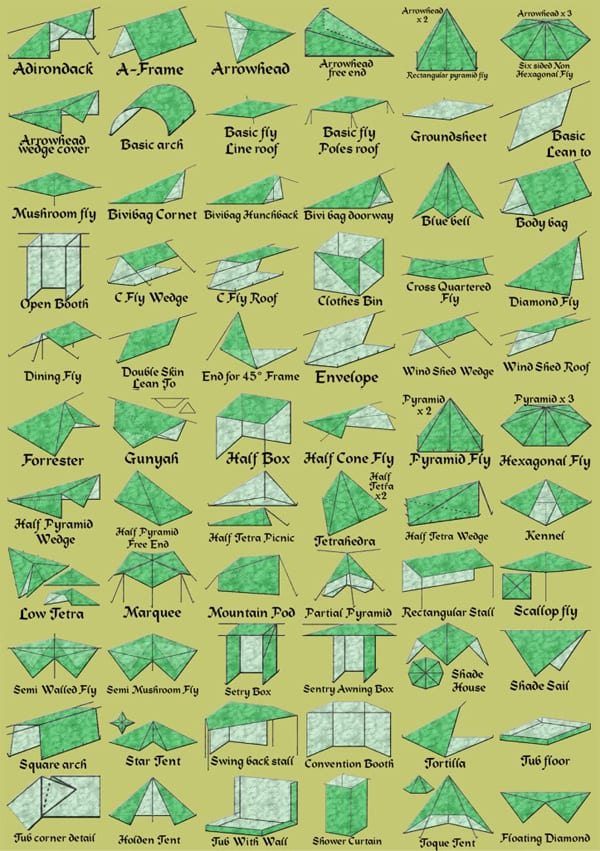
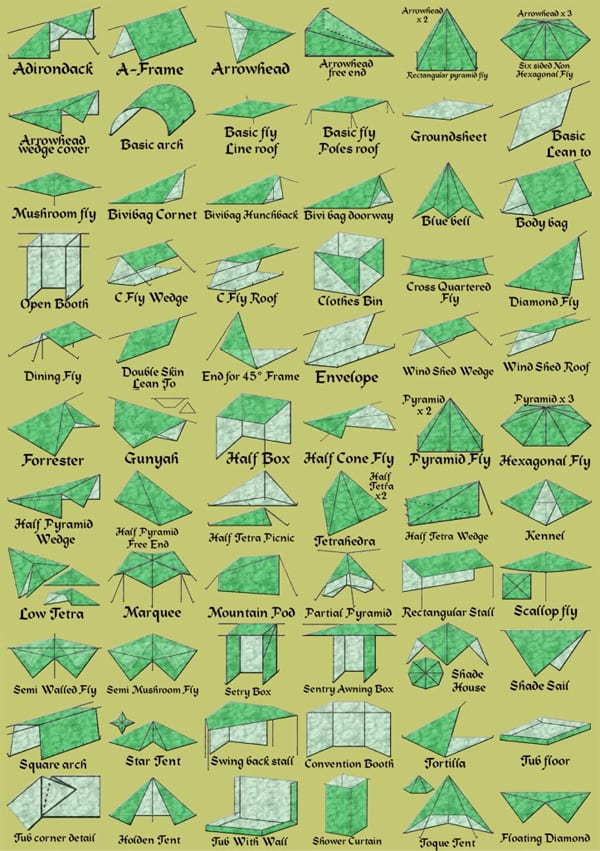
There many different types of tarp shelters you can build as you can see from this blogs picture. Here are four main ones:

  1. Lean-to Shelter – This is a simple shelter that requires one anchor point, such as a tree or a stake. The tarp is anchored at the top and stretched out to create a sloping roof. The bottom of the tarp is then anchored to the ground with stakes.
  2. A-Frame Shelter – This shelter is similar to a lean-to, but requires two anchor points. The tarp is anchored at the top of each anchor point and then staked out at the bottom to create a triangular A-frame shape.
  3. Diamond Shelter – This shelter is created by folding the tarp in half diagonally to form a triangle. The two corners opposite the fold are anchored to trees or stakes, and the other two corners are staked to the ground.
  4. Tarp Tent – This shelter is created by folding the tarp in half, and then anchoring the two corners opposite the fold to trees or stakes. The other two corners are then staked to the ground, creating a tent-like structure.

Tips for Building a Tarp Shelter

  • Choose a location that is protected from the wind and rain.
  • Clear the area of any debris or sharp objects that could damage the tarp.
  • Use a ground cloth or sleeping pad to insulate yourself from the ground.
  • Be sure to properly anchor the tarp to the ground and any anchor points.
  • Adjust the tension on the tarp to ensure a tight and secure shelter.
  • Always carry extra cordage and stakes in case of emergency or equipment failure.

10 Bushcraft Books You Should Read

Bushcraft is the art of living in and thriving in the wilderness, using only the natural resources available. It’s a skill that can be learned and mastered, and there are plenty of books available on the subject. Here are a few:

  1. “Bushcraft 101: A Field Guide to the Art of Wilderness Survival” by Dave Canterbury This book is a must-read for anyone interested in learning the basics of bushcraft. It covers everything from building a shelter and starting a fire to finding water and navigating in the wilderness.
  2. “The SAS Survival Handbook” by John “Lofty” Wiseman Written by a former SAS soldier, this book is considered one of the most comprehensive guides to survival. It covers a wide range of topics, from basic survival skills to advanced techniques such as navigation, self-defense, and first aid.
  3. “Wilderness Living and Survival Skills” by John McPherson This book is an excellent resource for anyone looking to learn practical bushcraft skills. It covers topics such as shelter building, fire-making, water purification, and foraging for food.
  4. “The Complete Guide to Hunting, Butchering, and Cooking Wild Game” by Steven Rinella Knowing how to hunt, butcher, and cook wild game is an important part of bushcraft. This book provides a comprehensive guide to the subject, including tips on field dressing, meat processing, and preparing game for the table.
  5. “Advanced Bushcraft: An Expert Field Guide to the Art of Wilderness Survival” by Dave Canterbury This book is the follow-up to Canterbury’s “Bushcraft 101” and provides more in-depth information on advanced bushcraft skills. It covers topics such as trap building, bow making, and advanced fire-making techniques.
  6. “The Bushcraft Field Guide to Trapping, Gathering, and Cooking in the Wild” by Dave Canterbury In this book, Canterbury provides practical advice on trapping and gathering food in the wild. It covers topics such as snaring, fishing, and foraging, as well as tips on cooking and preserving food in the bush.
  7. “Edible Wild Plants: A North American Field Guide” by Thomas Elias and Peter Dykeman Knowing how to identify and use wild plants is an essential part of bushcraft. This field guide provides information on over 200 species of edible plants, including descriptions, photographs, and tips on preparation and use.
  8. “The Forager’s Harvest: A Guide to Identifying, Harvesting, and Preparing Edible Wild Plants” by Samuel Thayer This book is an excellent resource for anyone interested in foraging for food in the wild. It covers topics such as plant identification, harvesting techniques, and preparation and cooking methods.
  9. “Bushcraft First Aid: A Field Guide to Wilderness Emergency Care” by Dave Canterbury and Jason A. Hunt In this book, Canterbury and Hunt provide practical advice on first aid and emergency care in the wilderness. It covers topics such as wound care, sprains and strains, and environmental emergencies.
  10. “The Outdoor Survival Handbook: A Guide to the Resources and Materials Available in the Wild and How to Use Them for Food, Shelter, Warmth, and Navigation” by Raymond Mears This book is an excellent resource for anyone interested in learning about the resources available in the wild and how to use them. It covers topics such as shelter building, fire-making, water purification, and navigation.

In conclusion, these 10 bushcraft books cover a range of topics, from basic survival skills to advanced techniques. There are lots of other books available. What are you reading?

Best Top 5 Bushcraft Podcasts 2023

Using time constructively is a great thing and being able to listen to a podcast whilst out for a walk, making nettle twine or relaxing with a cuppa is a great use of time. Listening to conversation can be a good way of learning and retaining knowledge. Here are my top 5 podcasts for 2023 to help you gain more knowledge whilst you are doing things.

1. Ask Paul Kirtley

Paul has been producing videos and podcasts “AskPaulKirtley” for a few years now and there is a great catalogue of advice and skills that would benefit every bushcrafter and outdoors person. The great thing about this series is that you can ask Paul a question and he answers it in his videos and Podcasts.

2. Jack Mountain Bushcraft Podcast

The Jack Mountain Bushcraft Podcast is about the woods life; guiding, bushcraft, expedition leadership, nature, survival and more. Join Registered Master Maine Guide Tim Smith in the studio and in the field.

3. Atlantic Bushcraft Adventures Podcast

Robert and Ben host the Atlantic Bushcraft Adventures Podcast with Live shows Wed Nights 9:00pm Atlantic Time. They talk about everything bushcraft.

4. The Bracken Outdoors Podcast

The Bracken Outdoors Podcast is hosted by Bracken Van Ryssen of Bracken Outdoors who interviews members of the Outdoor Industry and finds out their top tips, advice and experiences in Hiking, Bushcraft and general outdoor life.

5. The Canadian Bushcraft Podcast

The Canadian Bushcraft Podcast is hosted by Caleb Musgrave who chats about all things related to Bushcraft, camping, survival and hunting with guests.

What are your top 5 Bushcraft and Outdoors podcasts?