
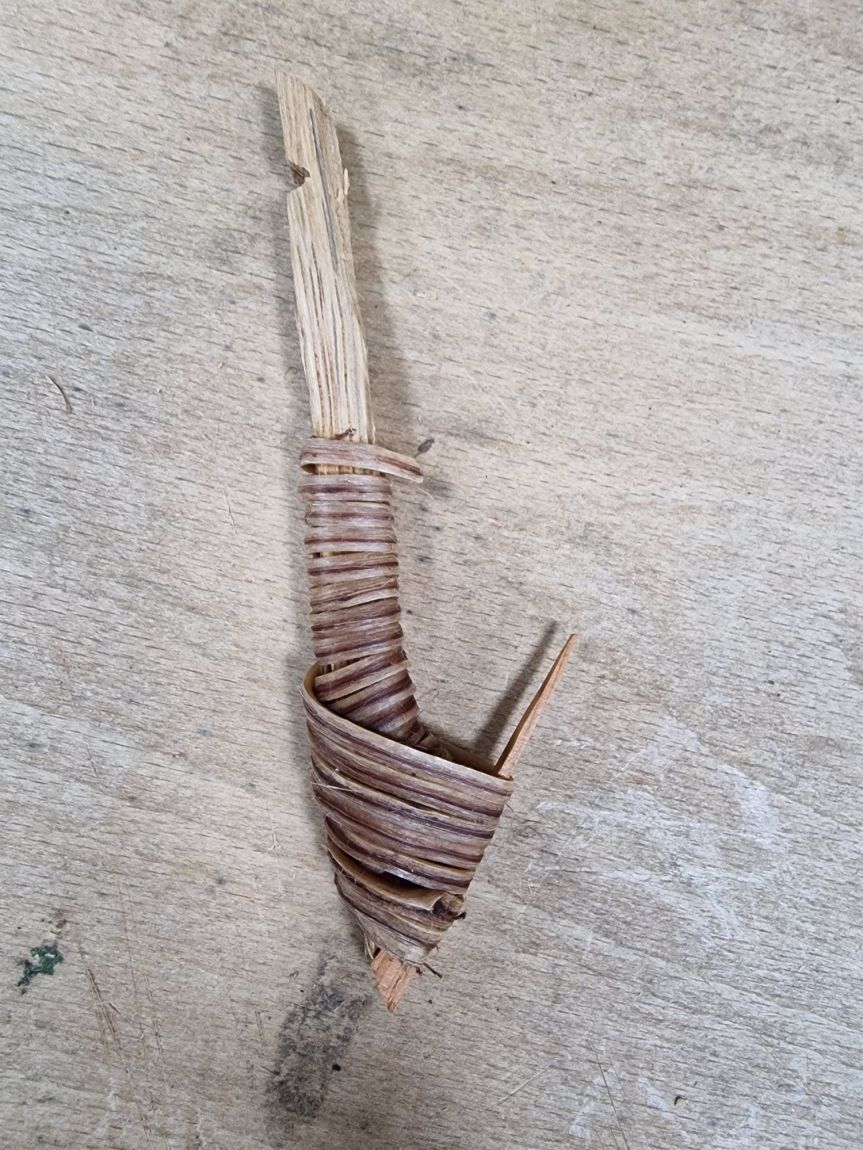
Recently I had the opportunity to attend a session with Adam Logan (www.awoodsman.co.uk) on Primitive Composite Fishhooks. This was a great session where I learnt how to make a Trolling Hook.
Primitive composite fishhooks are fascinating artifacts from ancient times, illustrating early human ingenuity. These hooks were typically made from a combination of materials like bone, wood, and stone, meticulously crafted to catch fish efficiently. The composite design, often involving a sharp, curved point attached to a sturdy shaft, showcased early humans’ understanding of both the materials at their disposal and the behaviour of their prey. Such hooks not only highlight the resourcefulness and adaptability of early cultures but also offer invaluable insights into the evolution of fishing technology and subsistence strategies in prehistoric societies.
First thing was to learn about the shape of the hooks, materials and the best way to carve the hook.
A practice at the lashings using a bigger version and cord to see if we could master the wrapping method and end up with a neat cross wrap. The main goal here is to have a straight line of the wrap down the centre of the hook.
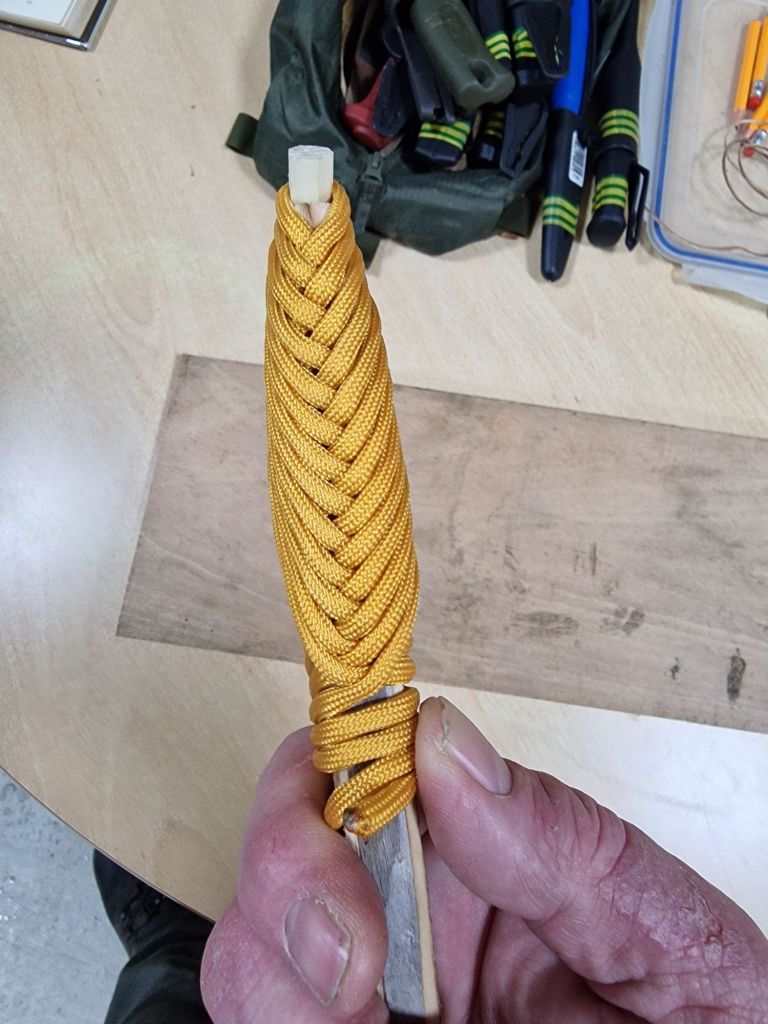
Moving on to carving. This is where you take time to ensure that the angles and cuts are right so that the width of the hook shaft and point are the same width, otherwise you end up with a loose wrap.
- Shaft = Seasoned Oak (Strong sturdy shaft)
- Point = Seasoned Yew (Has a slight flexibility)
- Wrap = Split Spruce root
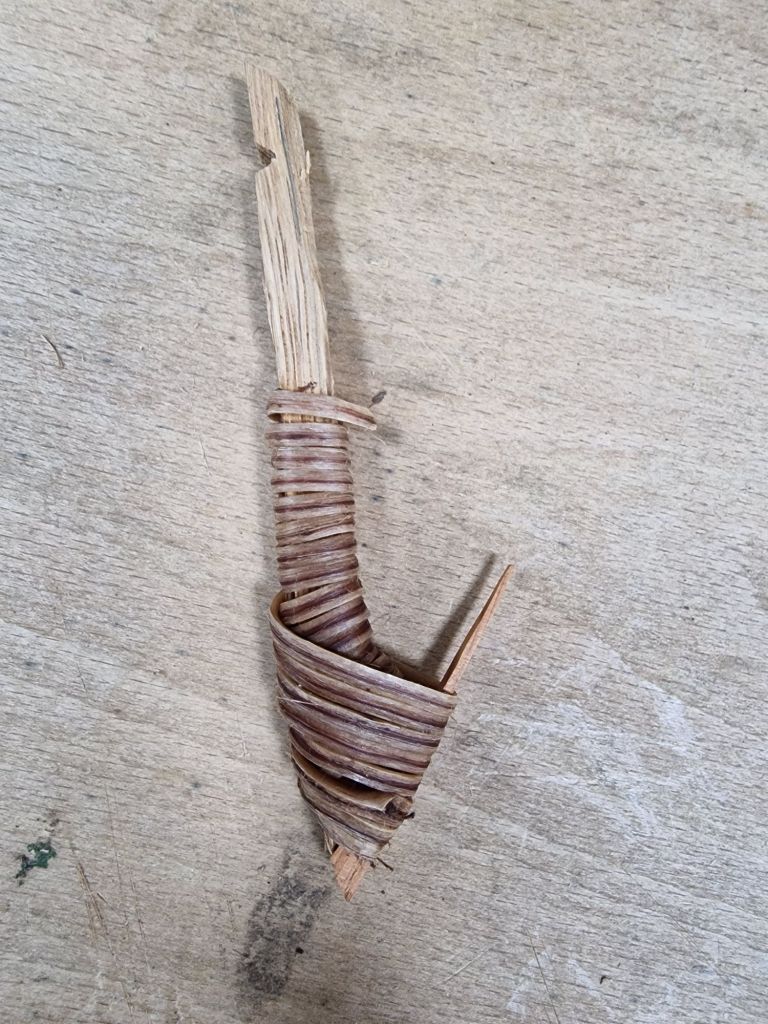
At the top of the shaft I put a V notch for the attachment of a leader.
The final stage when dry as the Spruce root was damp, was to dip the hook into a hot pine resin for waterproofing and ensuring the wrap doesn’t come loose.
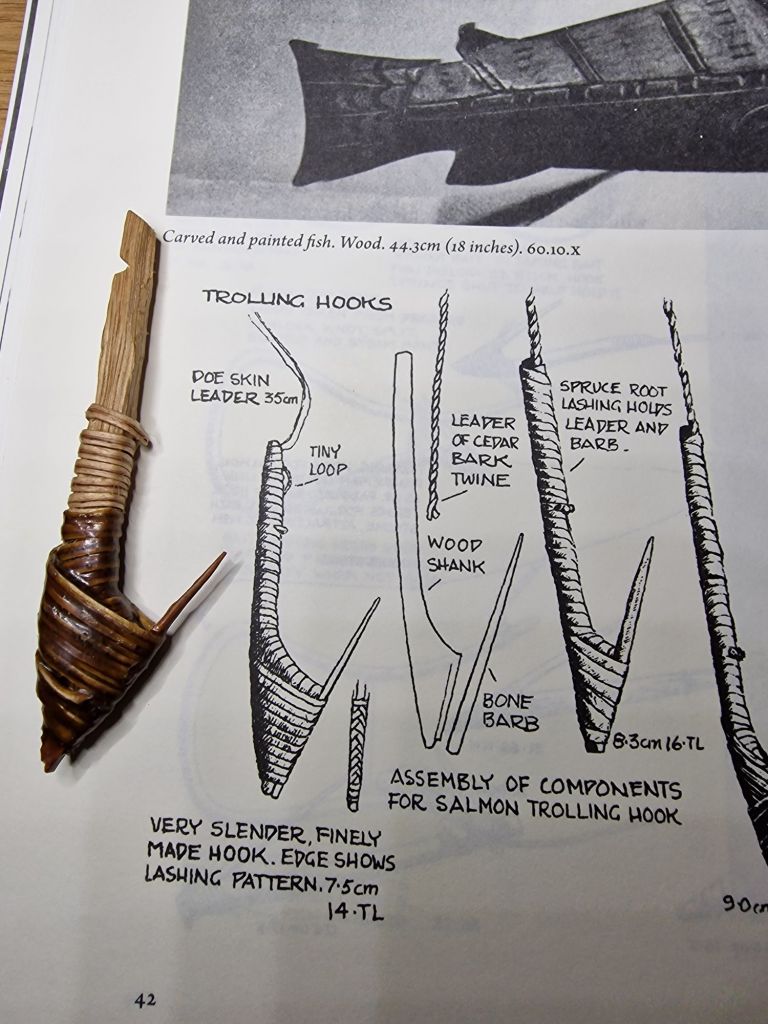
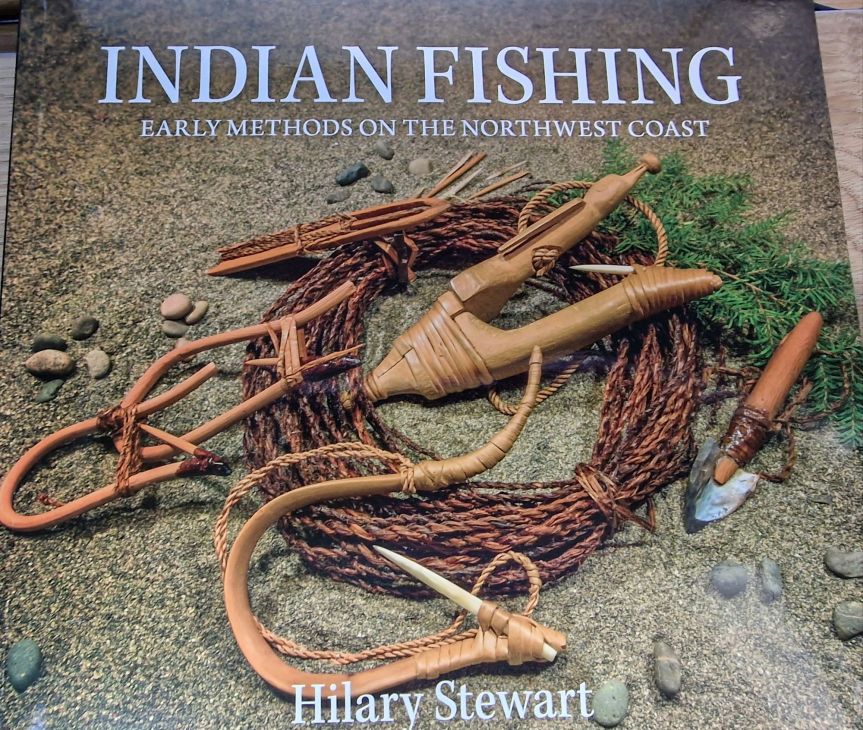
Here you can see my finished Trolling Hook with an illustration from a book called “Indian Fishing, early methods on the Northwest coast” by Hilary Stewart. This is an excellent book and reference guide for making fishing related items. This illustration also shows the shape of the hook I carved.
Fishing was an integral part of life for the Indigenous peoples of the Northwest Coast of North America, who developed a variety of sophisticated techniques long before European contact. They crafted tools like cedar bark nets, wooden fish traps, and intricately carved bone and antler fishhooks to capitalize on the rich marine environment. One notable method involved the construction of weirs—wooden barriers built across rivers and streams to guide fish into enclosures for easy capture. Specific techniques varied depending on the targeted species; for instance, dip nets and spears were commonly used during the salmon runs. These early methods not only demonstrate a deep understanding of the local ecosystem but also highlight the cultural and communal significance of fishing within these societies, where sustainable practices ensured the continued abundance of fish for future generations.
Hilary Stewart meticulously documents the rich fishing heritage of the Indigenous peoples of the Northwest Coast. She gathered material from museum archives, fish camps, and coastal village elders to illustrate the craftsmanship behind handmade tools like hooks, lines, sinkers, lures, floats, clubs, spears, harpoons, nets, traps, rakes, and gaffs. With over 300 detailed drawings, Stewart not only shows how these tools were made and used but also highlights the spiritual and cultural significance of fishing practices, including prayers, ceremonies, and taboos that reflect the deep respect these communities had for their life-giving resource
 Sparrowhawk Bushcraft